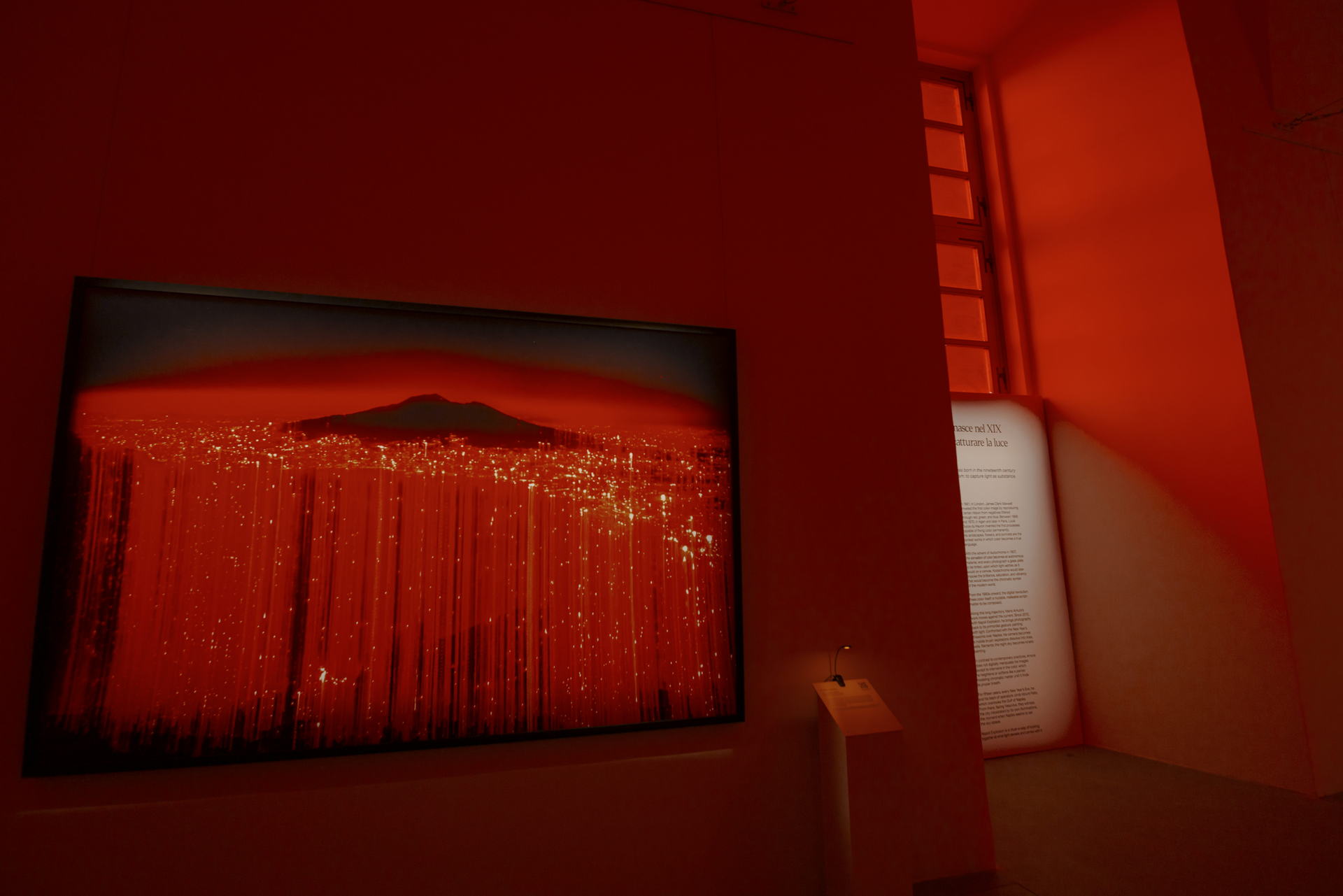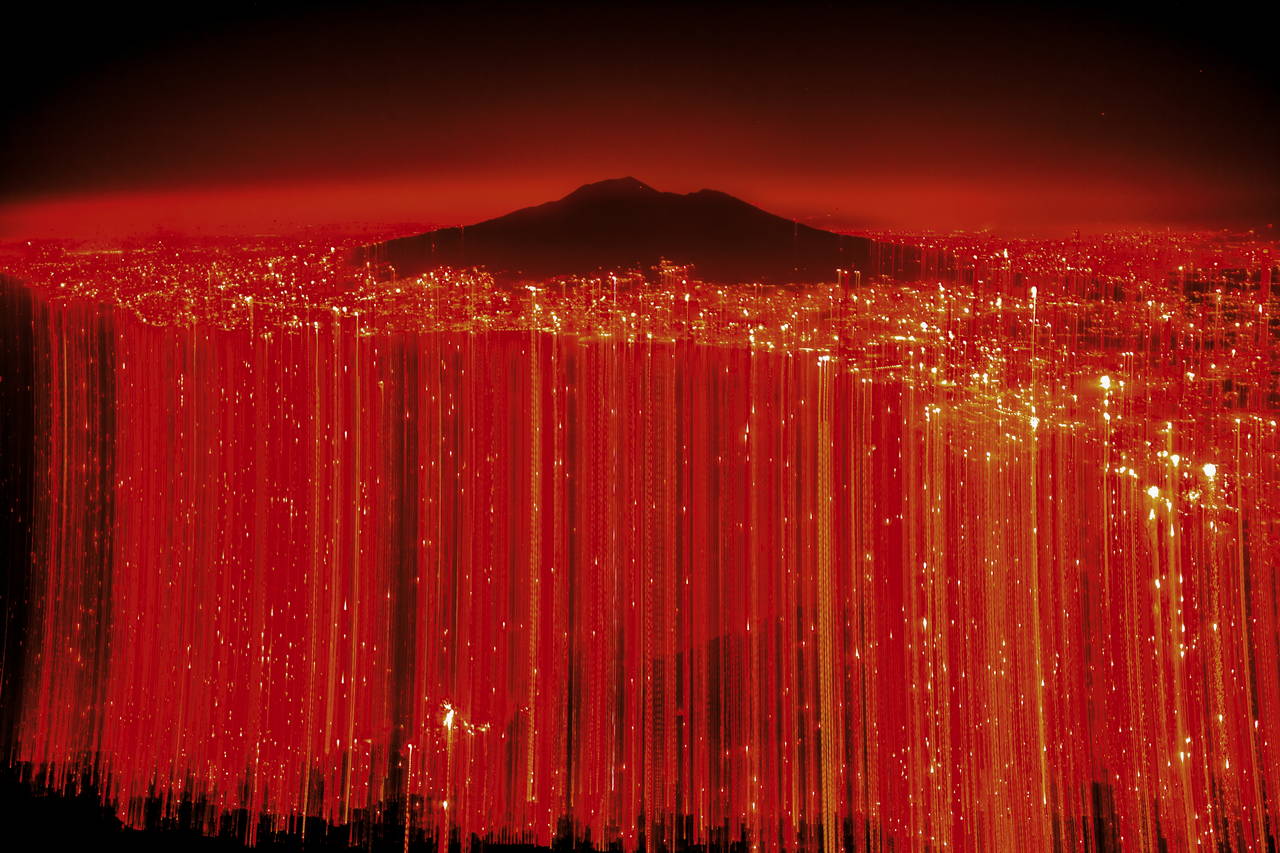
Napex 7303222
Single Edition 240×160 cm
Fine Art print Hahnemühle
MARIO AMURA | 2017
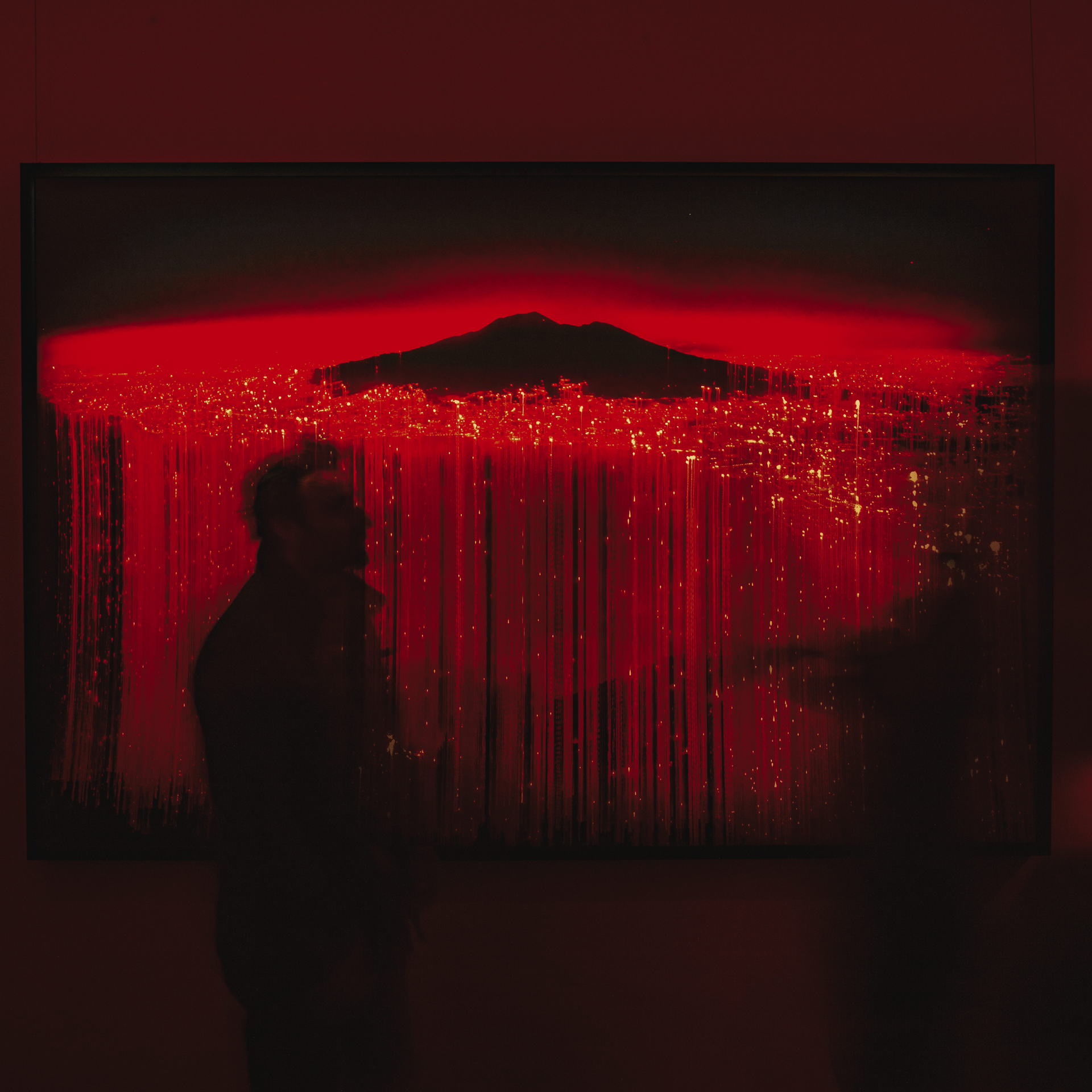
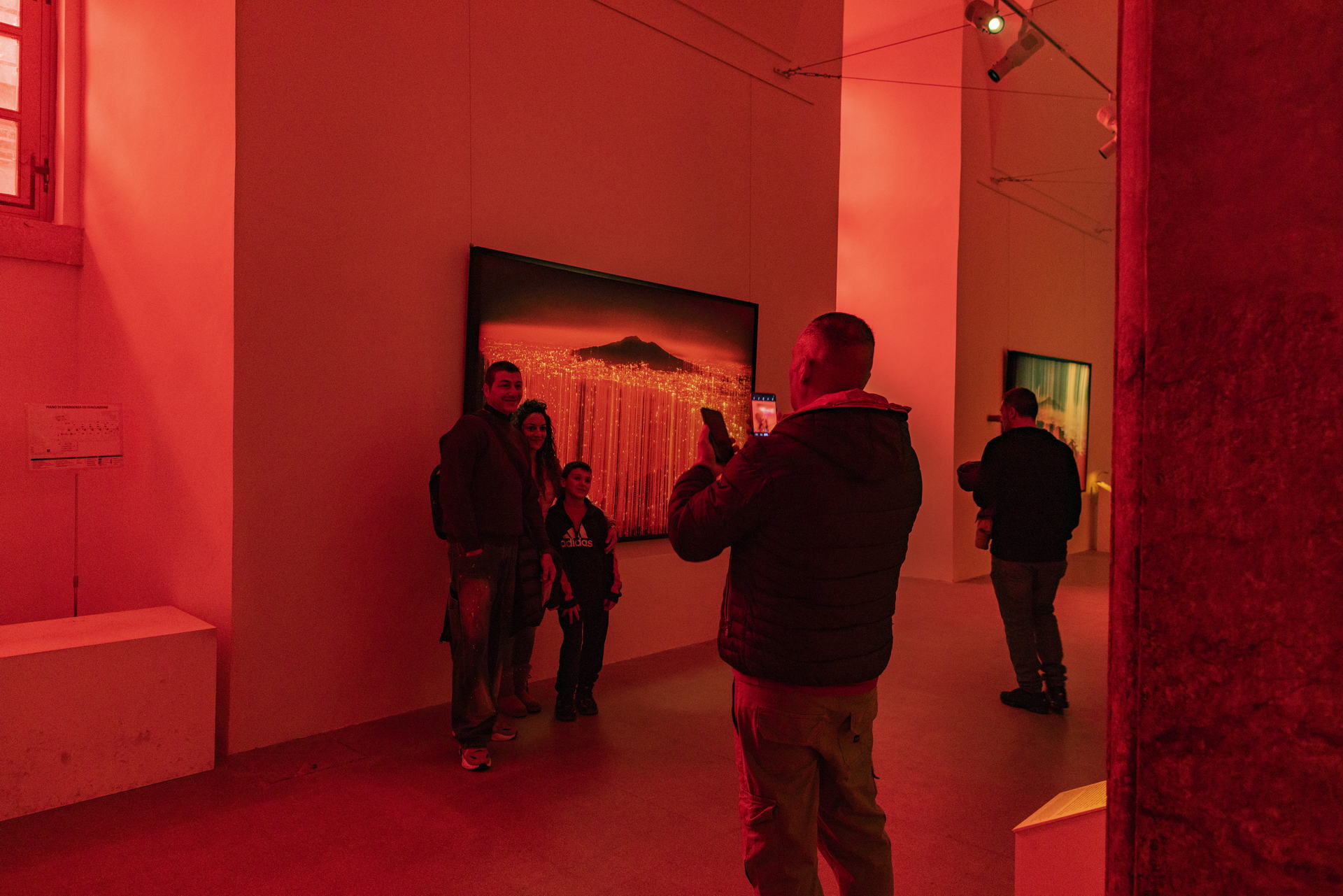
Here, the nocturnal landscape transforms into a luminous script built on the relationship between red and black. A uniform red sky sharply outlines the dark mass of the volcano, while the city lights stretch into long, regular drips, revealing a steady exposure time and a broad movement. The composition is dominated by the vertical gravity of fire, which transforms the landscape into a weave of luminous trails.Even without an eruption, Vesuvius associated with red immediately evokes in our minds the incandescent lava historically linked to this mountain. This image extends the long visual tradition of the volcano which, since the Grand Tour, has continually reinvented the very shape of the landscape.
This image, created in 2017, is centered upon the volcano, which, since the era of the Grand Tour, has exerted a magnetic pull on artists and travelers alike. From the English painter Joseph Wright of Derby (1734–1797), a witness to industrial England, to the French artist Pierre-Jacques Volaire (1729–1799), a true portraitist of Vesuvius in eruption, to the Dane Johan Christian Dahl (1788–1857), and to Johann Heinrich Wilhelm Tischbein (1751–1829), who came to Naples with Goethe, the volcano became an essential landmark of the European gaze.
Napex 7303222