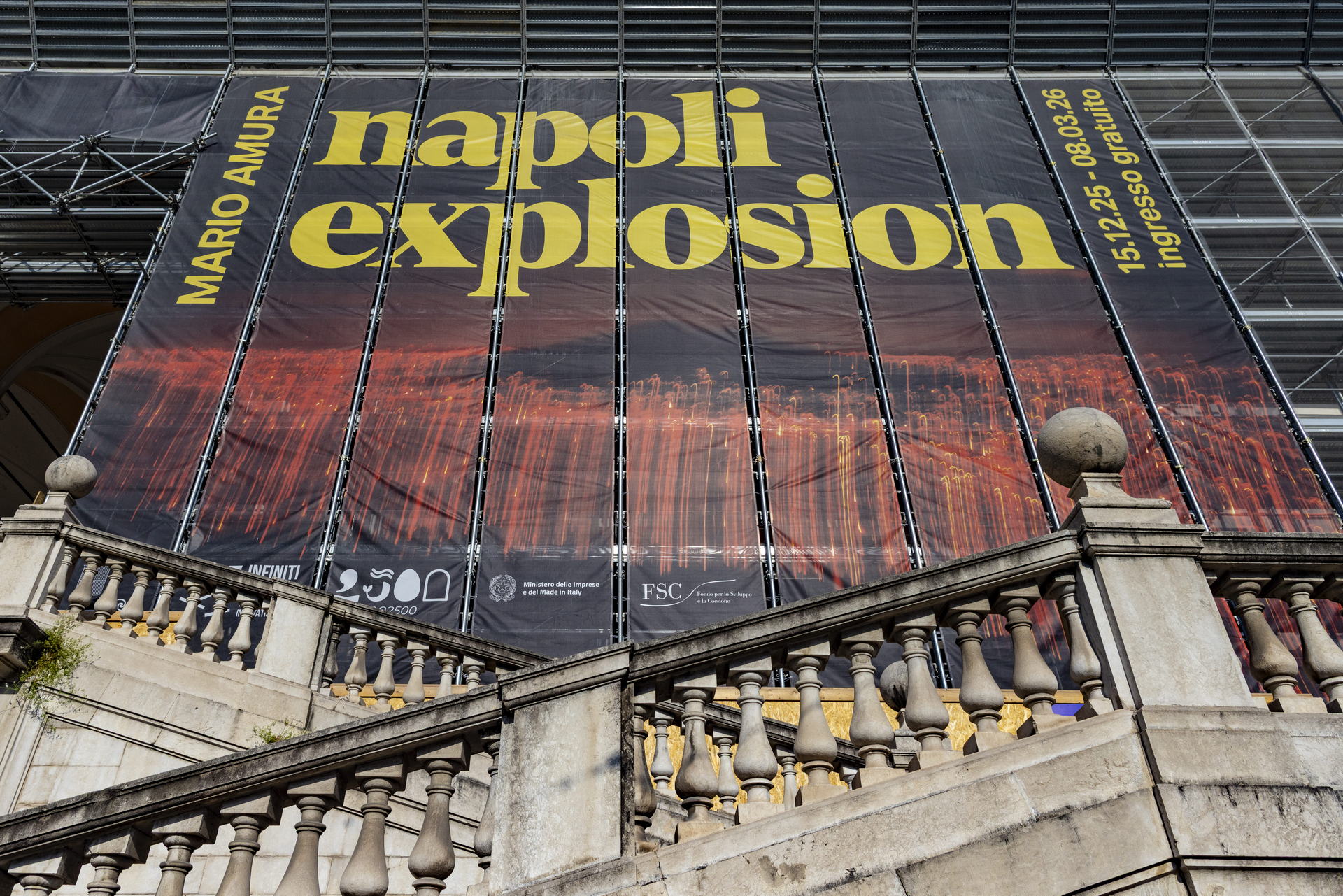
A monumental exhibition that catapults Naples onto a star at the dawn of the cosmos.
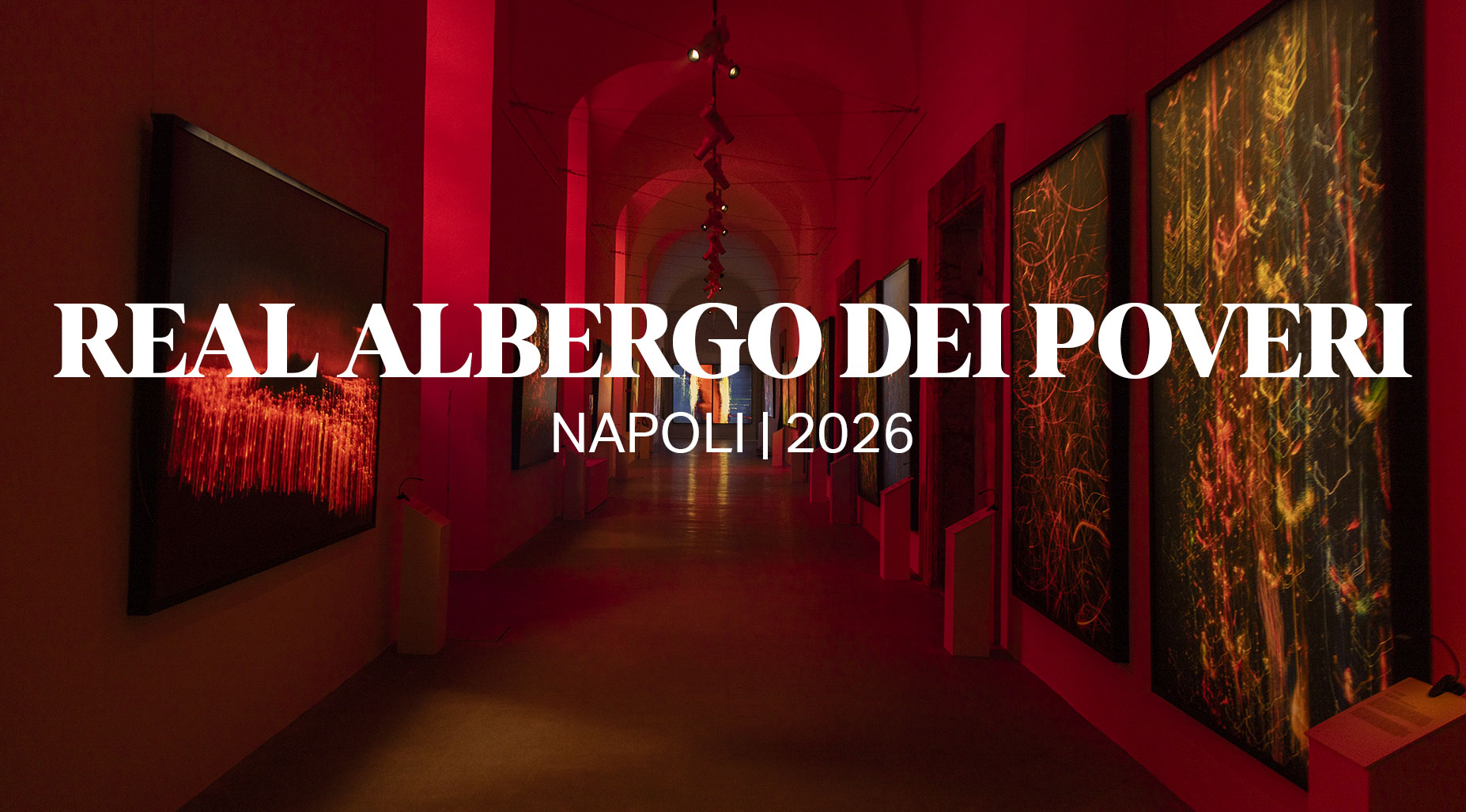
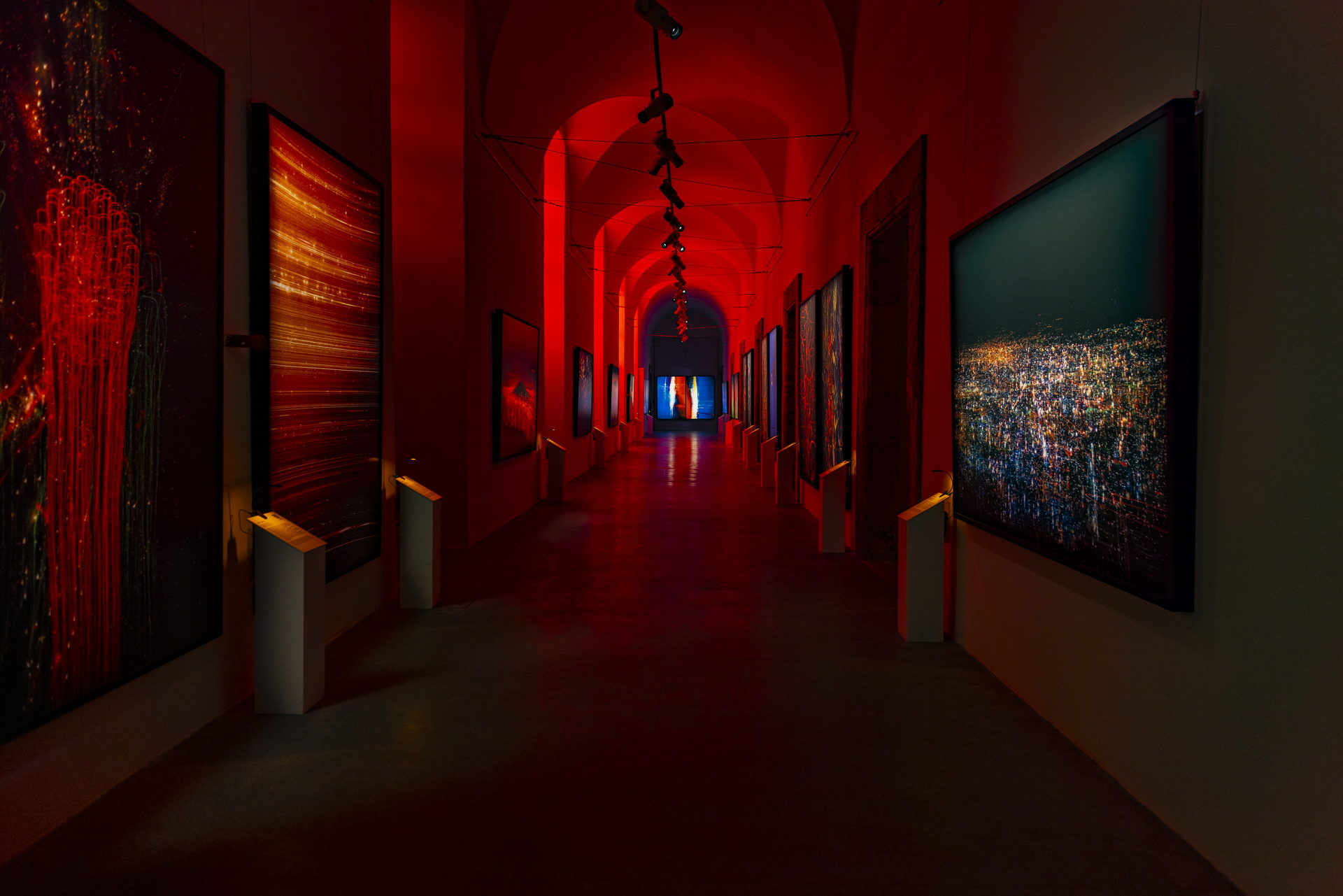
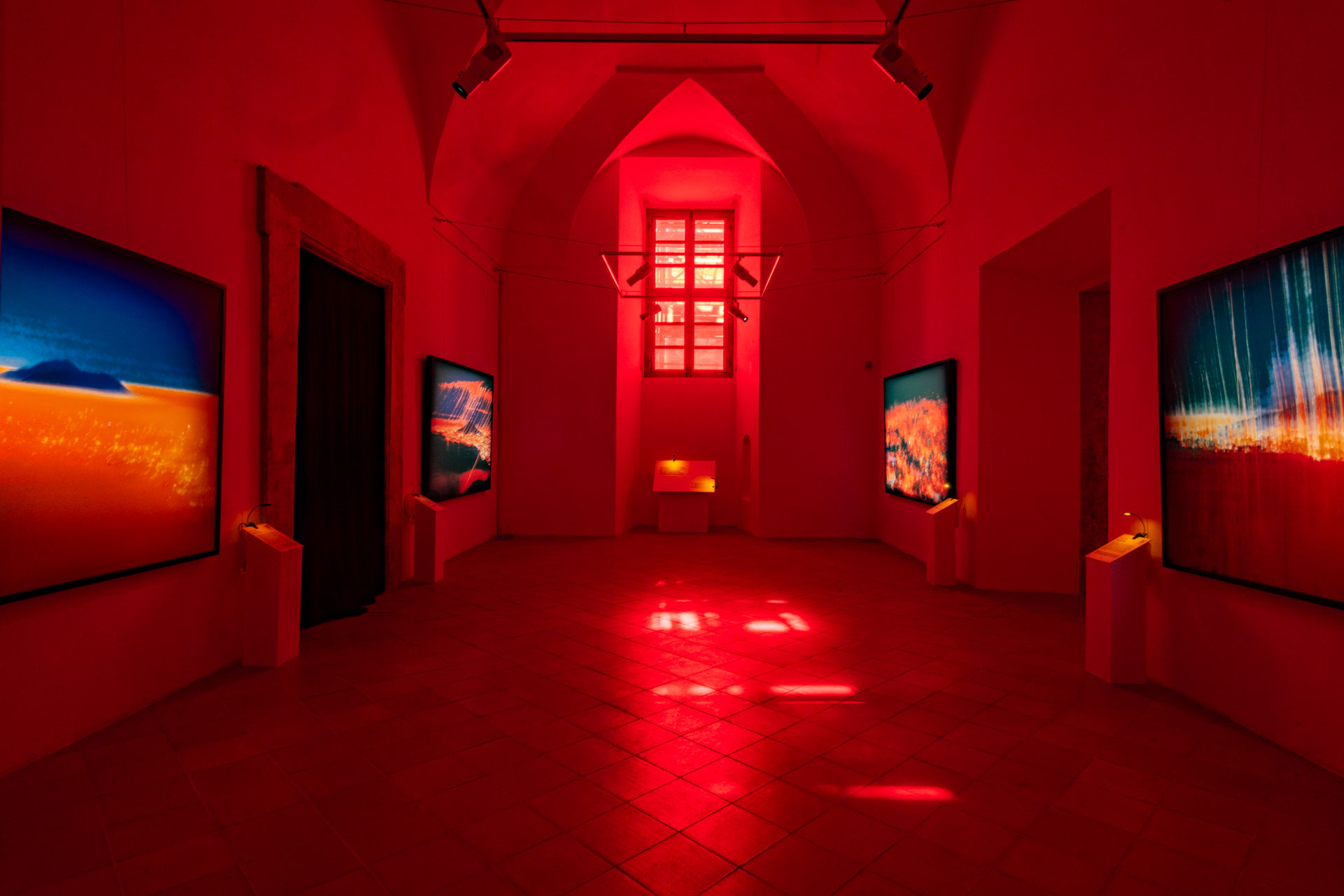
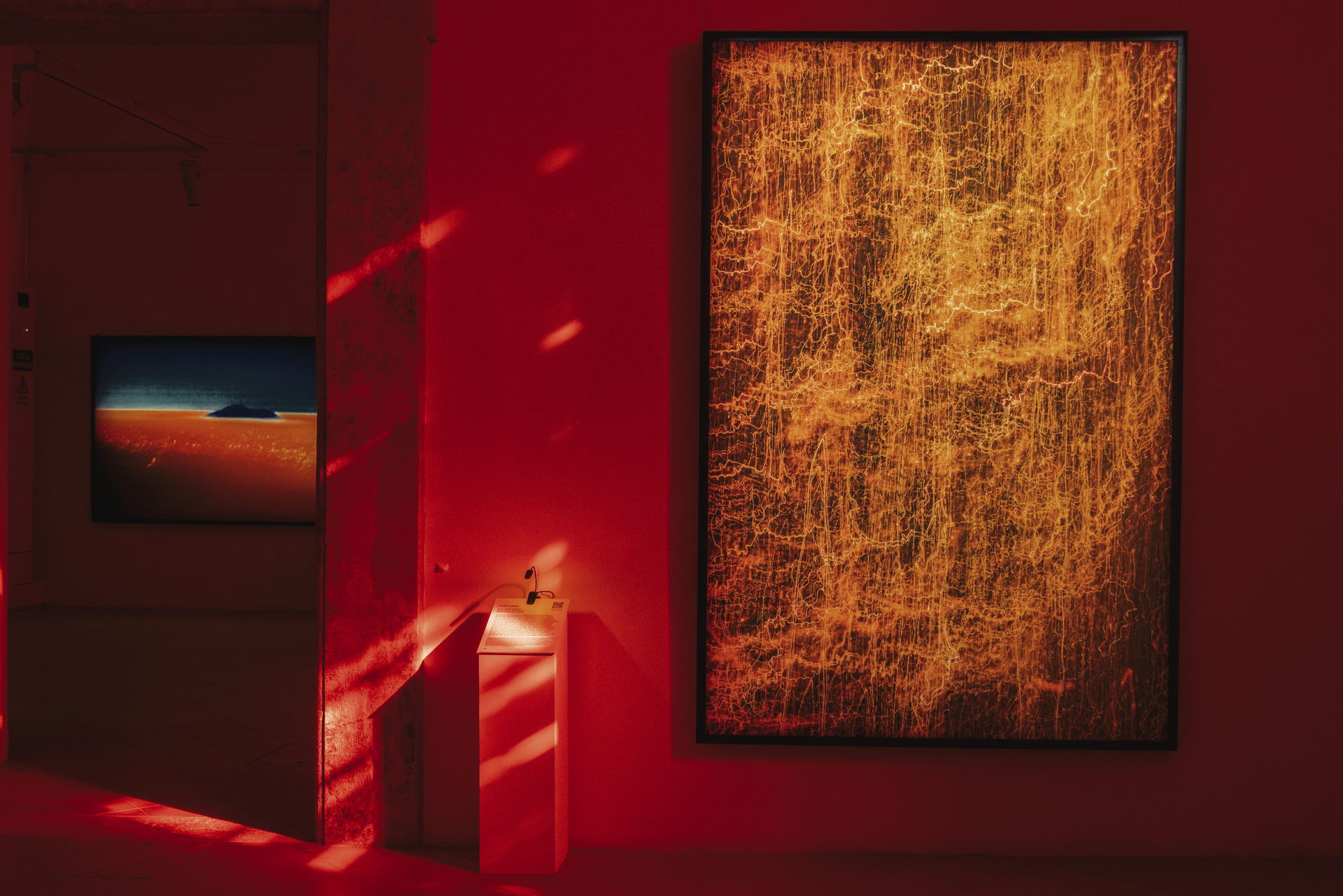
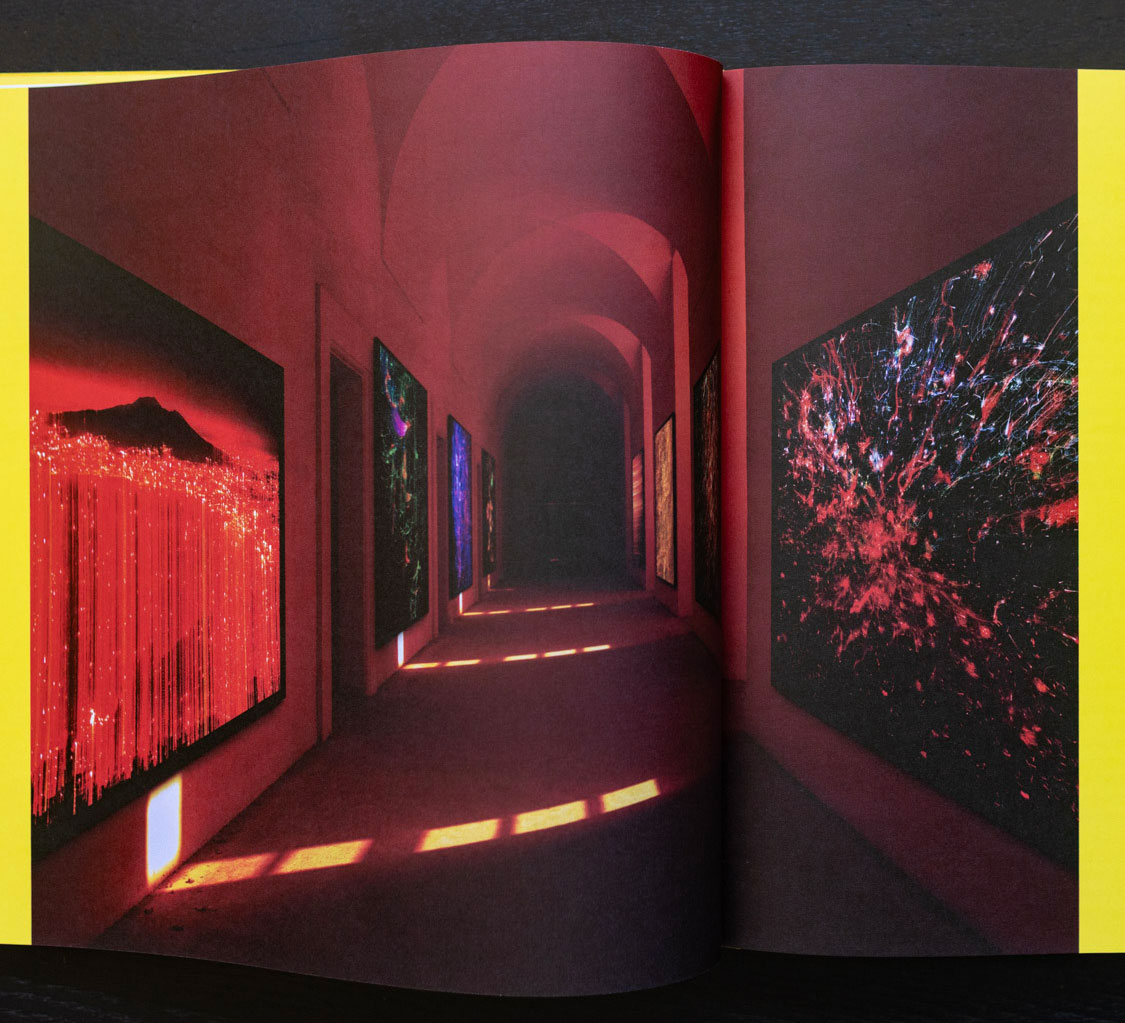
“In the year in which Neapolis celebrates its 2,500th anniversary, I imagined an exhibition capable of challenging our conception of time and the way we perceive it. I immersed the works in an incandescent red pouring through the vast windows of the Real Albergo dei Poveri, as though Naples had been catapulted onto a star from the cosmic dawn. It is the red of the magma chamber, where, over geological ages, the volcano forges matter and its colours. It is the first colour we perceive in the womb. This exhibition arises from a dialogue between different temporalities: the time of Neapolitan civilisation, the geological time of Vesuvius, and the infinitesimal time of the photographic exposure.”
Mario Amura
A king’s dream meets the eruption of a people.
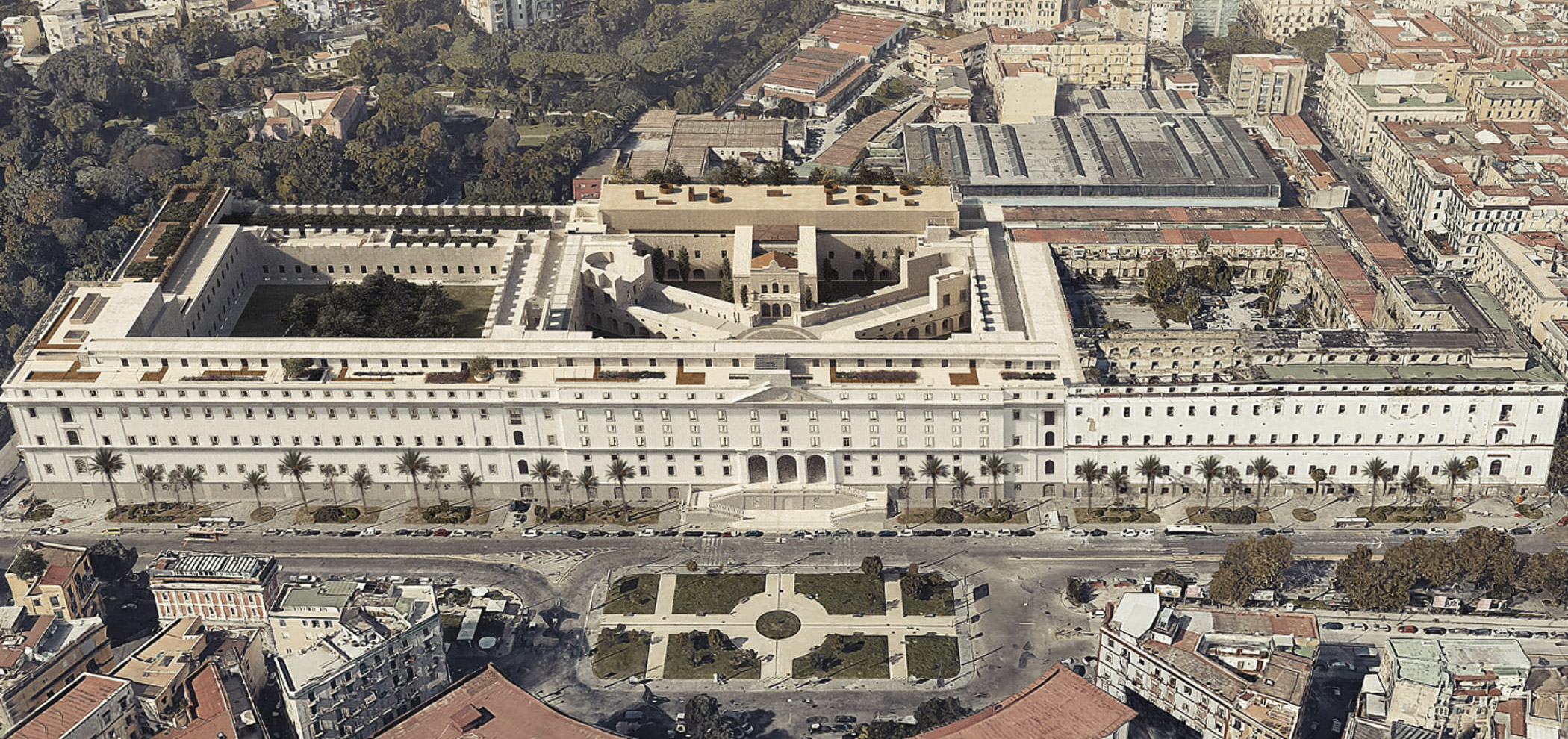
Conceived as a site-specific exhibition for the Real Albergo dei Poveri, Napoli Explosion enters one of Europe’s largest monumental buildings. Commissioned by Charles III of Bourbon and designed by Ferdinando Fuga, the palace preserves an unfulfilled dream: to welcome all the poor of the Kingdom, offering them not only shelter, but also an education and a trade. It is this dream that Mario Amura has sought to evoke. In rooms created to receive multitudes, the exhibition gives back to the people of Naples the image of their own collective performance: the eruption of light that ignites the sky around Vesuvius every New Year’s Eve.
33 Unique Monumental Works.
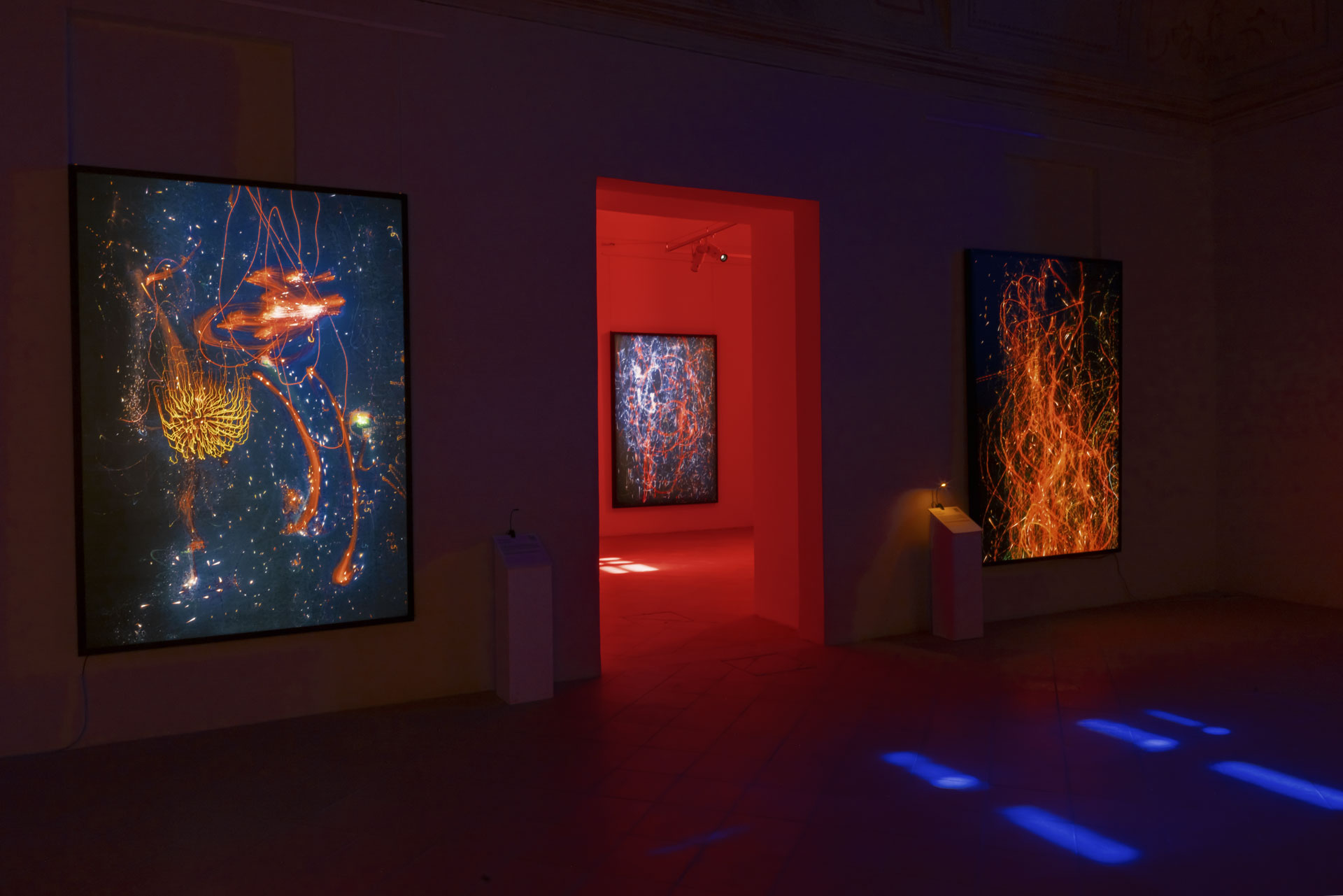
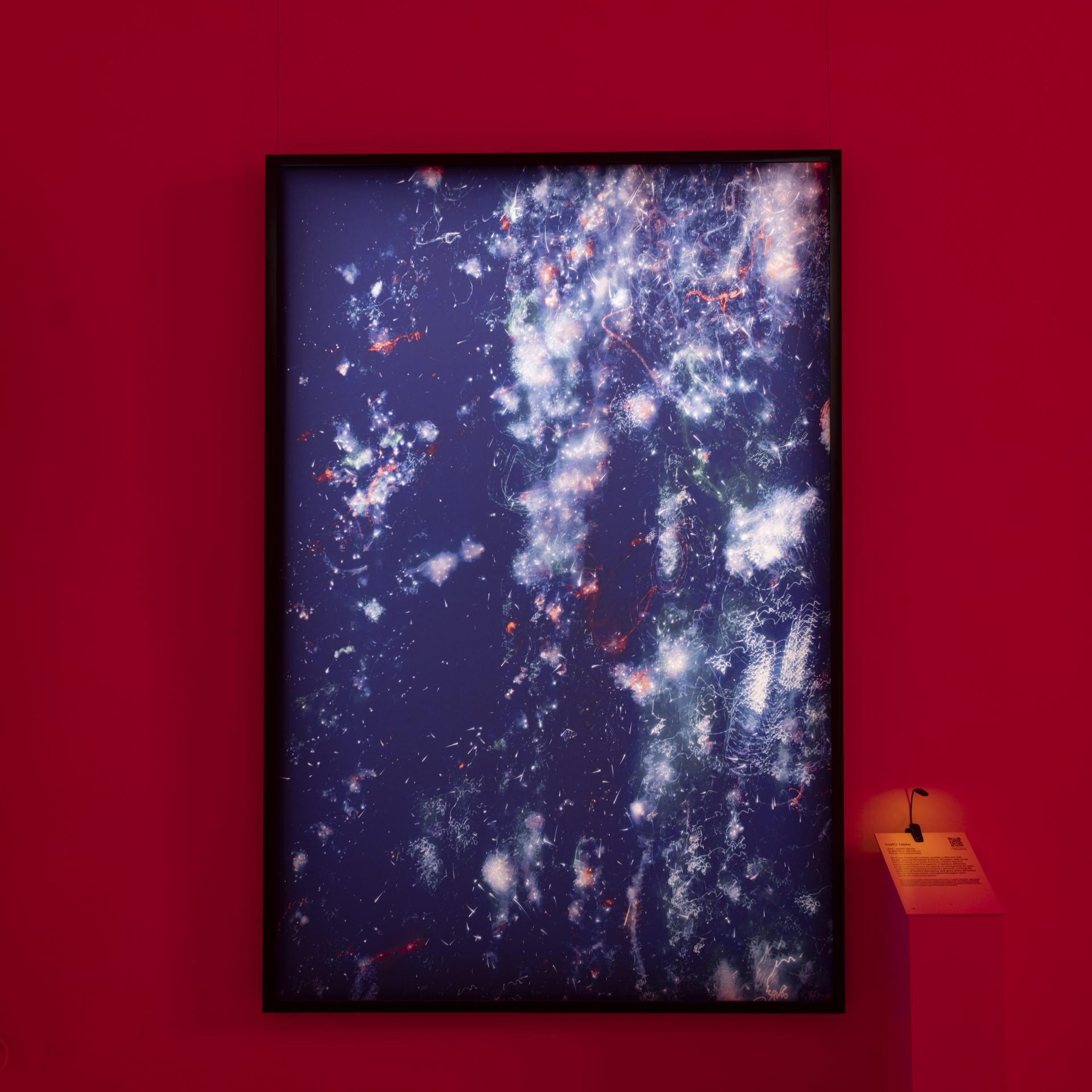
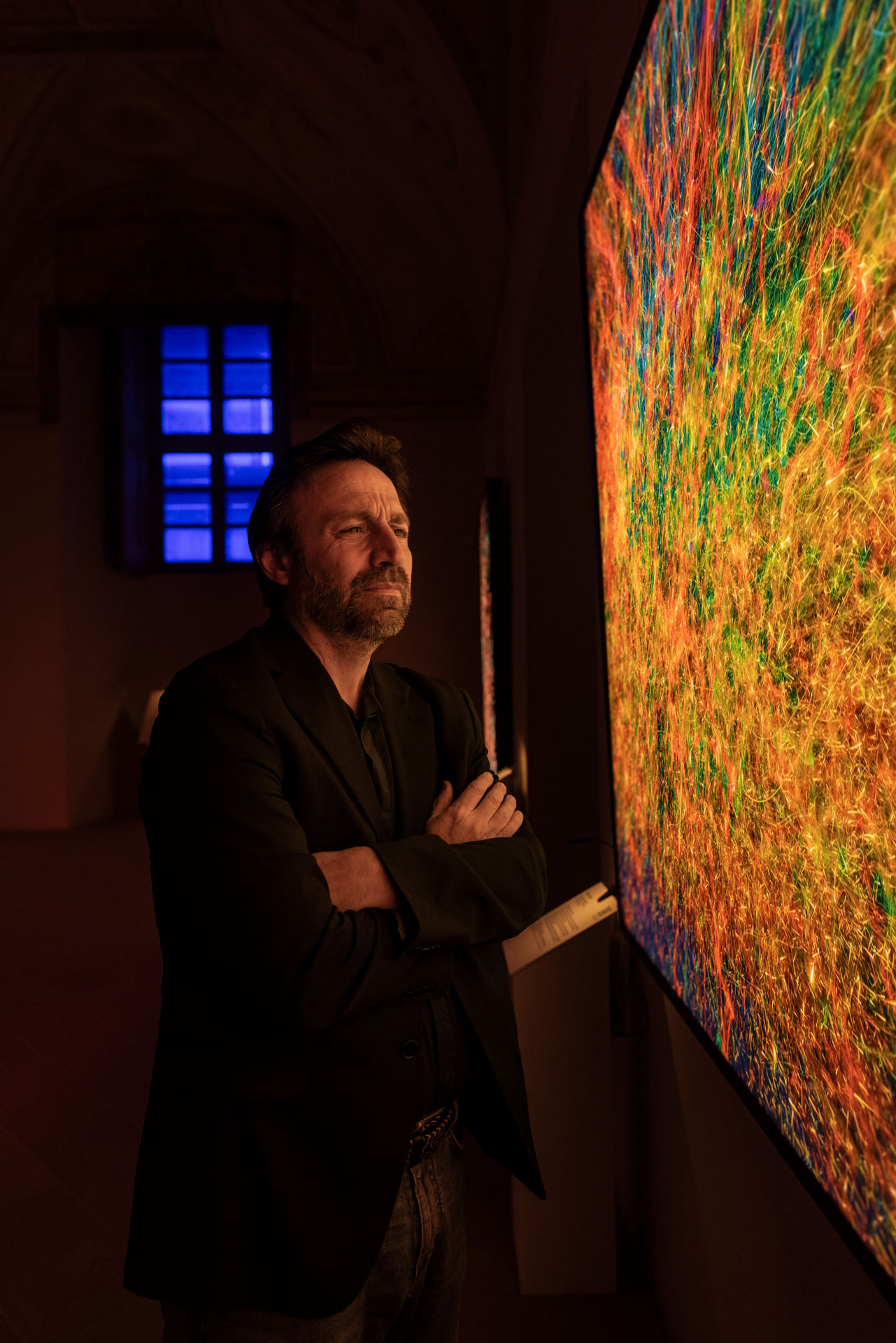
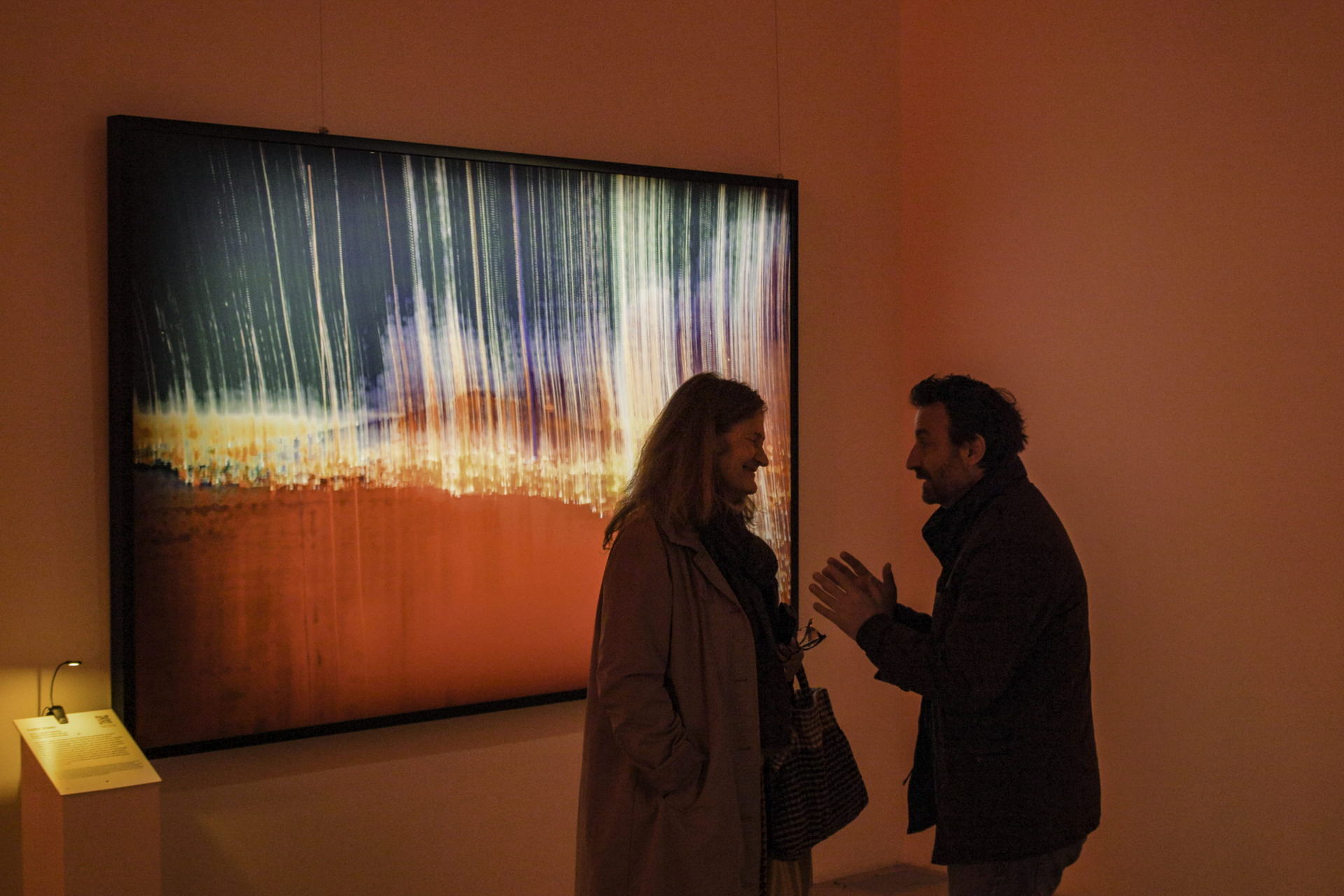
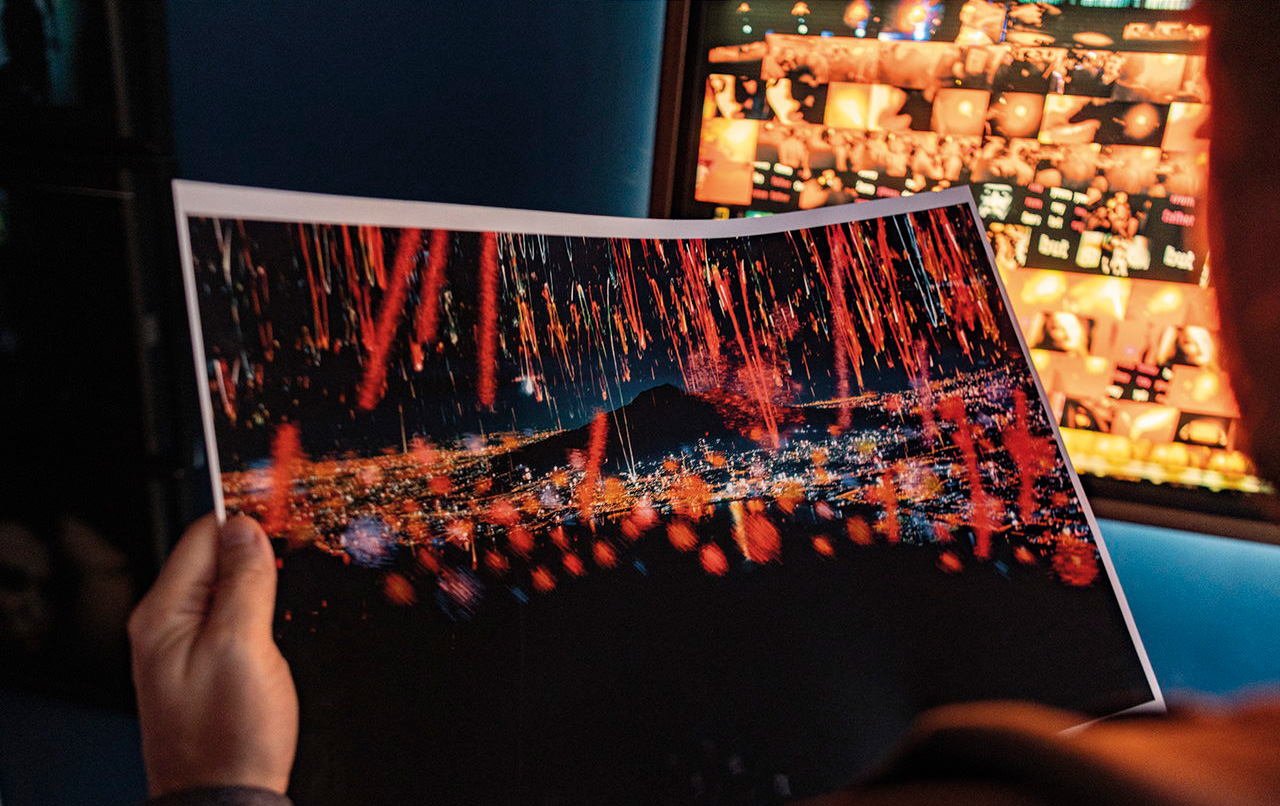
In the grand rooms of the piano nobile of the Real Albergo dei Poveri, Mario Amura presented thirty-three monumental works, some measuring more than five metres. Each exists as a unique edition and will never be produced again in the same dimensions. It is a radical choice: in an age of extreme technological reproducibility, as artificial intelligence calls into question the boundaries between reality and fiction, Amura restores to photography the uniqueness traditionally reserved for painting. The images thus become physical presences, rather than merely reproducible surfaces. Photography takes up the challenge of painting on the terrain of scale, permanence and uniqueness.
Captured light returns as light.
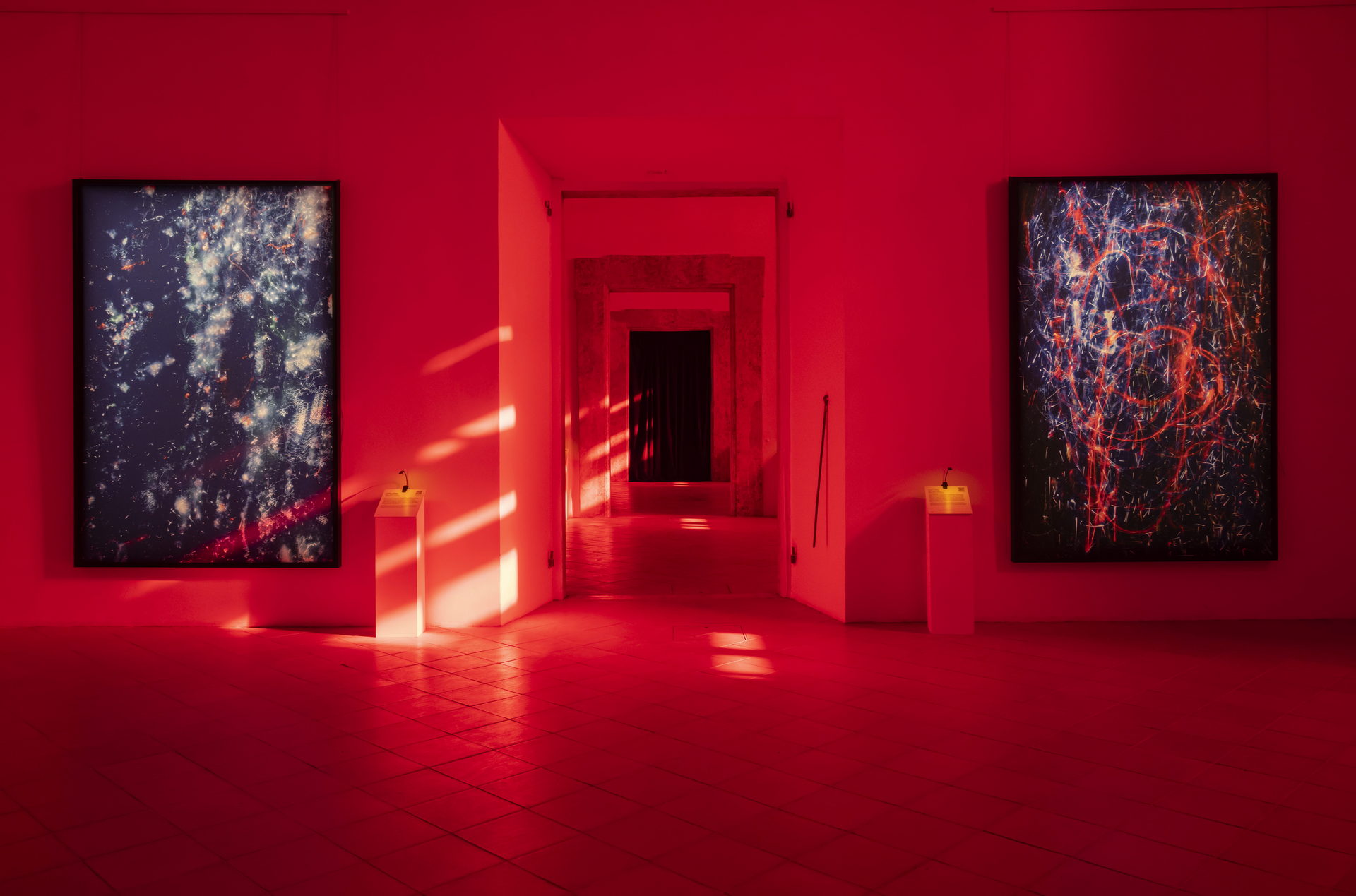
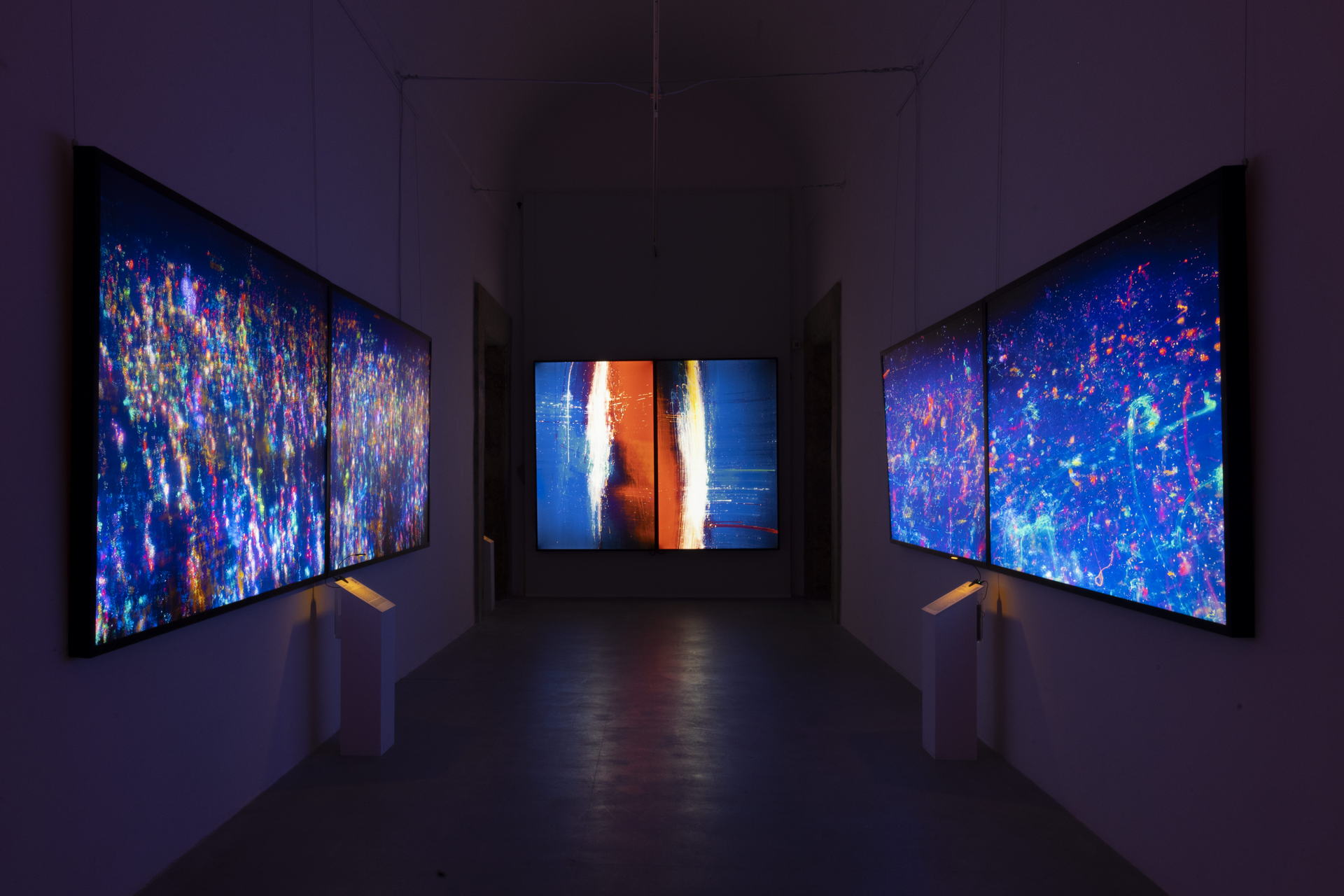
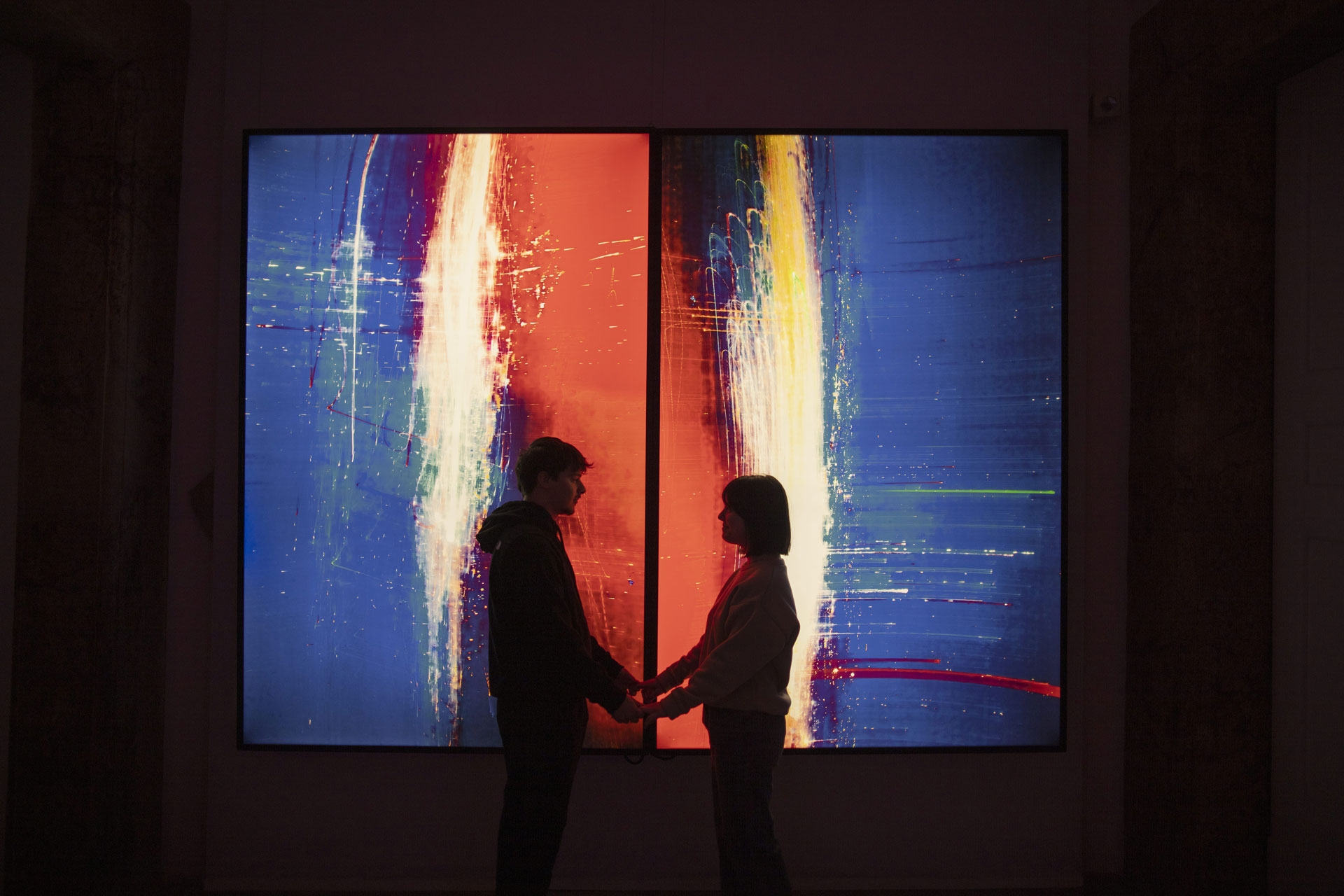
The lightboxes bring the gesture of Napoli Explosion to completion. The light of the fireworks, gathered in the night through long exposures and transformed into image, returns to radiate light into the surrounding space. Photography is no longer merely a surface: it becomes a luminous body, suspended between painting and screen, capable of drawing the eye and transforming the environment that contains it. Within the exhibition route at the Real Albergo dei Poveri, dominated by red, the lightboxes open thresholds of blue light. They interrupt the rhythm, offer the gaze a moment of respite, and guide the transition from one room to the next. Here, light does not simply illuminate the work: it is both its original medium and its presence.
An exhibition design shaped by the light of the Real Albergo dei Poveri.
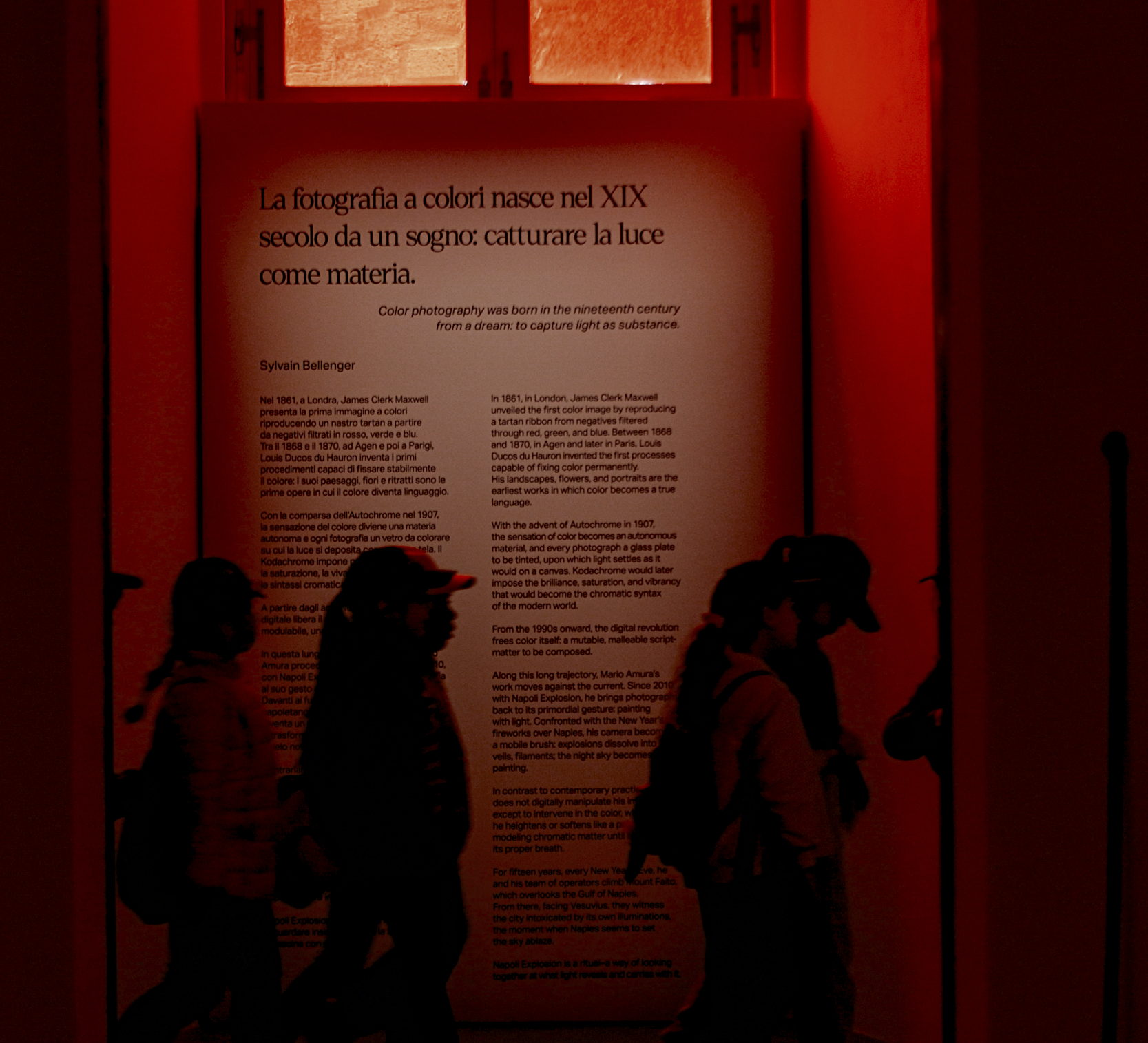
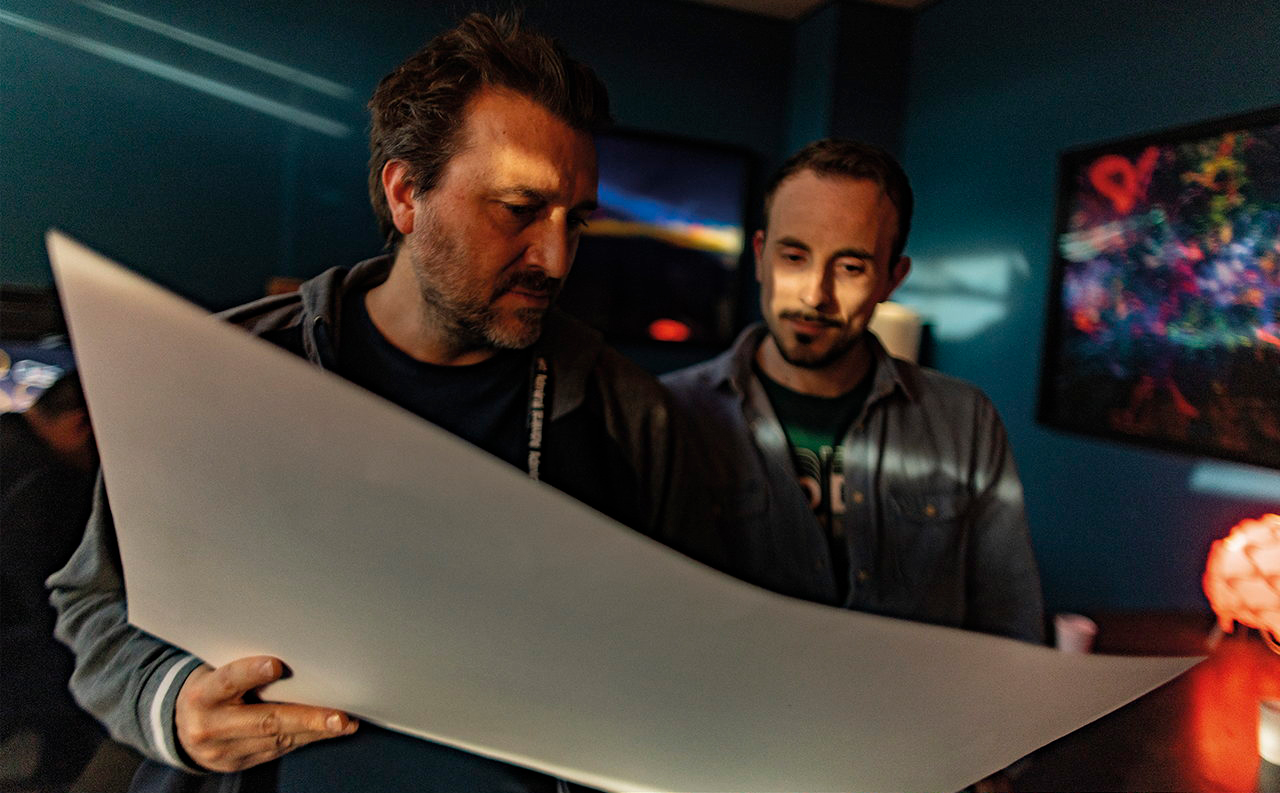
The exhibition design, developed with architect Lucio Turchetta, grew out of a respect for the monumental spaces of the Real Albergo dei Poveri and a desire to engage with their natural light. Red filters applied to the vast windows transform the rooms into an incandescent environment: the red of Vesuvius’s magma chamber, where matter and colour are formed over time; the red of the darkroom, where the photographer attempts to fix an instant; the red of the womb, the first light we perceive. Within this atmosphere, each work is illuminated by precisely focused framing spotlights, individually calibrated to preserve its chromatic intensity and brilliance without allowing light to spill into the surrounding space. The images thus emerge with luminous clarity, immersed in the red that envelops the architecture as a whole.
Sylvain Bellenger gives voice to the works and coherence to the exhibition.
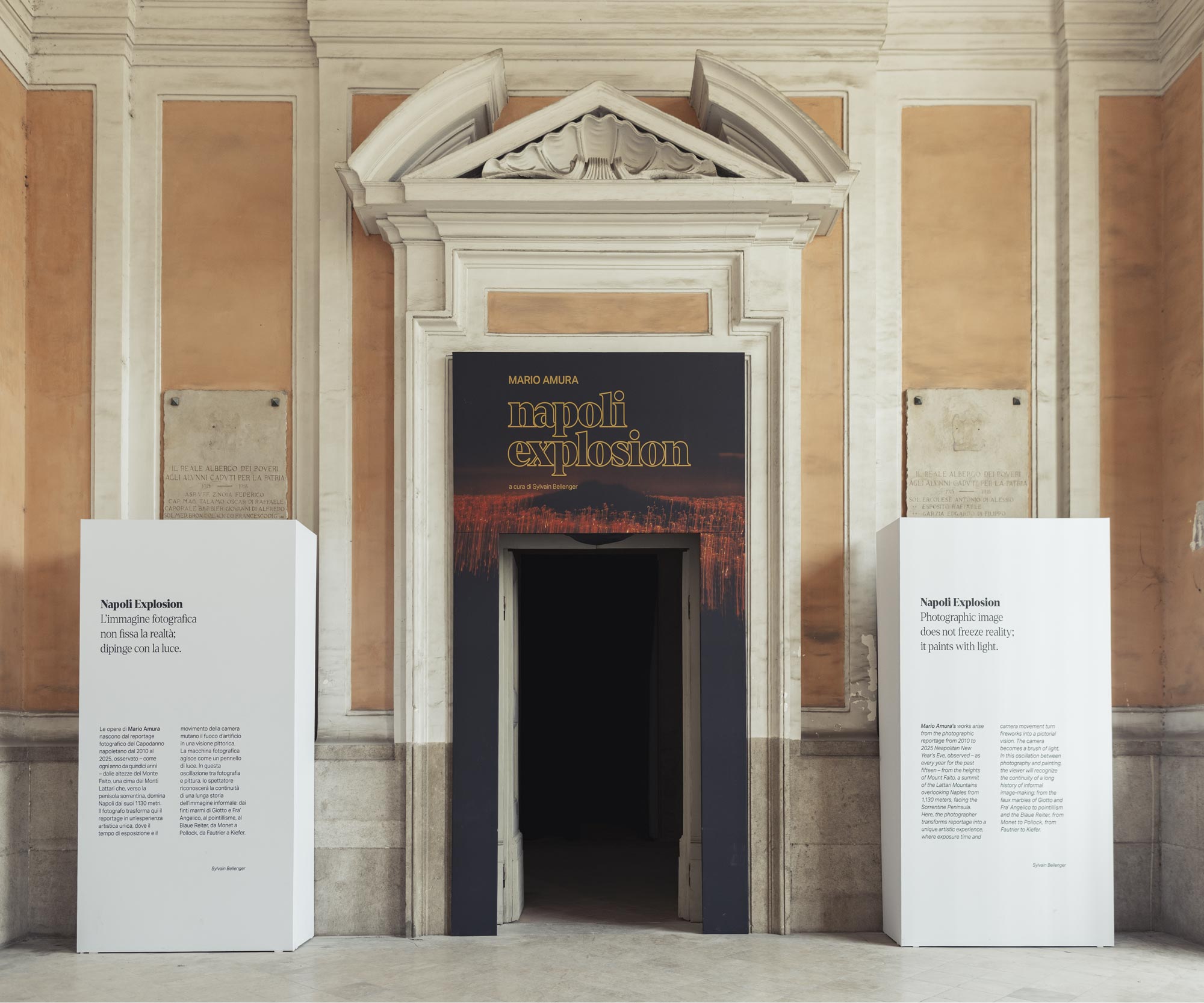
As curator of the exhibition, Sylvain Bellenger shaped the critical narrative that accompanies the entire visitor journey. He wrote the texts devoted to the works and themes of Napoli Explosion, drawing connections between light, time, Vesuvius, photography and collective memory. He also selected and positioned throughout the exhibition reflections by Salvatore Settis and Erri De Luca. The result is a continuous critical thread that lends each image context and depth without ever eclipsing its power: a voice that guides the gaze and accompanies visitors from one work to the next.
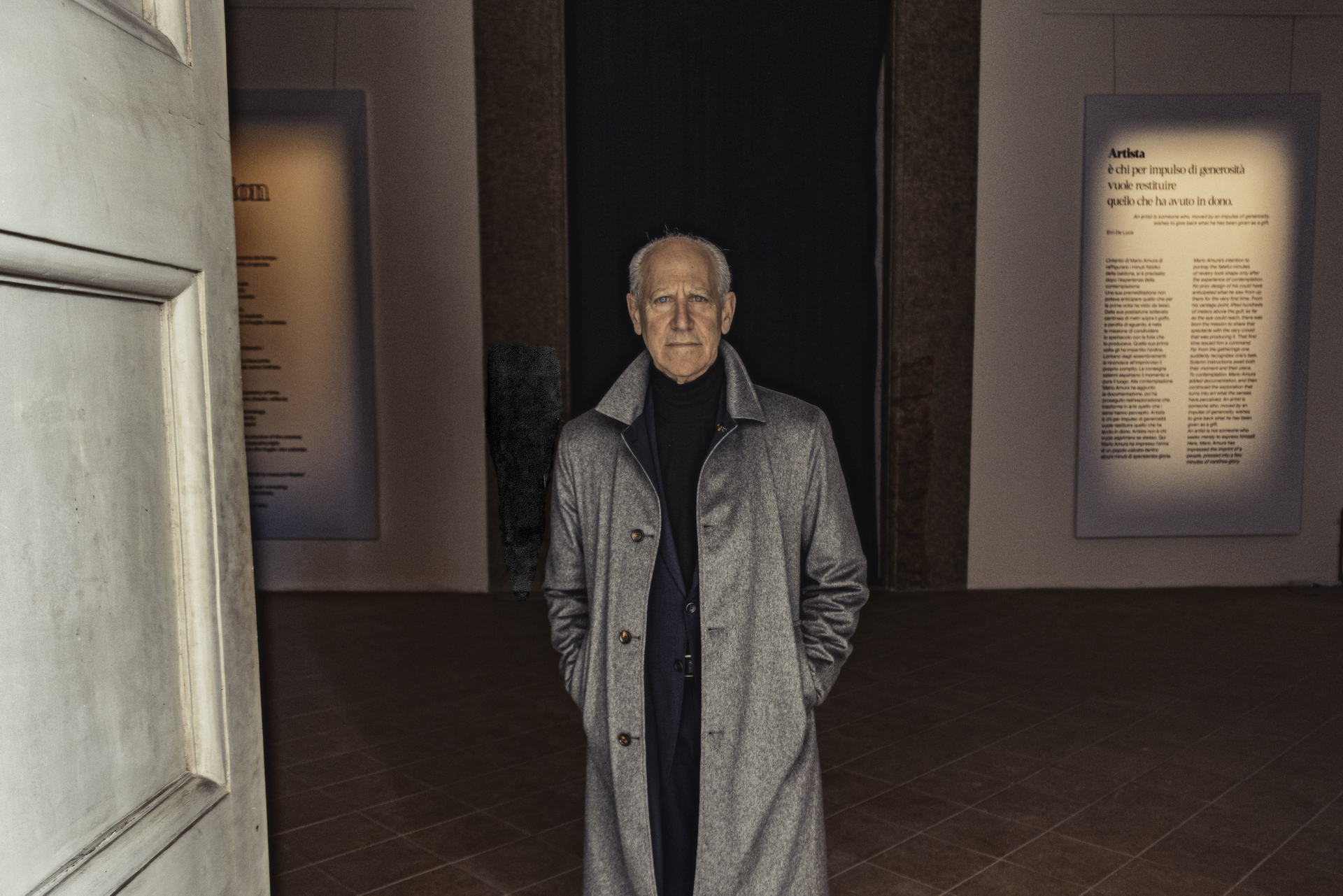
Sylvain Bellenger – Director Emeritus, Museo e Real Bosco di Capodimonte
Napoli Explosion at the centre of international museum attention.
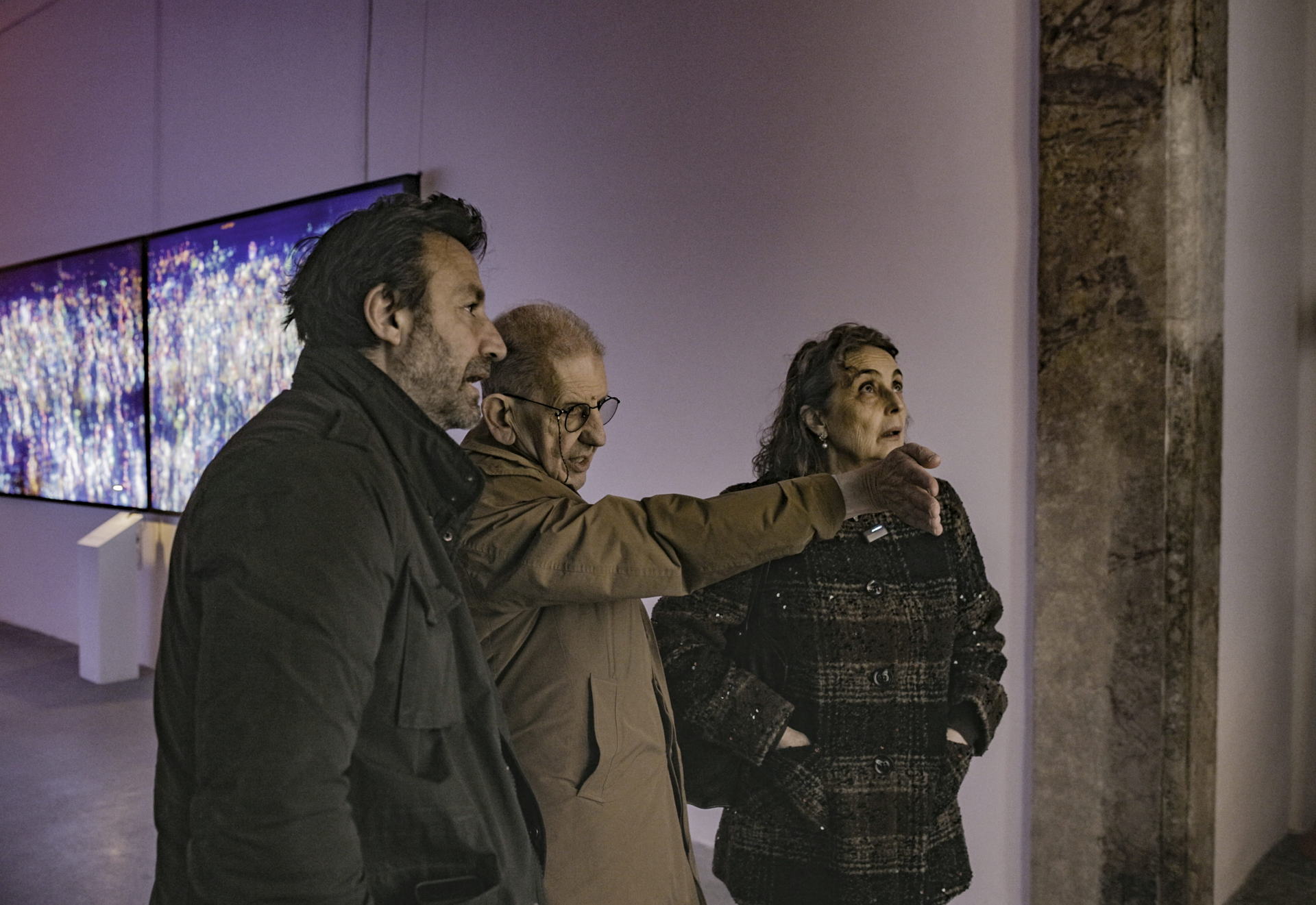
During its five-month run Napoli Explosion was visited by art historians, curators and directors of major international institutions. The Real Albergo dei Poveri also hosted a session of the EDI Global Forum 2026the Fondazione Morra Greco initiative devoted to innovation in museum education and directed by Sylvain Bellenger, bringing together 94 museums and organisations from 23 countries.The programme included a dedicated visit to the exhibition entitled Napoli Explosion: Photography, Popular Culture, Anthropology, Mythology.
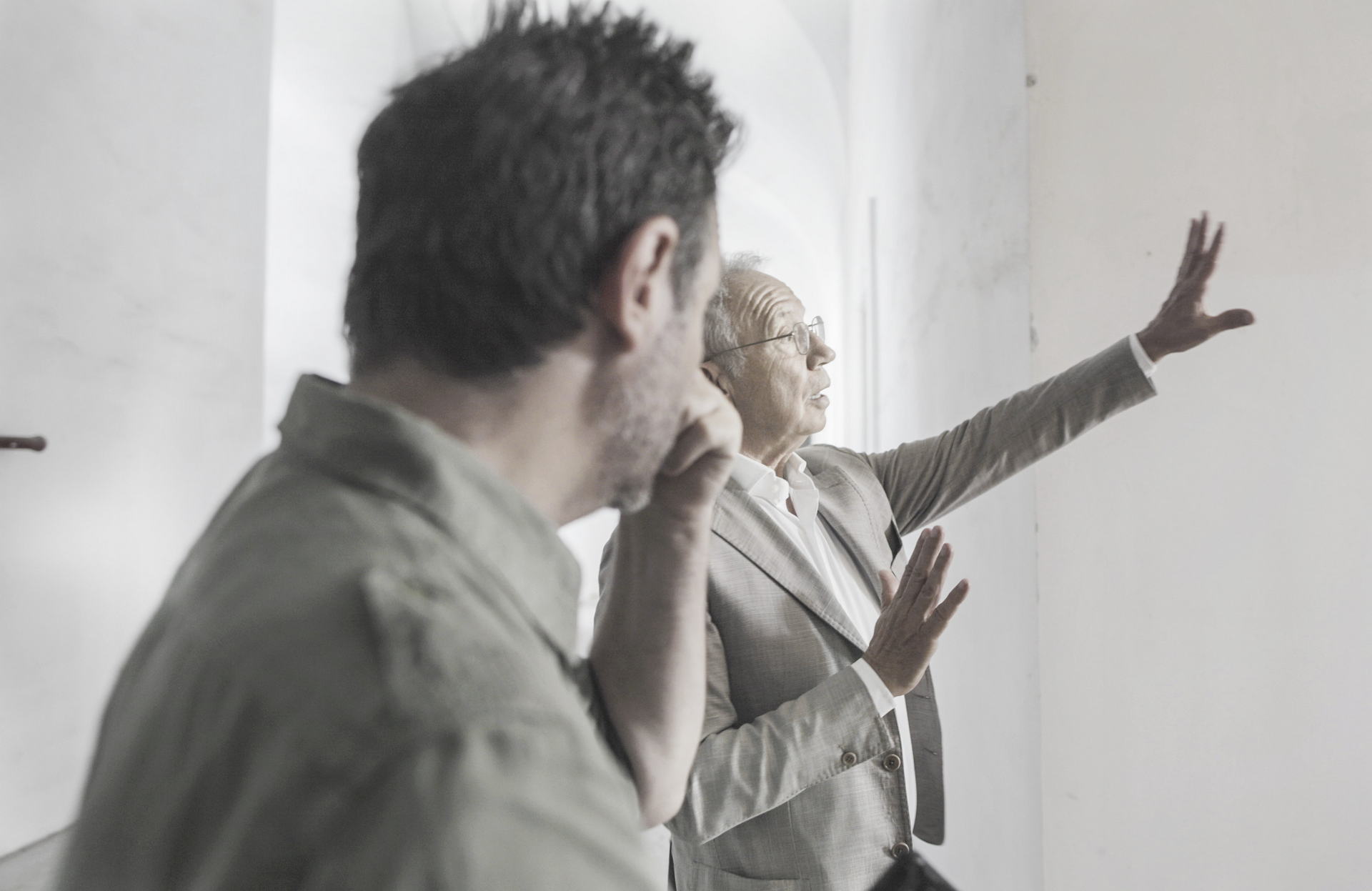
On separate occasions, the exhibition was also visited by Glenn D. Lowry, Director Emeritus of MoMA; Salvatore Settis, President of the Louvre’s Scientific Committee; Dominique de Font-Réaulx, General Curator at the Louvre and one of the foremost scholars of the relationship between painting and photography; and Chiara Rostagno, Deputy Director General of the Pinacoteca di Brera. These were four distinct encounters, each unfolding through an extended dialogue with the artist and a close examination of the works.
Glenn D. Lowry – Director Emeritus, MoMA (New York)
Mario Amura with art historian Salvatore Settis and Professor Michela Sassi
Dominique de Font-Réaulx, General Curator at the Louvre, with Mario Amura
The wonder of more than one hundred thousand gazes.
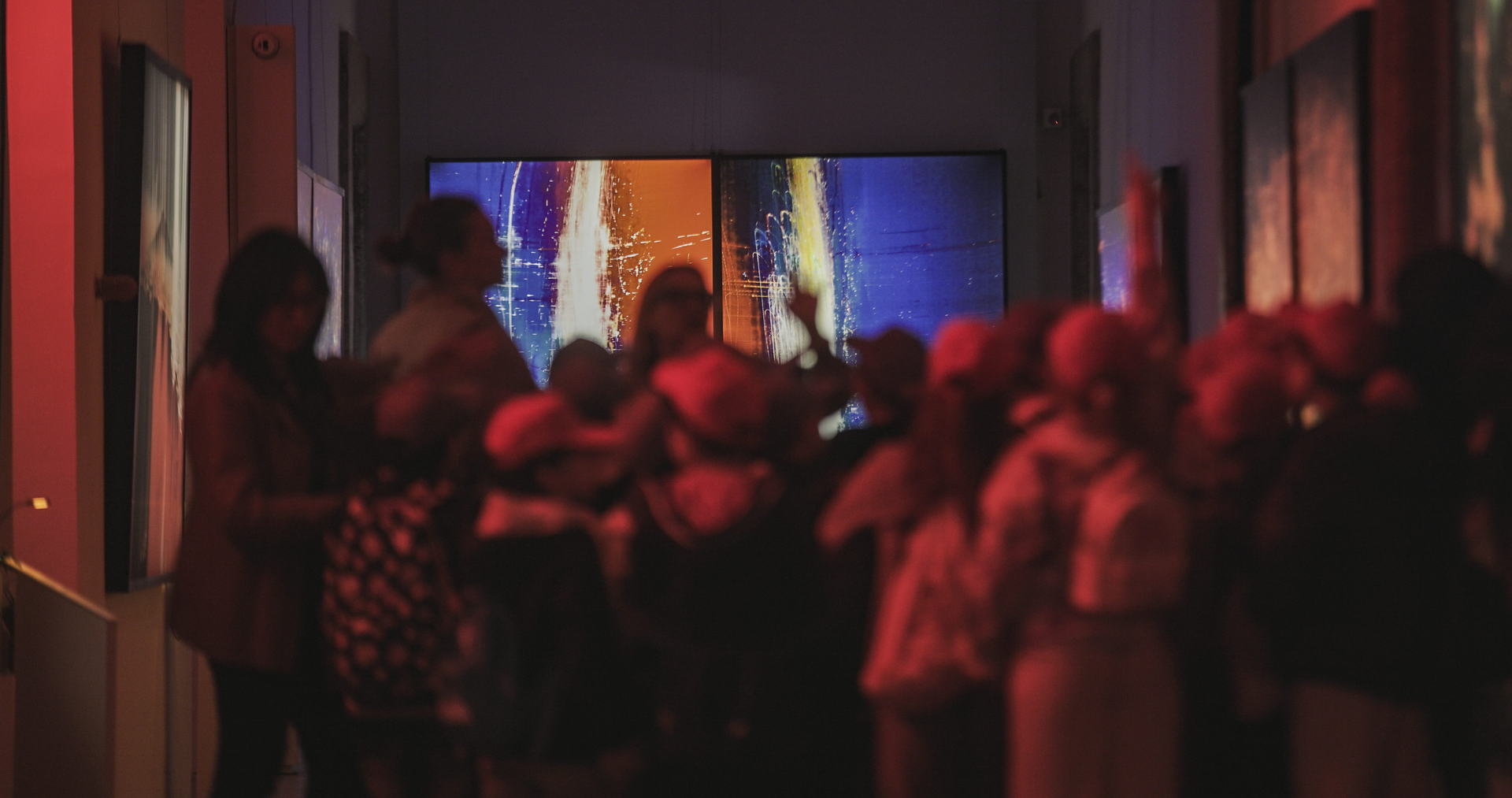
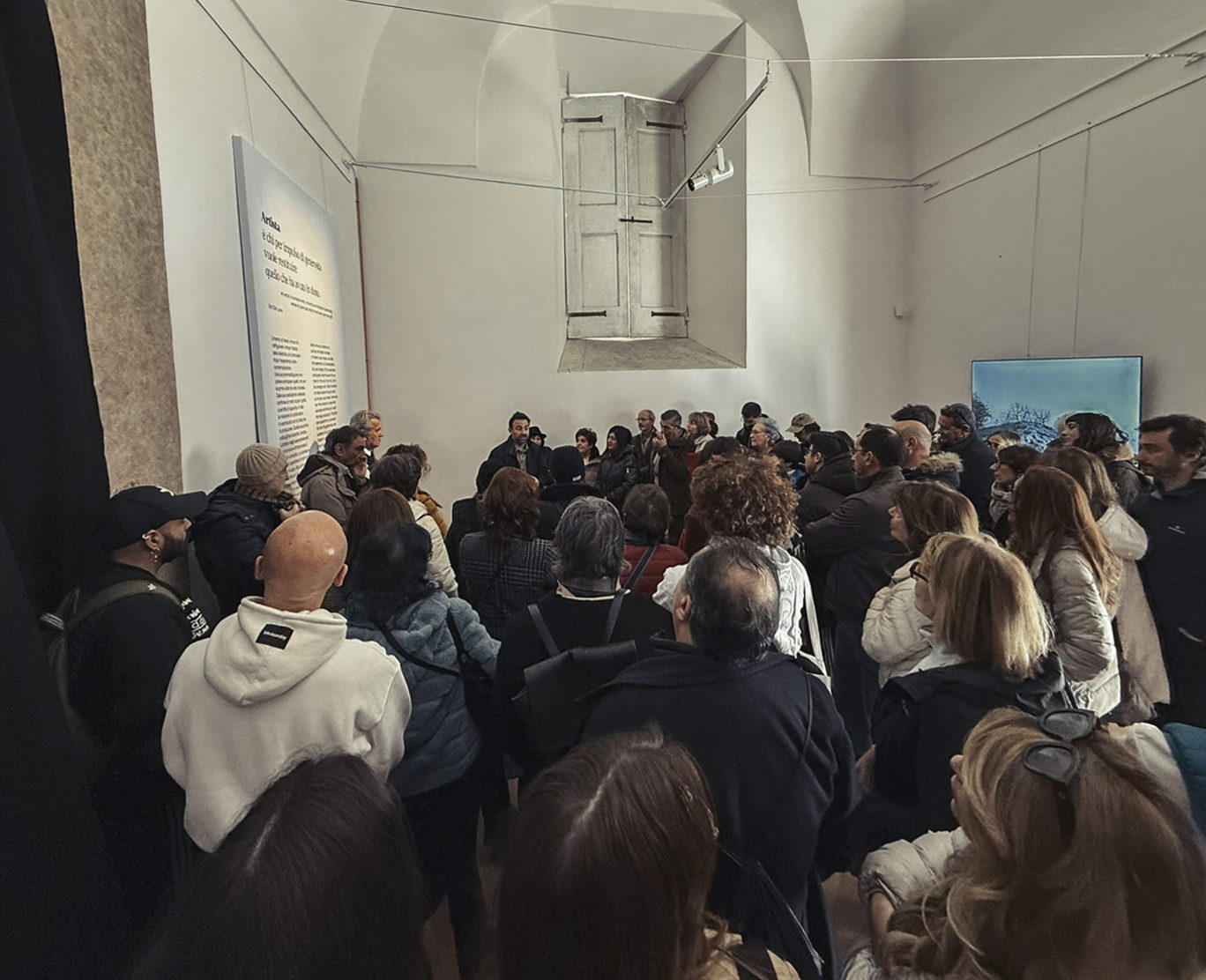
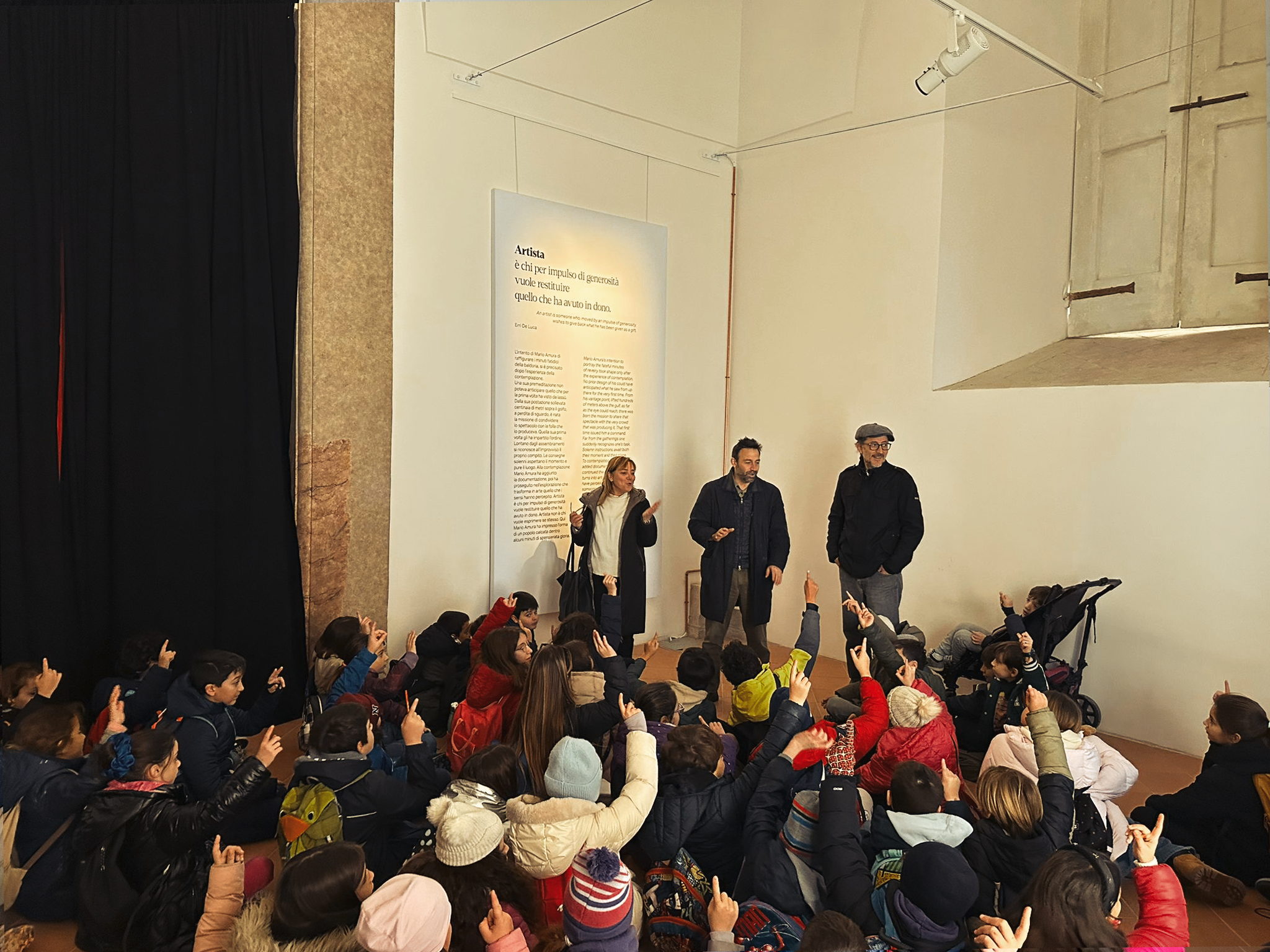
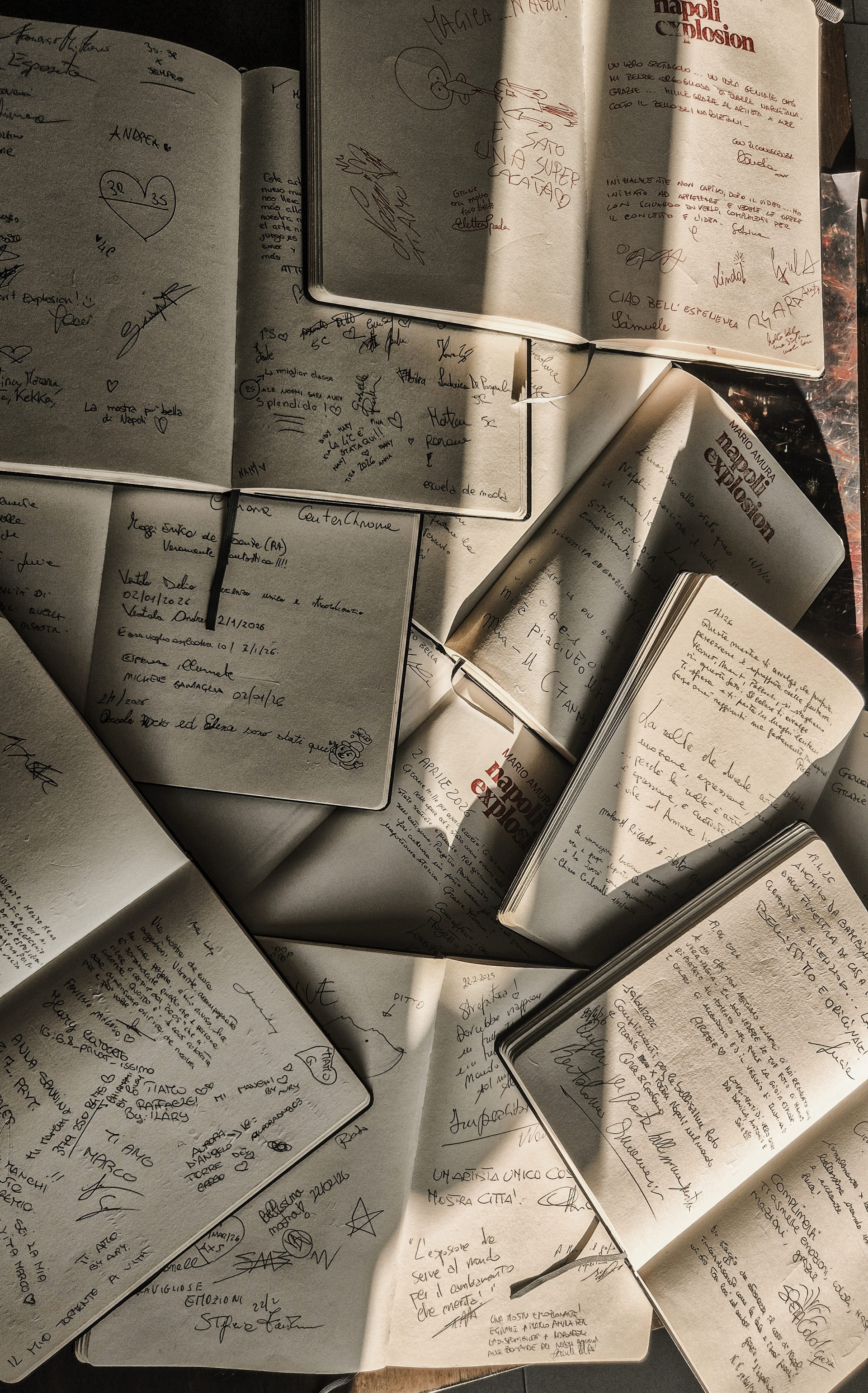
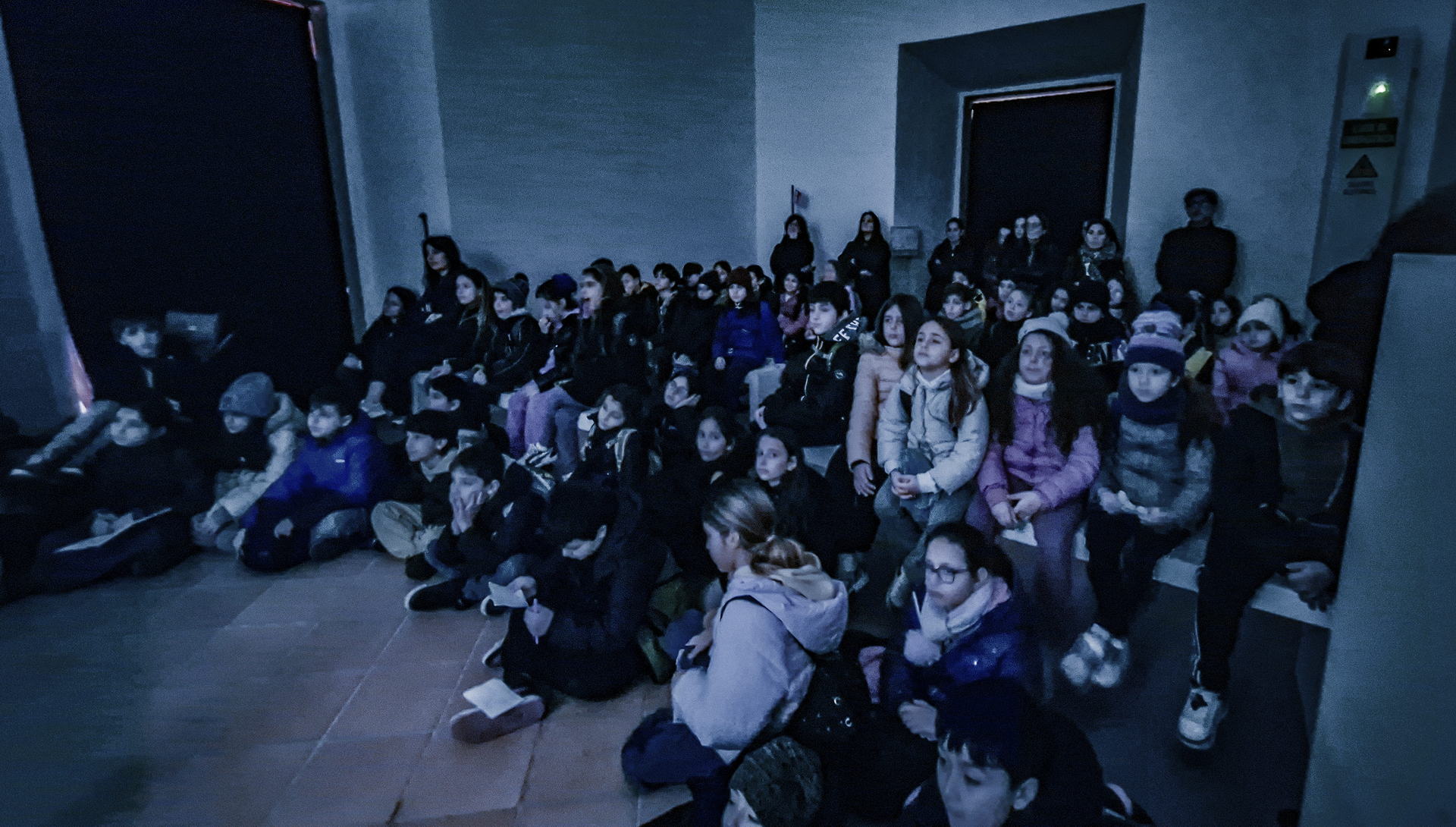
Over the course of more than five months, and following two extensions, more than one hundred thousand people passed through the rooms of the Real Albergo dei Poveri. Among them, at least forty thousand students, from primary school to university, encountered Napoli Explosion as an experience of discovery, wonder and participation. Nine guest books were filled with more than twenty thousand messages, drawings and expressions of appreciation. These are not merely figures: they are the trace of an exhibition capable of speaking to different generations and transforming each visit into a shared memory.
NYA – Now Your Art:
every visitor creates their own Napoli Explosion.
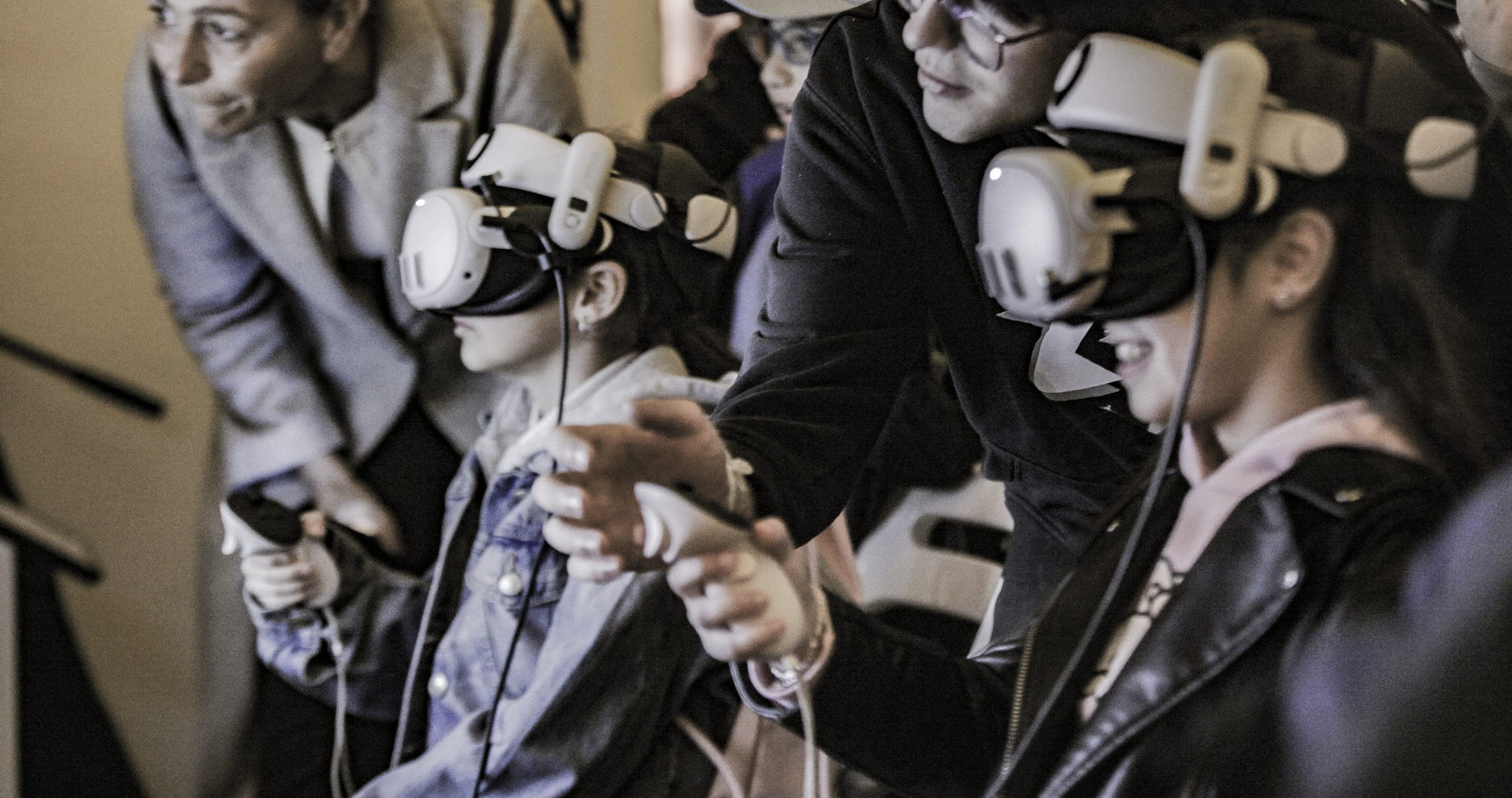
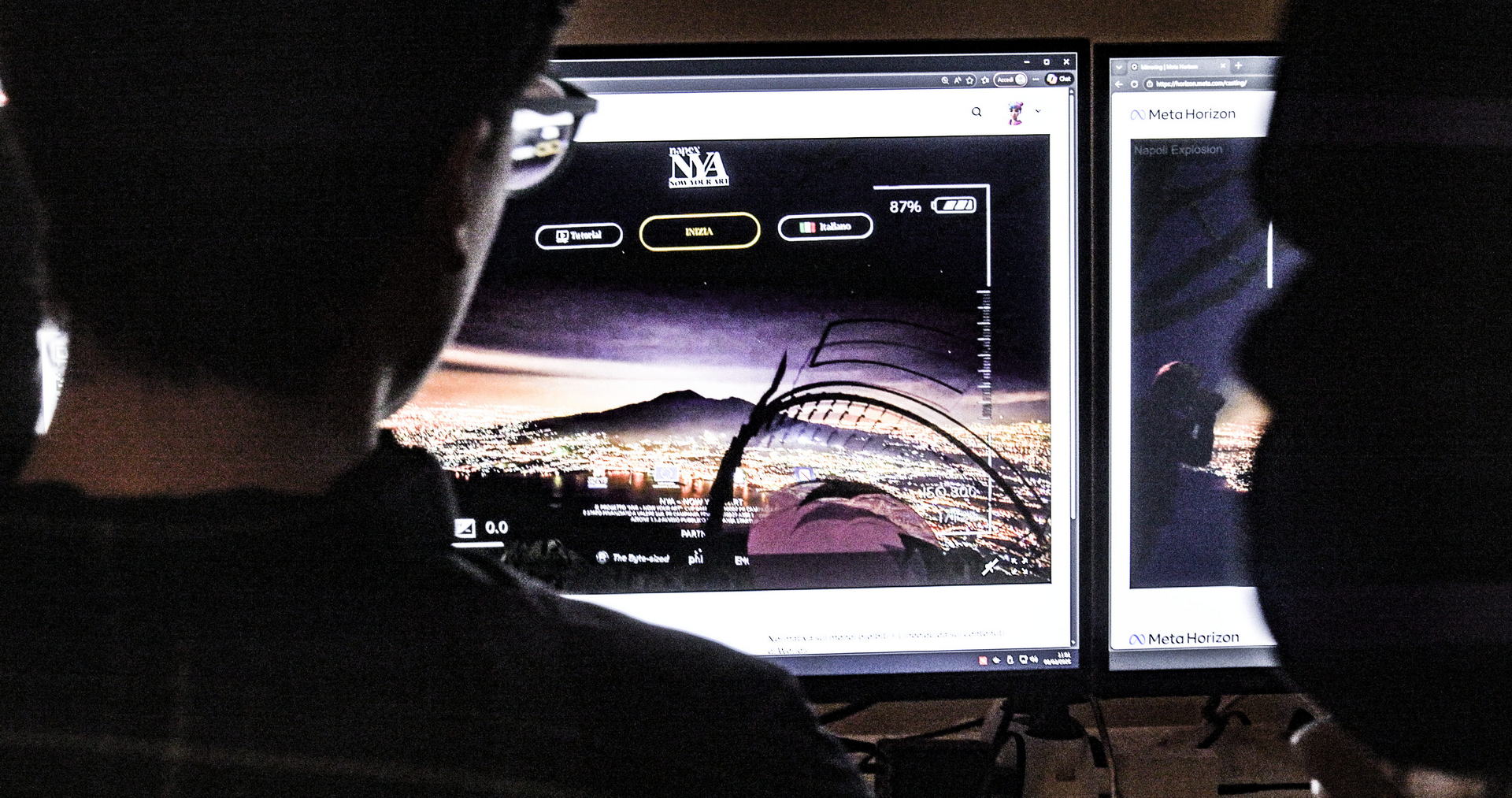
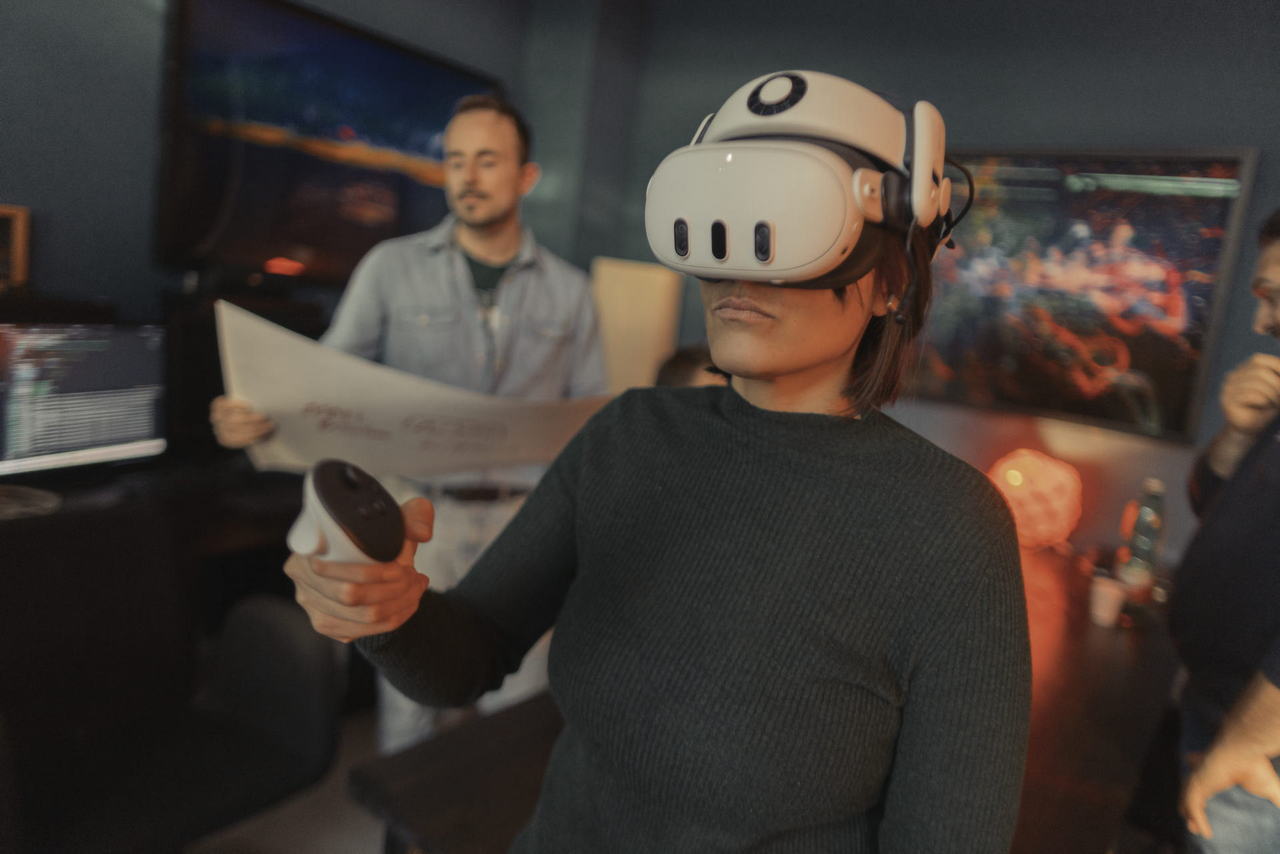
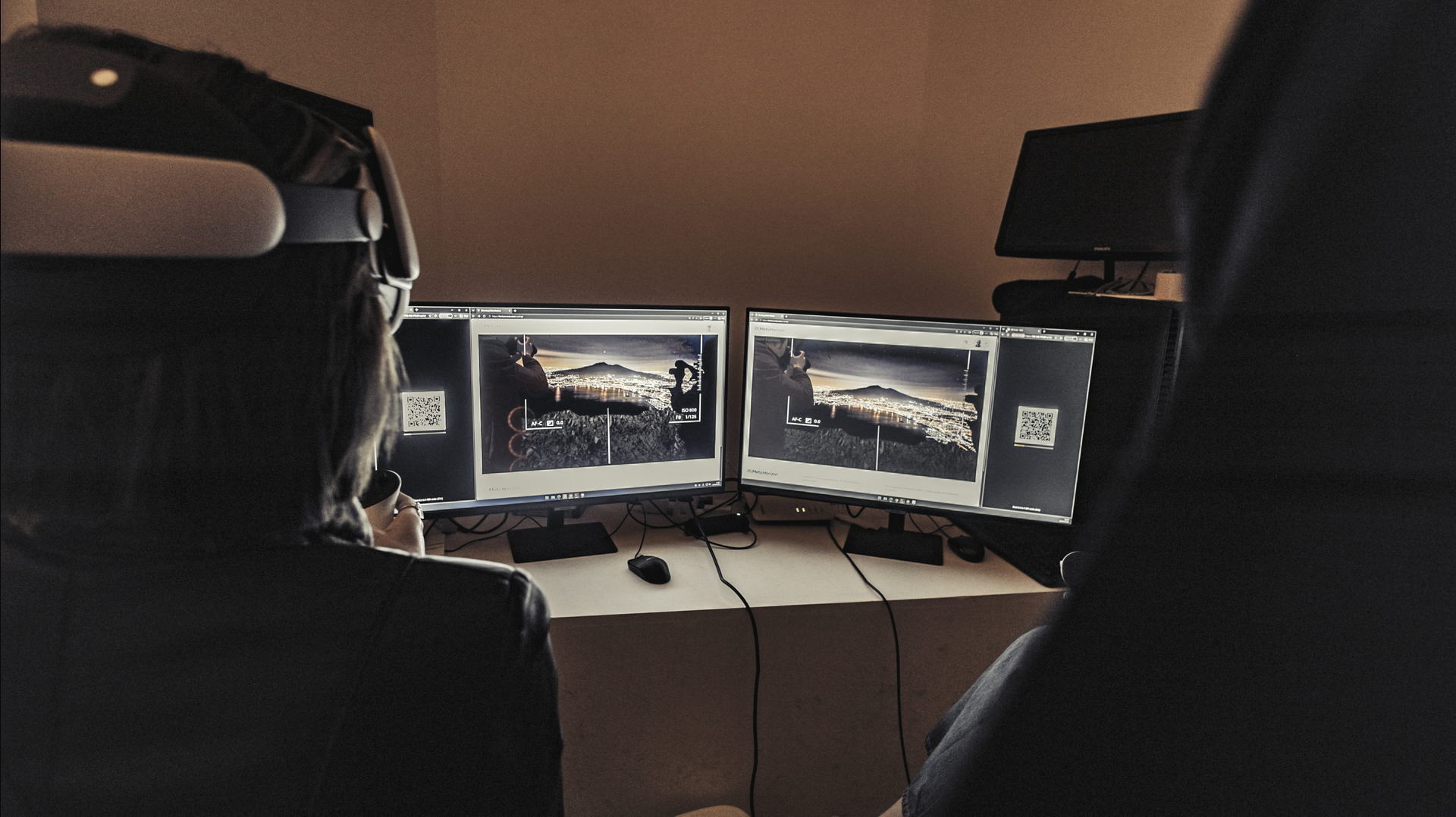
By wearing the virtual reality headset, visitors join the Napoli Explosion on Monte Faito just moments before midnight on 31 December. Before them, the Gulf of Naples ignites around Vesuvius. Holding a virtual camera in their hands, they can move within the scene and transform the gesture of the hand and the light of the fireworks into their own unique work. During the exhibition at the Real Albergo dei Poveri, more than 11,000 works: a vast collective archive destined to become an autonomous exhibition.
Mario Nucibello and Angelo Faella during the development of NYA
Cristina Ascione, Napex Team

Fifteen Years of Napoli Explosion, told by those who lived it.
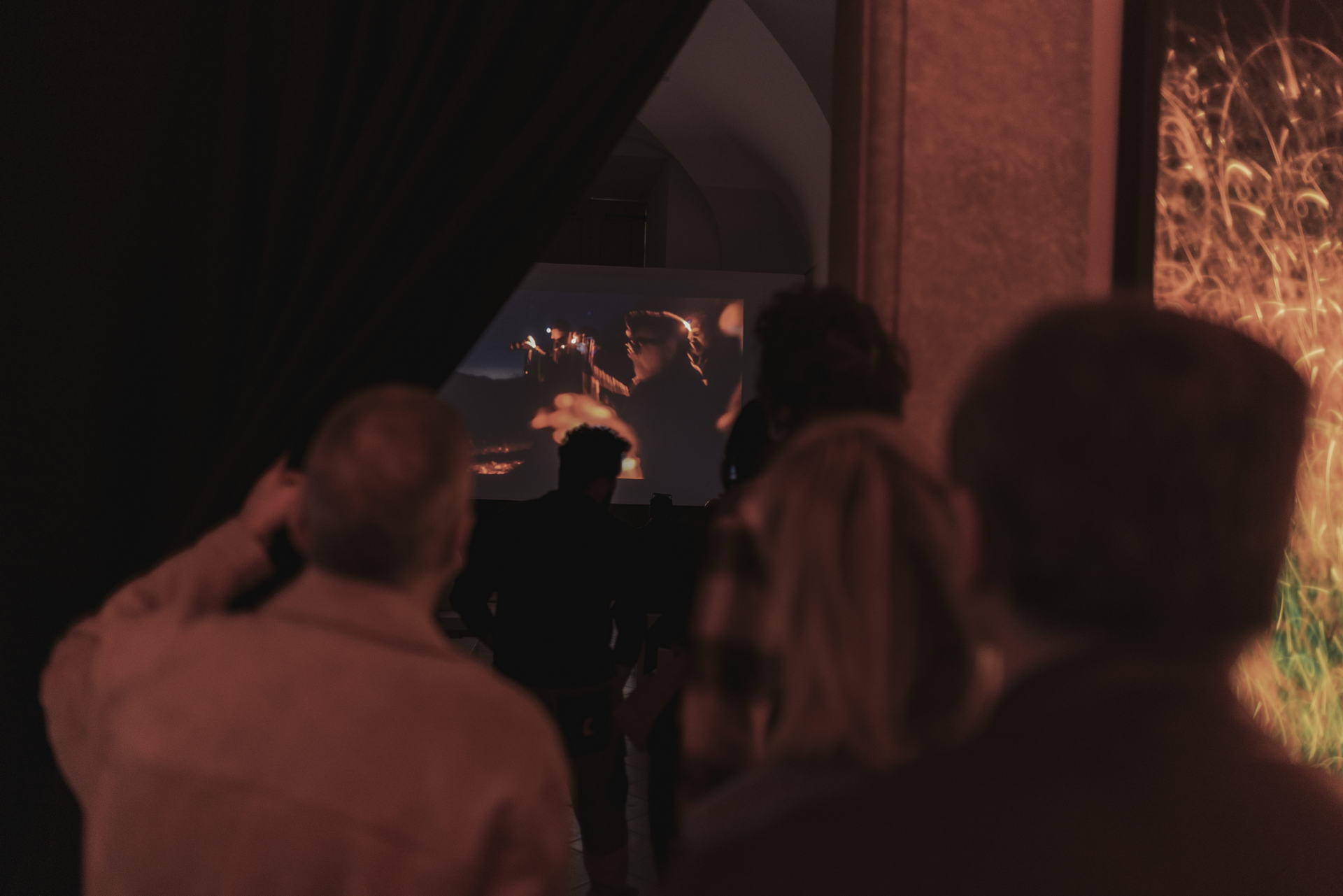
In the cinema room, the documentary Napoli Explosion the key stages of fifteen years of ongoing research: from the earliest intuitions concerning the relationship between the New Year’s Eve ritual and Vesuvius, to the expeditions to Monte Faito and the creation of the works and exhibitions. The narrative brings Mario Amura’s voice together with those of art historian Salvatore Settis, curator Sylvain Bellenger, and several members of the crew, including Serenella Iovino, an ecocritical theorist and scholar of environmental cultures, and Serafino Murri. It also features Bruno Di Marino, a historian of visual culture and audiovisual languages.
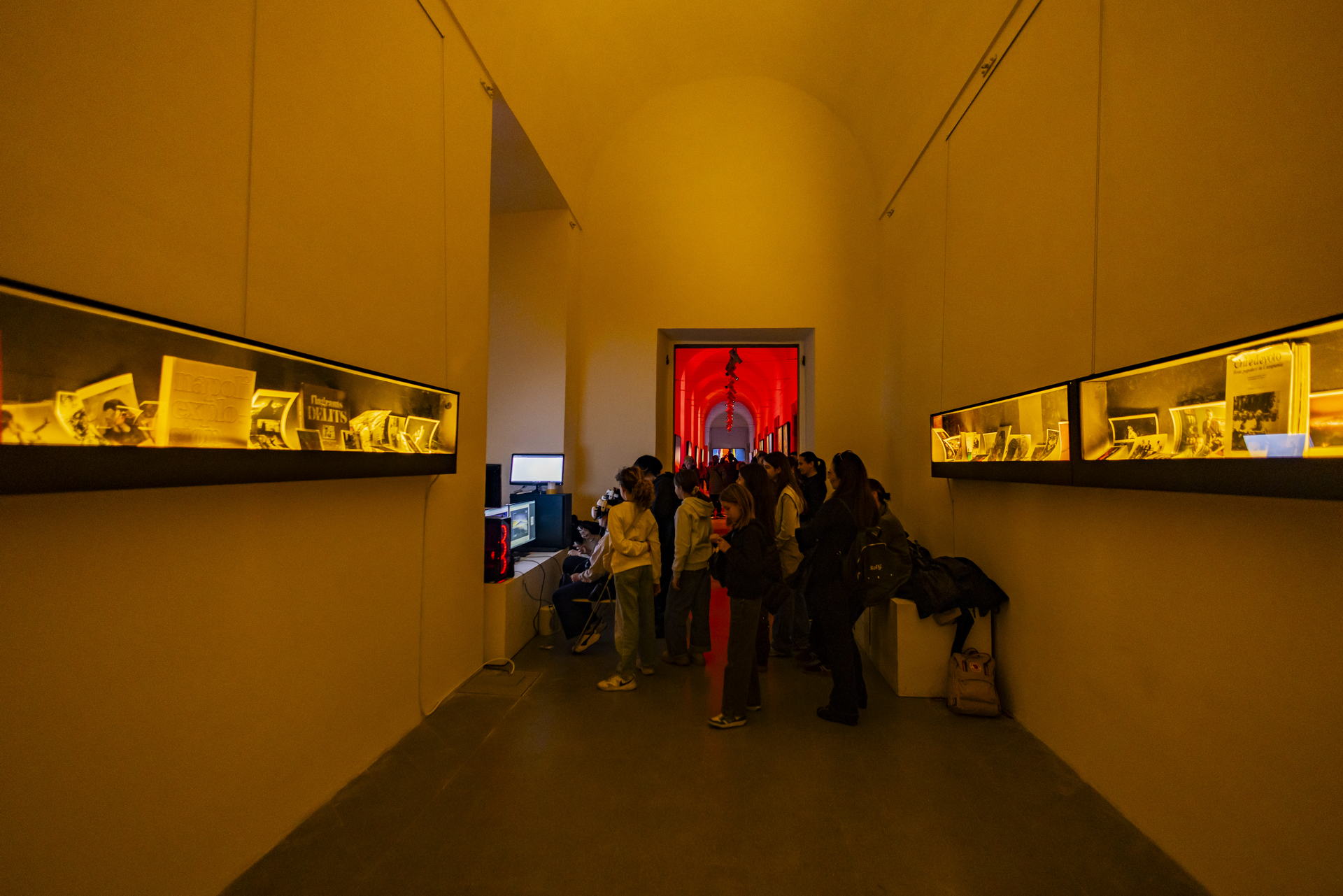
The yellow room preserves the genealogy of Napoli Explosion.
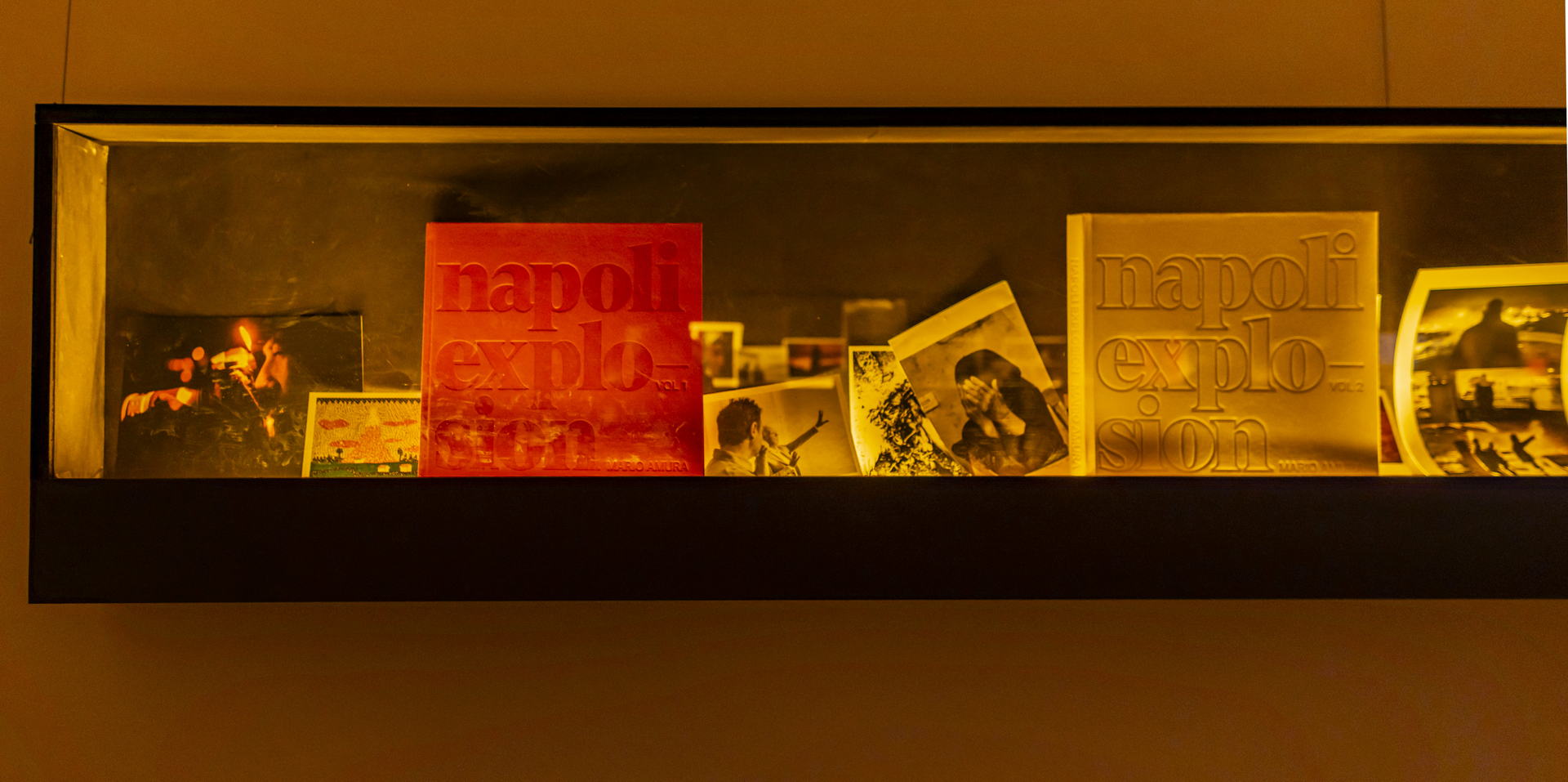
In the Yellow Room, alongside NYA – Now Your Art, illuminated display cases bring together photographs that trace the long genealogy from which Napoli Explosion emerged. This is not a biography separate from the project, but the account of an artistic investigation developed over time: an enduring attention to light, movement, duration, and the possibility of transforming a real event into an image. From Mario Amura’s earliest experiments to the nights spent on Monte Faito, the display reveals how Napoli Explosion grew out of a way of seeing shaped over the years and continues to evolve today.
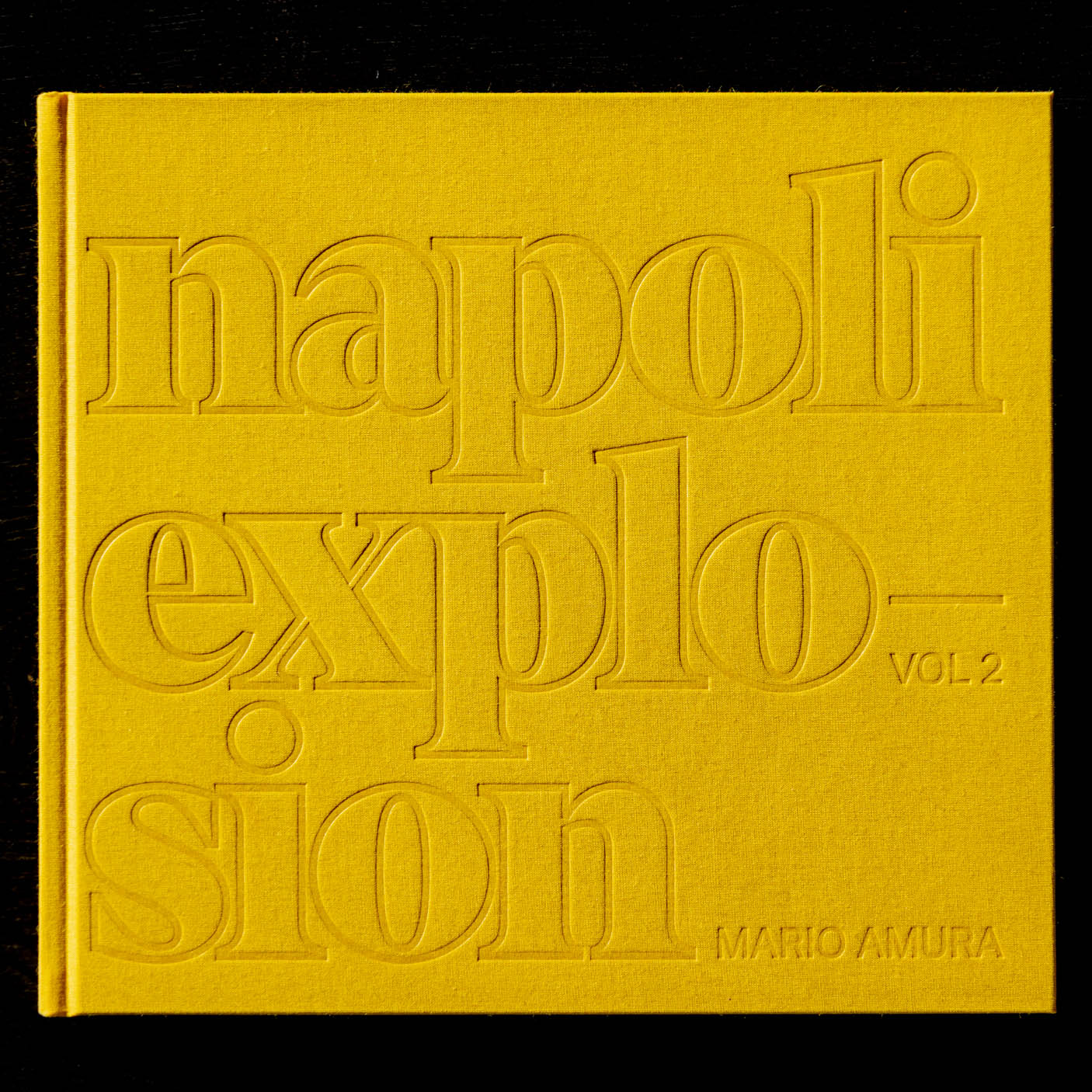
Napoli Explosion Vol. 2: The Exhibition Artbook
Published on the occasion of the exhibition at the Real Albergo dei Poveri, Mario Amura: Napoli Explosion vol. 2 continues the publishing project begun with the first volume, produced for the exhibition at the Museo e Real Bosco di Capodimonte. The artbook brings together 92 photographic paintings created over more than fifteen years of research, accompanied by texts by Sylvain Bellenger, Erri De Luca, Serafino Murri and Salvatore Settis. Signed by the artist and limited to 500 copies, the volume documents a new chapter in the evolution of Napoli Explosion.
