Mario Amura’s «Napoli Explosion» project, on view at Naples’ Real Albergo dei Poveri
by Bruno Di Marino
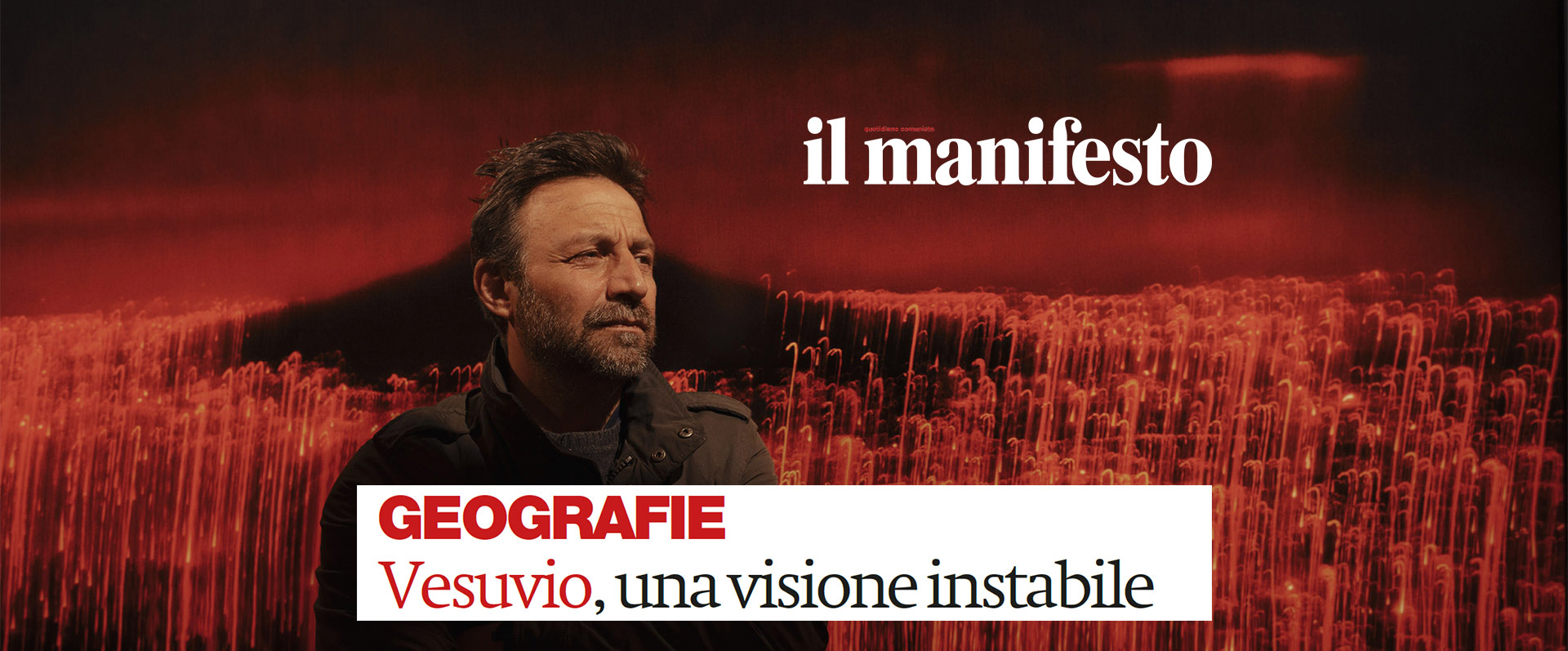
In the nineteenth century, when photography was still in its infancy, many photographers turned to “Pictorialism” in order to overcome their inferiority complex vis-à-vis the visual artists, imitating the subjects and stylistic conventions of painting. In the early years of the twentieth century, once photography had been accepted as an art form, there was no longer any need to disown its own identity. And yet, with the historical avant-gardes, many artists experimented with the photographic medium, producing images that were non-realistic, if not overtly abstract. It is to this tradition, in some way, that Mario Amura belongs. Since 2011, he has been pursuing his project Napoli Explosion, currently on view at the Real Albergo dei Poveri in Naples (through March 8).
FOR FIFTEEN YEARS Amura, together with a group of friends, has documented New Year’s Eve in Naples from the summit of Monte Faito, recording its extraordinary spectacle of light through the simple use of exposure time and camera movement. Over the years, this has yielded thousands of images which, when presented on a large scale, fascinate the viewer, left spellbound before photographic compositions that seem like paintings. As the curator Sylvain Bellenger (former director of the Museo di Capodimonte) explains, “these images move beyond the descriptive dimension to assume autonomous, abstract, painterly forms. What emerges is a reflection on the relationship between light, time, and perception—one that places photography back at the center as a cognitive language, capable of uniting artistic intuition and scientific analysis.”
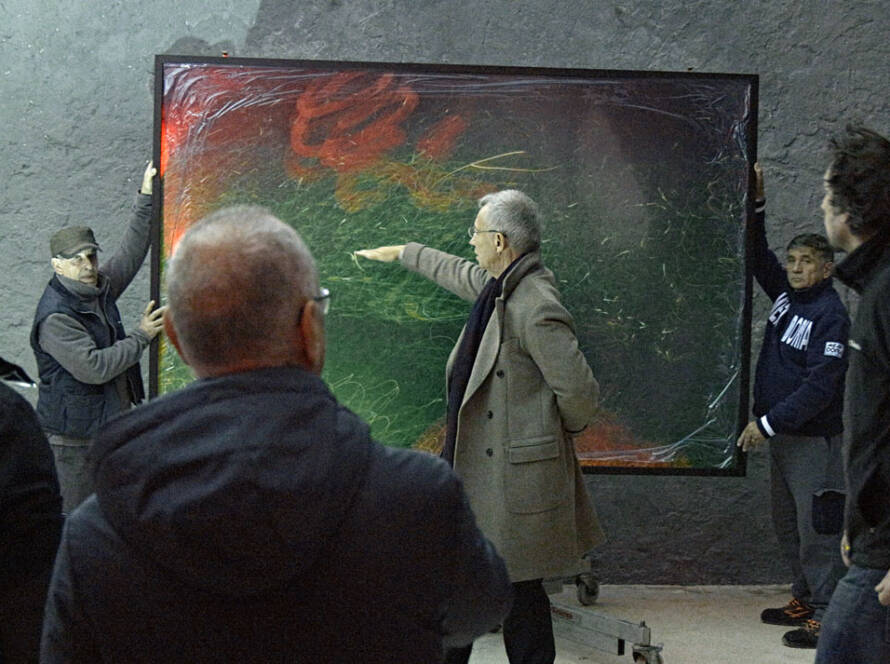
The works—around thirty in all—are displayed in one wing of the immense palace, currently under restoration (one of the largest in Europe). In a few cases they are mounted on light boxes, but for the most part they are high-resolution prints, illuminated with impeccable care. After all, Amura, a graduate of the CSC, also worked in the past as a director of photography for filmmakers such as Sorrentino and Guadagnino. The result is that the texture of each work asserts itself before the viewer with an unprecedented material and chromatic density. At times, one can make out the silhouette of Vesuvius rising above the Bay of Naples, seeming to catch fire at the stroke of midnight; at others, luminous trails, flourishes, arabesques, fields of color, and so forth are inscribed upon the surface, giving rise—after the initial sensation of astonishment—to a reflection on the relationship between realism and abstraction.
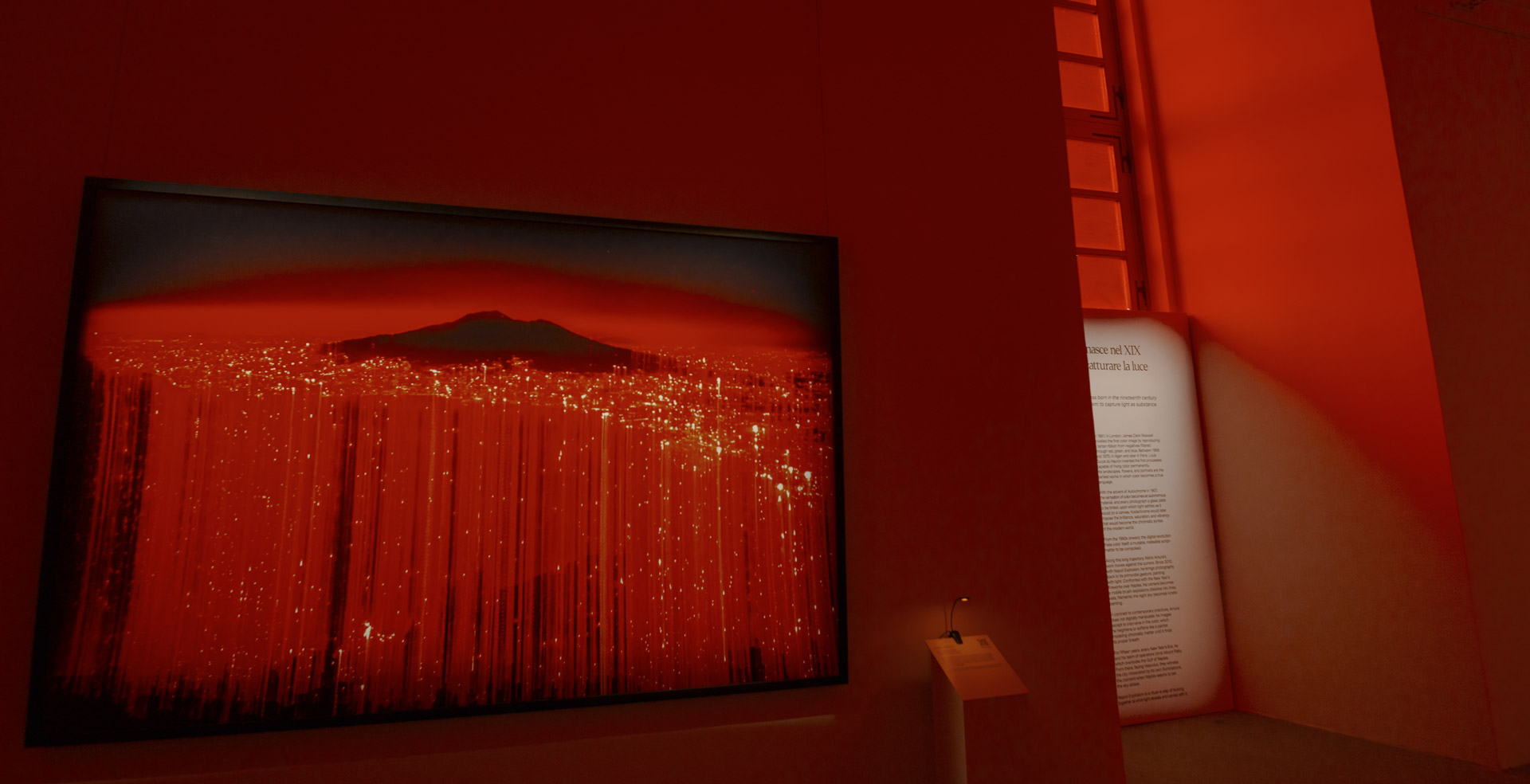
WHAT ARE WE LOOKING AT? A reproduction that has a real-world referent of its own, or a representation without an analogon? What sensation—even on the level of perception—does one experience before a composition of this kind? Once it has been established that these are photographic images, or, if one prefers, works that incorporate light within themselves (but that are also the result of precise and calculated movements of the apparatus), one does not feel any more reassured about the nature of these images. And why should one, for that matter, given that today the digital has rendered the status of any image radically ambiguous, and the gap between the true and the false has become constitutive and structural, indeed almost intrinsic to the work itself? In fact, the very status of the photographic image is founded upon a fundamental semiological instability, since it is, to use Peirce’s terms, a mixture of index and icon. What appears, then, is a luminous trace encoded as an illustration.
“From the very beginning, I tried to tell the story of the bond between the people of Naples and Vesuvius through a kind of contrappasso, immortalizing the city as it explodes while the volcano remains silent. Over the years, I have pursued an obsessive search for an icon of Vesuvius that would not be stereotypical, already seen, perhaps a vision capable of dislodging the gaze from its expectations. The image of the black, silent silhouette of the volcano submerged beneath the clamor of colors from the fireworks struck me as a representation that had to be seriously pursued, and along many different paths.” These are the artist’s own words, included in the second volume of the Napoli Explosion catalogue, which runs to 190 pages, features 92 color illustrations, and includes texts by Sylvain Bellenger, Erri De Luca, Serafino Murri, and Salvatore Settis.
The artist is quick to point out that these images were not subjected to any post-production work that would have altered their form, but only to a process of color correction that allows colors registered in the creative act itself to emerge—almost alchemically—and that, in the final print, present themselves to our eyes in all their beauty and expressive power. Whether analog or digital, real or abstract, natural or artificial, painterly or photographic, these images begin in reality only to transfigure it; they proceed from movement in order to arrest it in a view or in a detail.
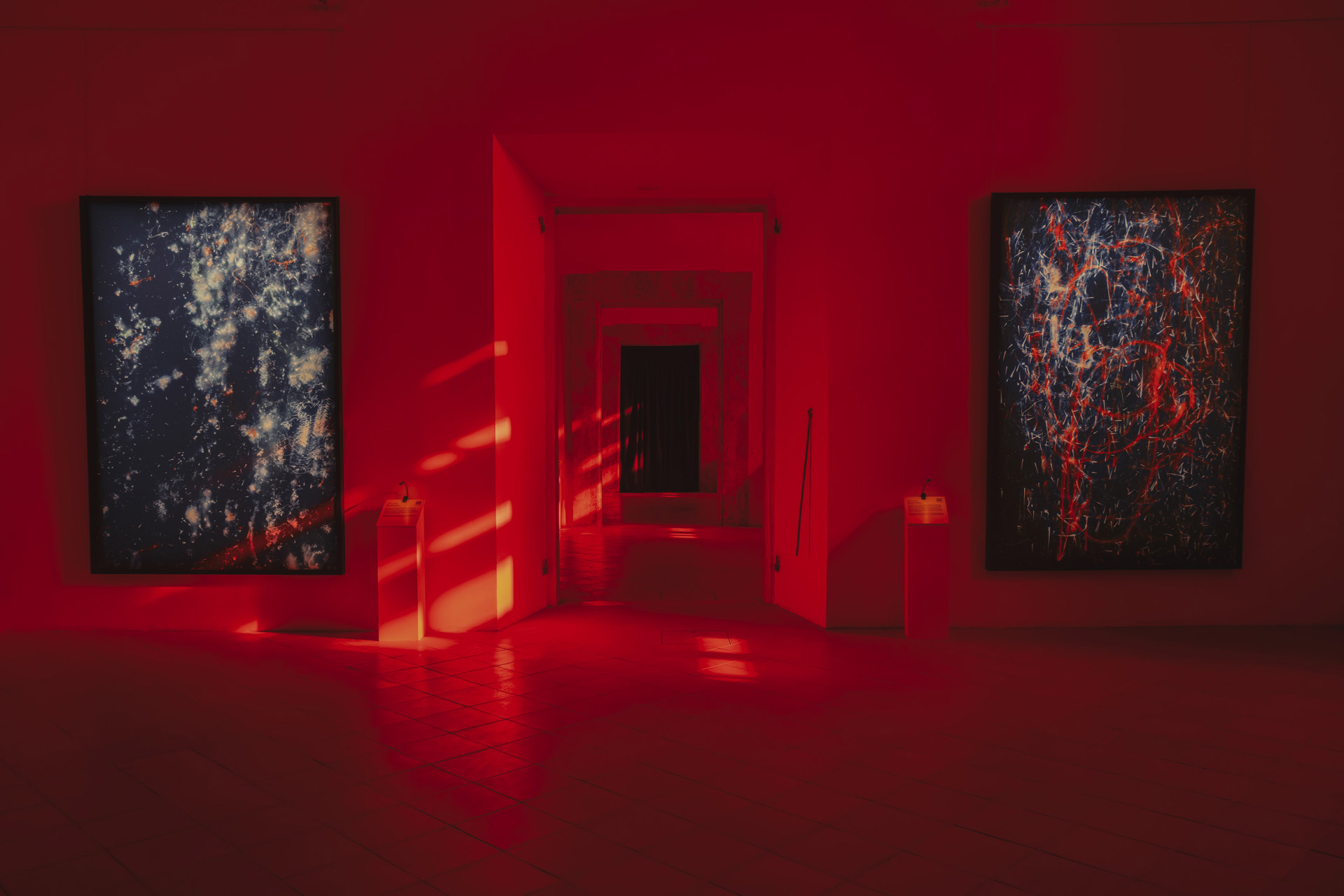
THE SHOTS that make up NapEx instinctively lead us to draw comparisons with the history of painting (Turner, Monet, Op Art) or with abstract photography. But they are also concrete images of fireworks—that is, of an abstraction materializing in reality, which the digital apparatus allows to coagulate into an unstable, shifting, volatile matter.
The thousands of explosions that simultaneously illuminate and color the sky over Naples may be read as the ecstatic sublimation produced by the collective unconscious to exorcise and ward off the not impossible eruption of Vesuvius. The explosion of these “virtual” fireworks solidifies not into lava but into photographic prints, arousing in those who behold them a suggestive power no less intense than that offered by the formidable spectacle of nature.