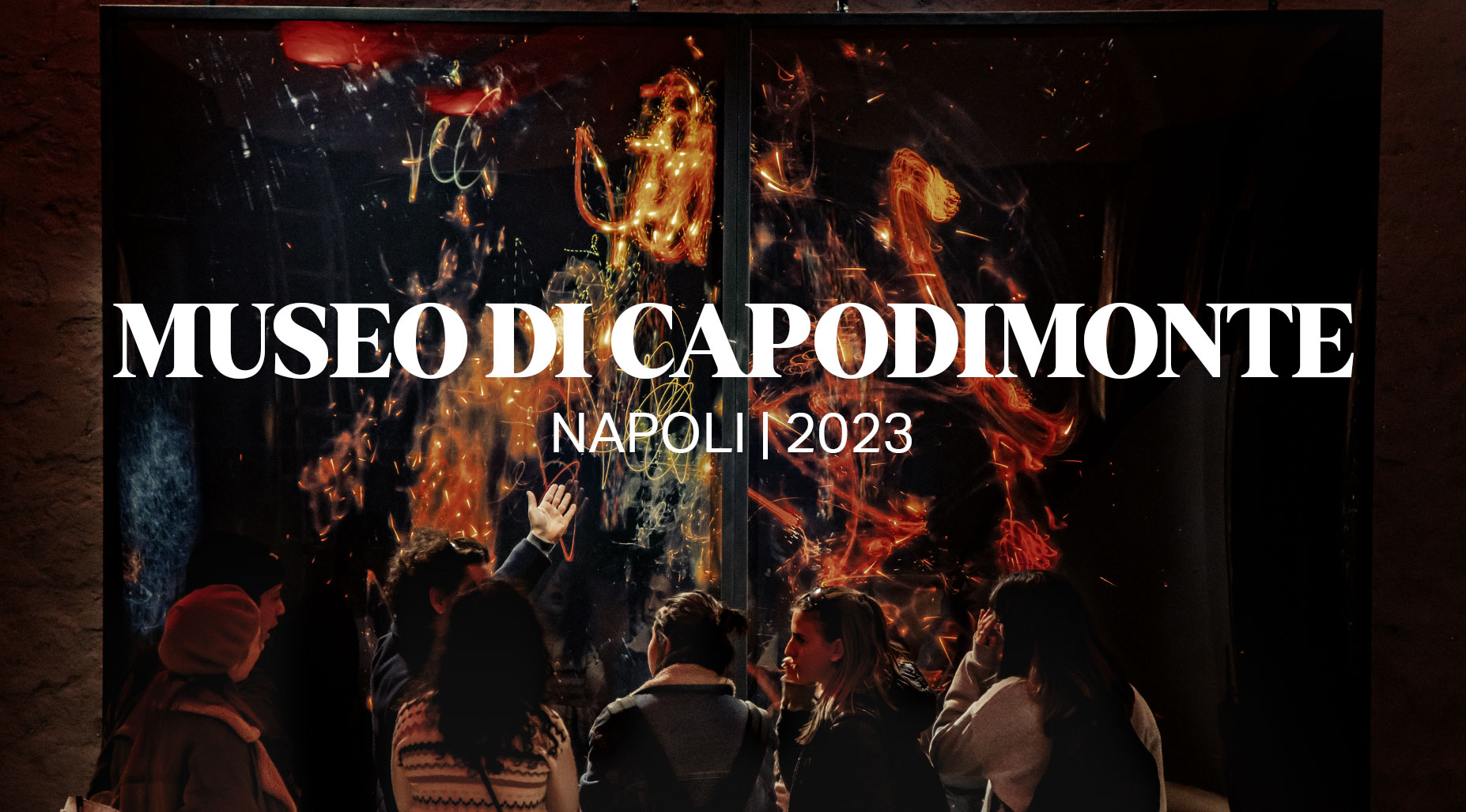
After thirteen years of research, the first exhibition

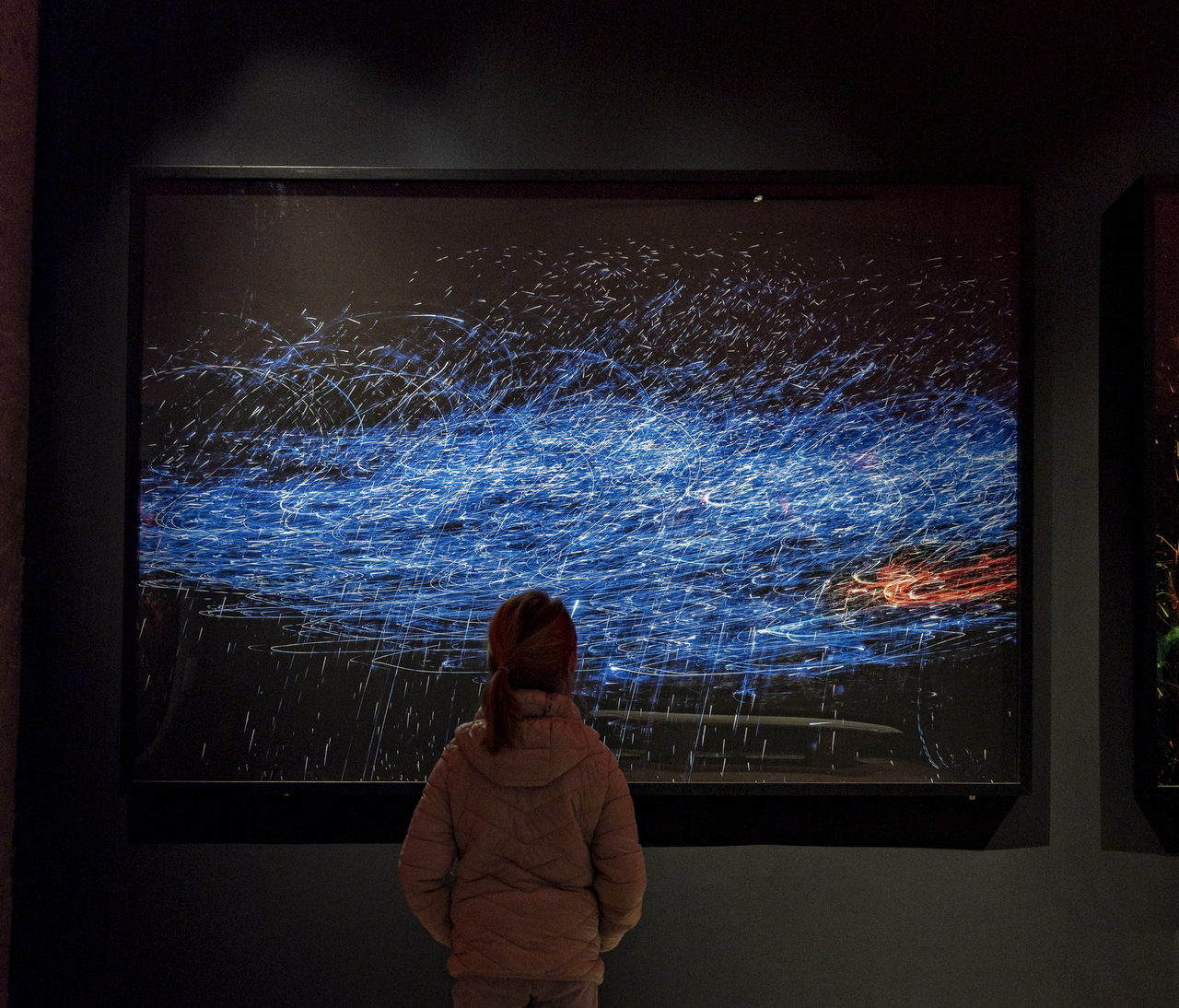
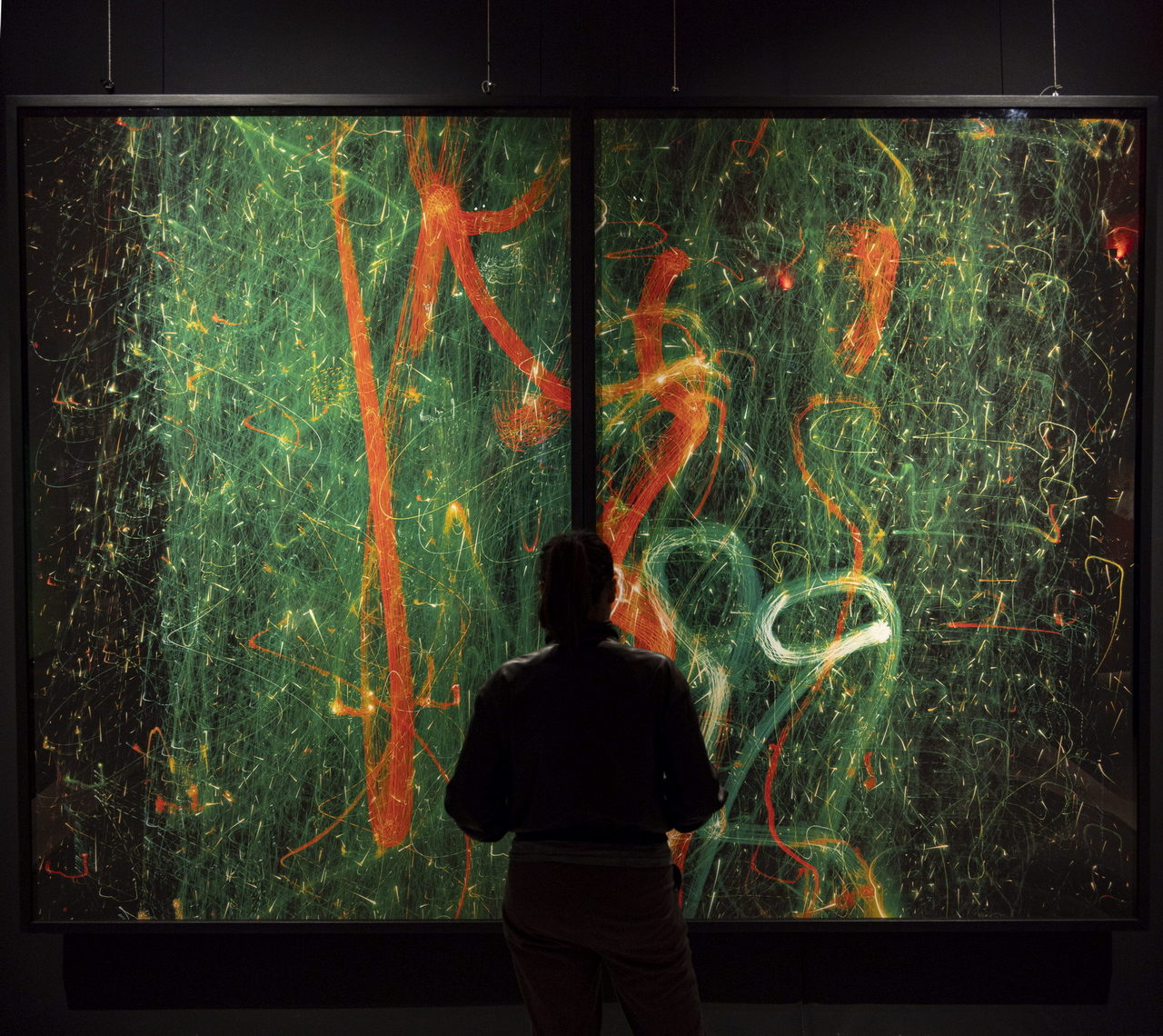
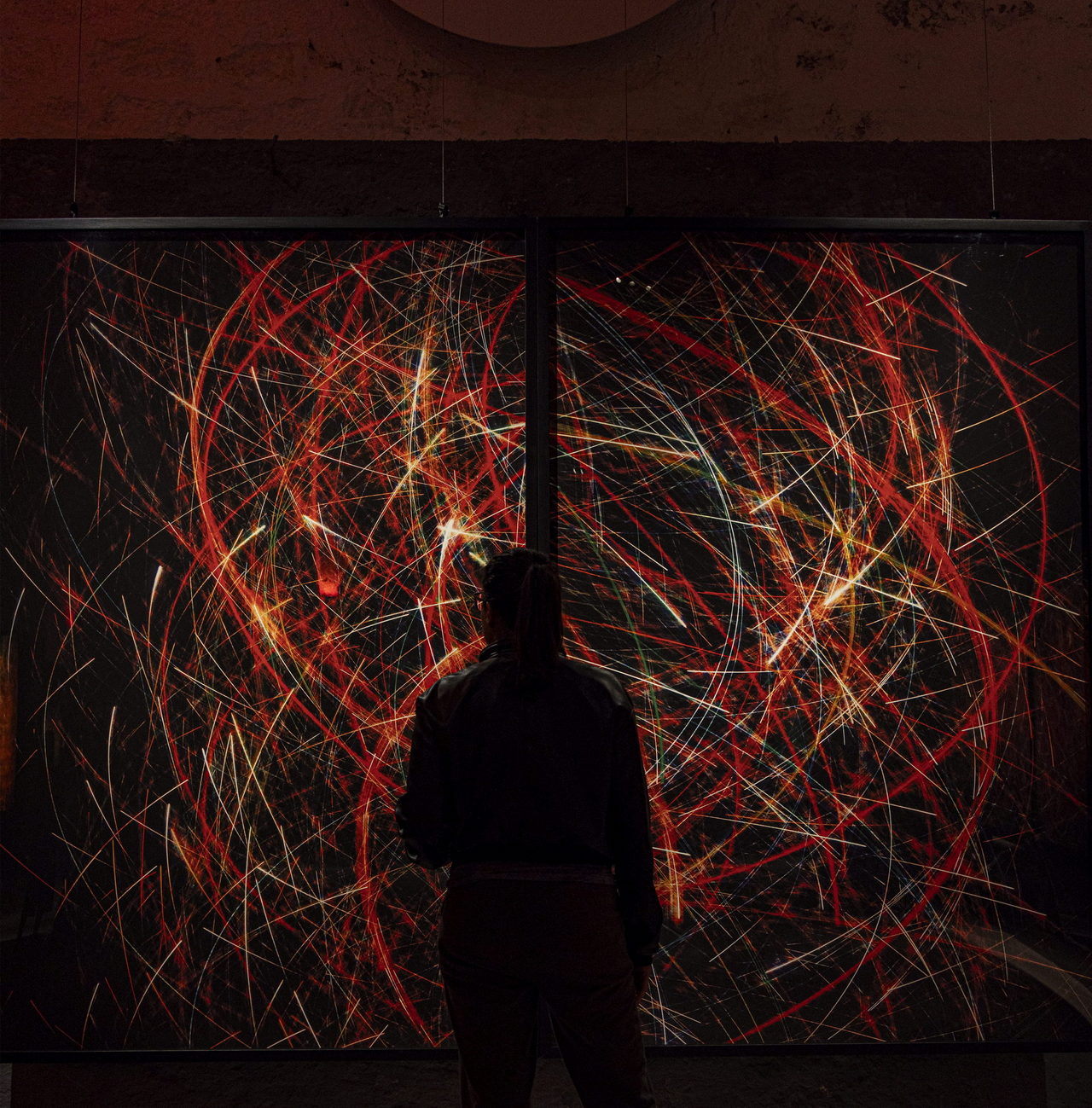
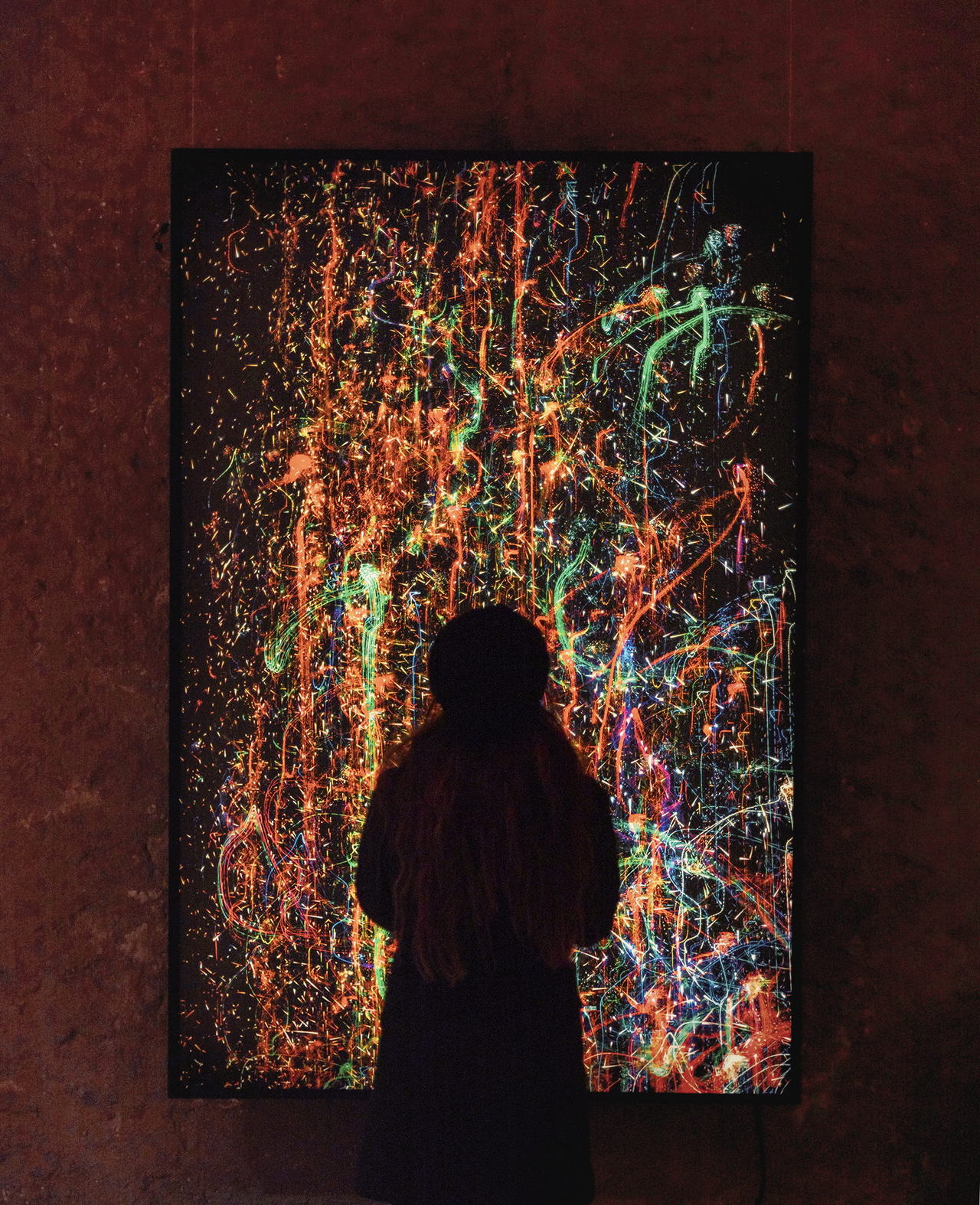
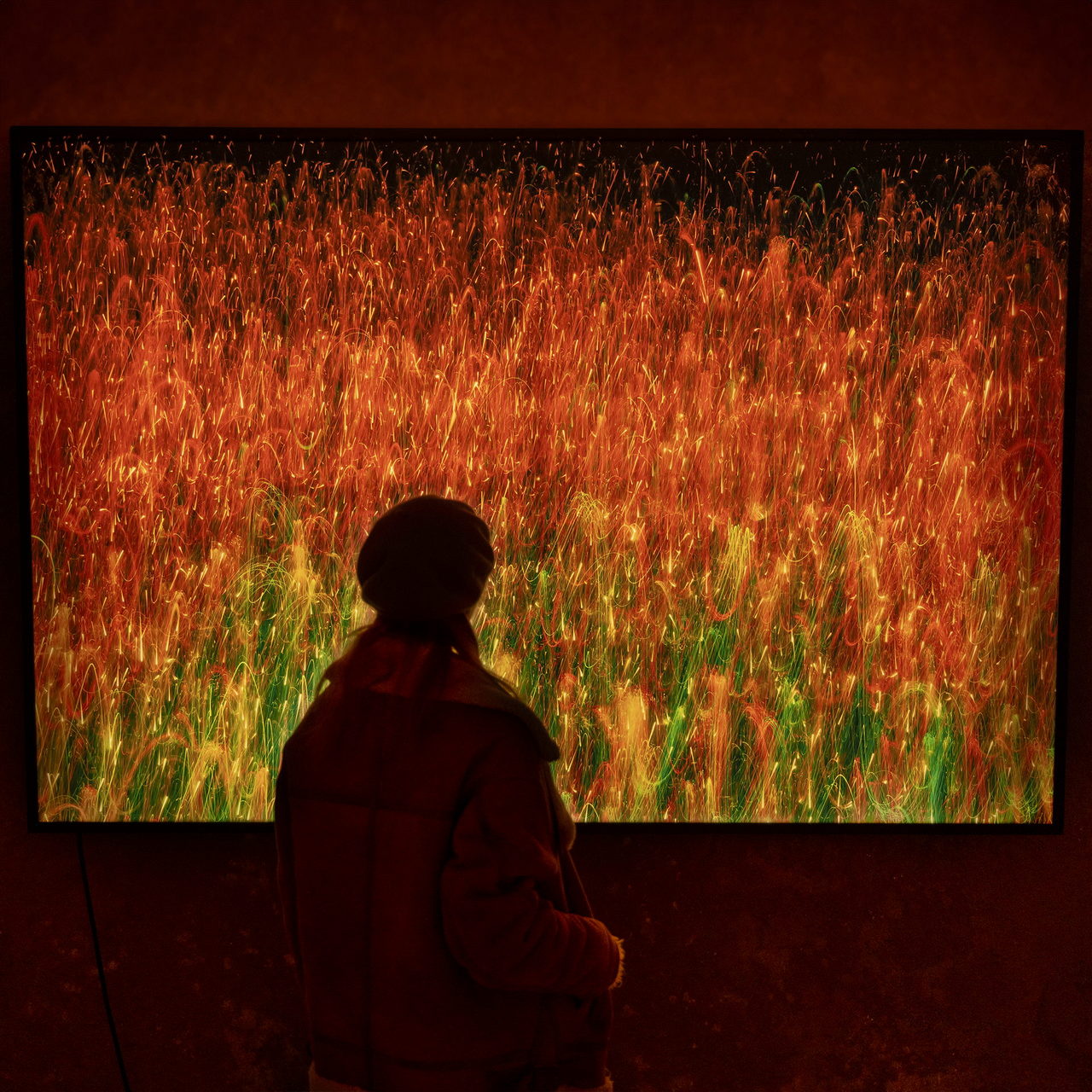
“Napoli Explosion brings together pyrotechnic art, photography and painting in a single event. It is the gift with which the Museo e Real Bosco di Capodimonte accompanies Naples from Christmas to New Year’s Eve. Few cities in the world are as closely bound to a force of nature as Naples is to Vesuvius: the city spreads out at its feet like an amphitheatre and carries its presence within its collective memory. Mario Amura’s 37 large-scale works are the result of more than thirteen years spent observing New Year’s Eve. From Monte Faito, the artist records the collective ritual through which the people of Naples illuminate the Bay around the volcano. Through long exposures, the fireworks shed their ephemeral forms and become matter, mark and landscape: photographic paintings generated by light.”
Sylvain Bellenger

Visit the exhibition in 360°

Napoli Explosion in the history of Capodimonte.

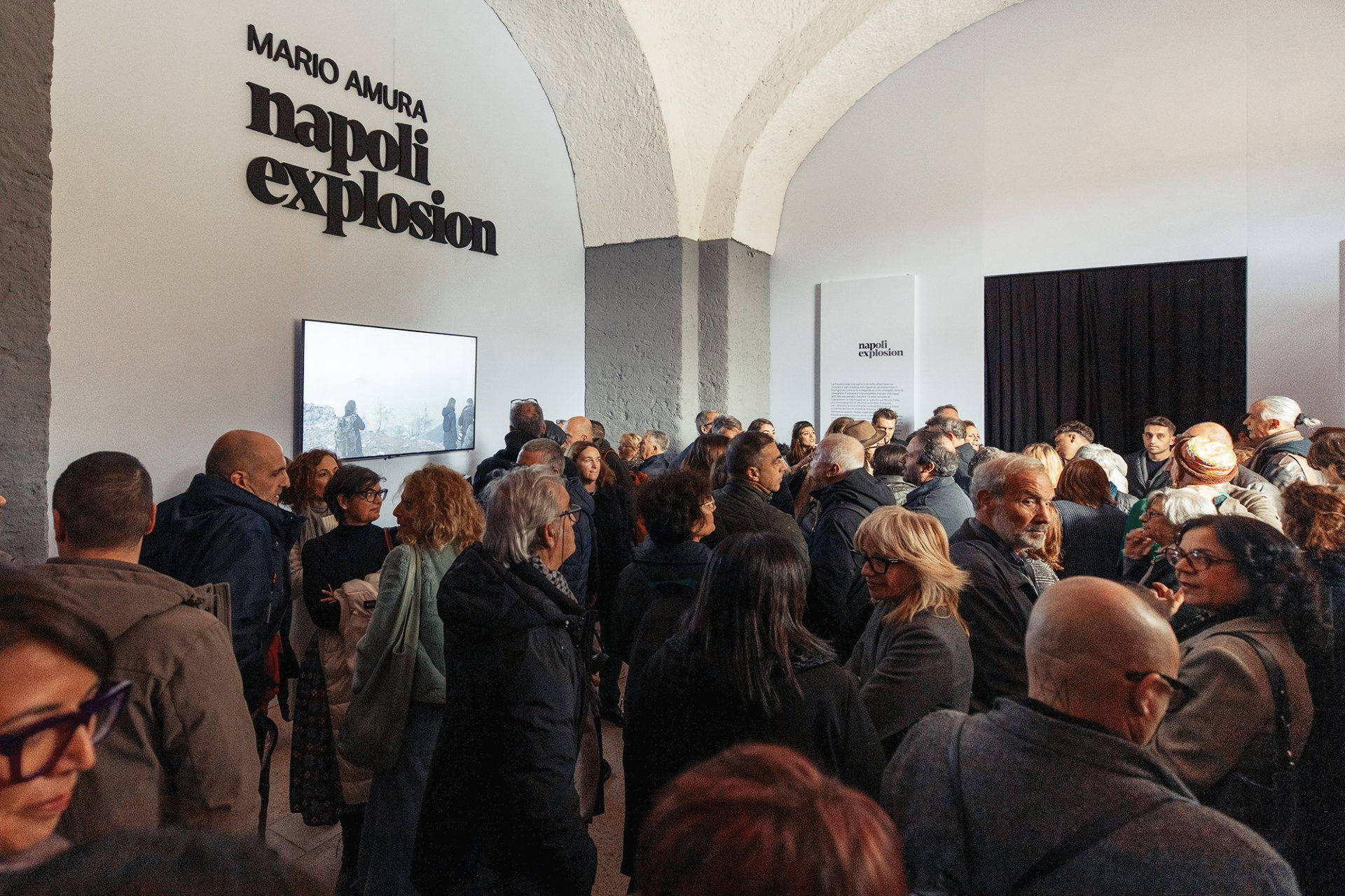
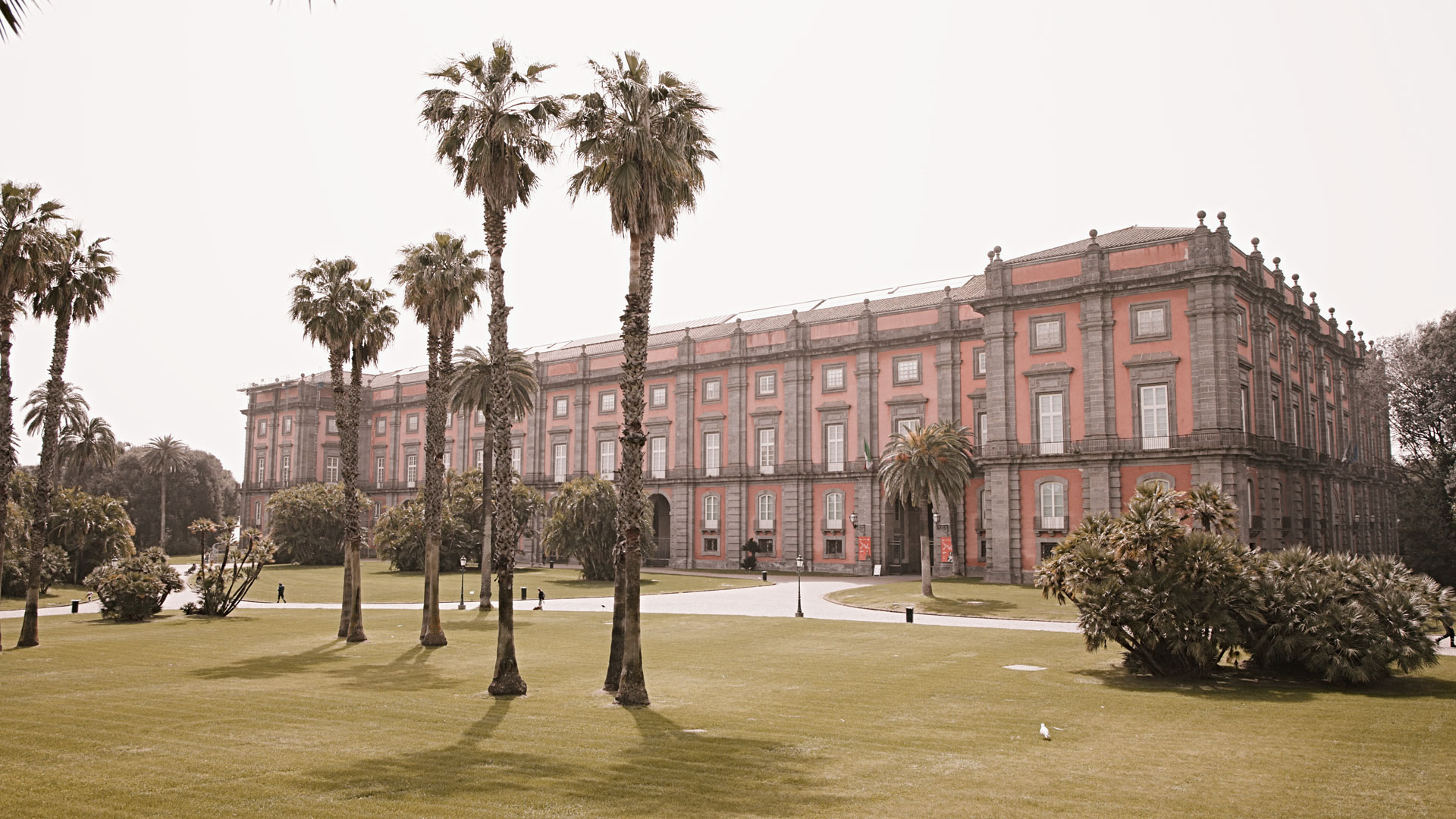
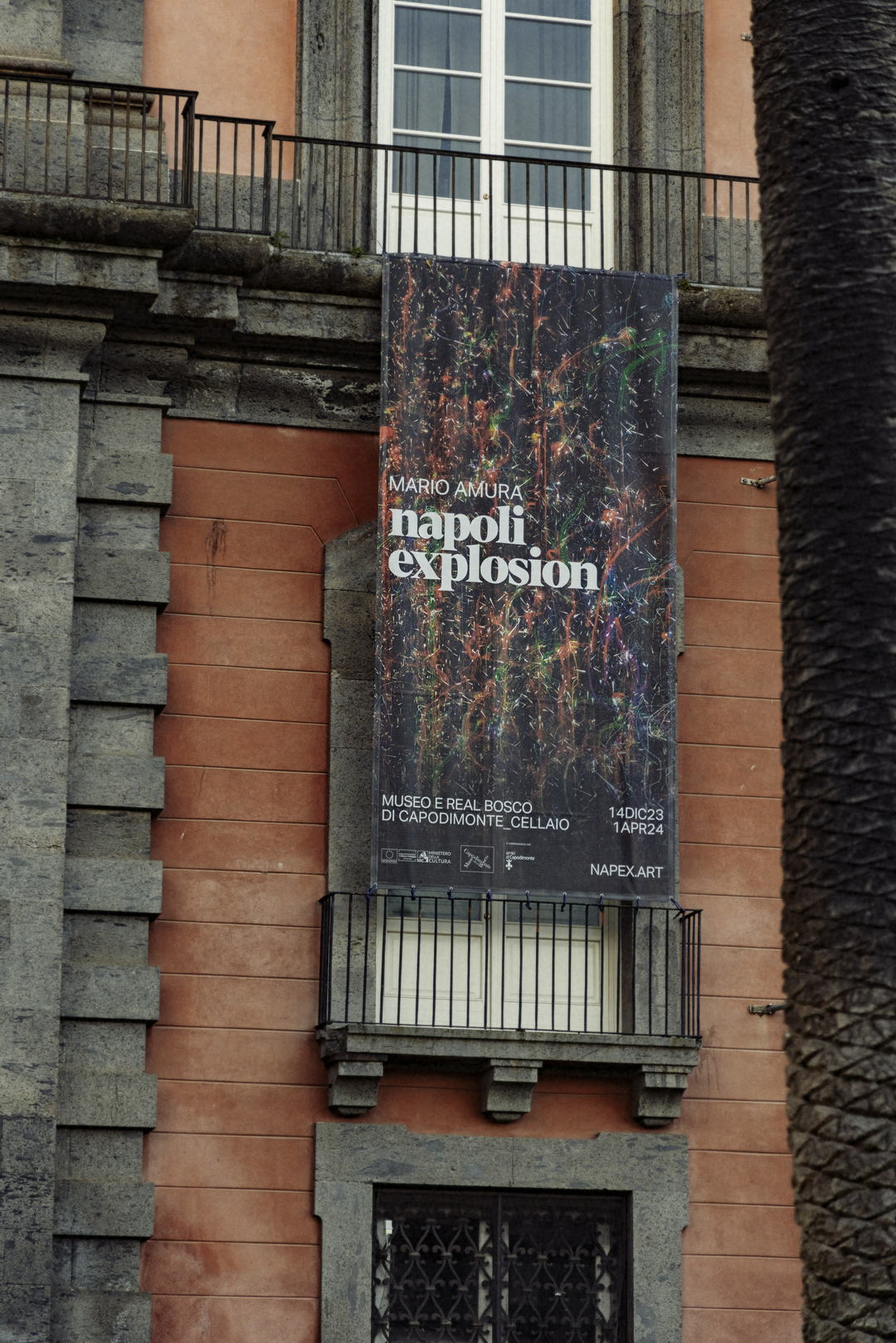
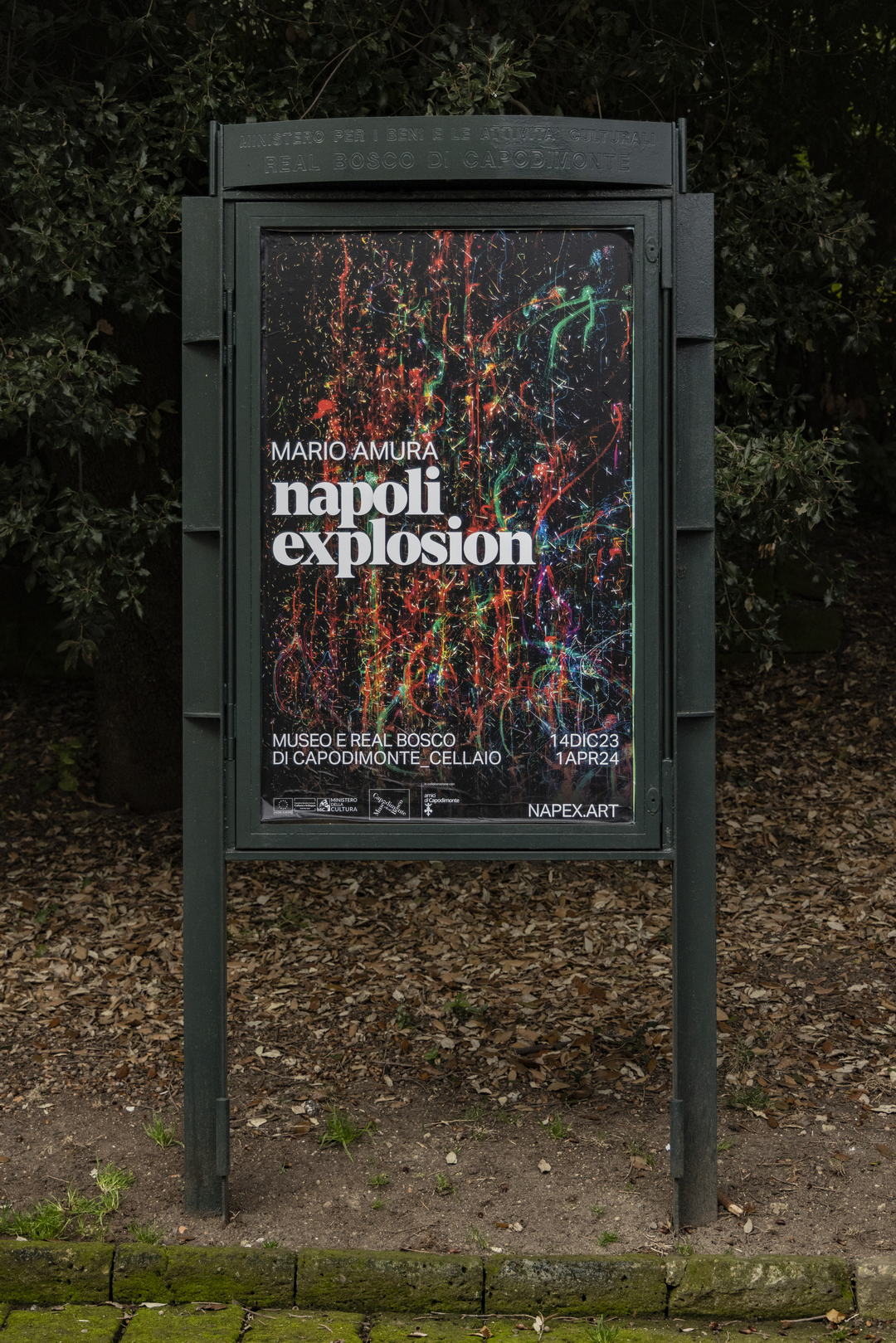
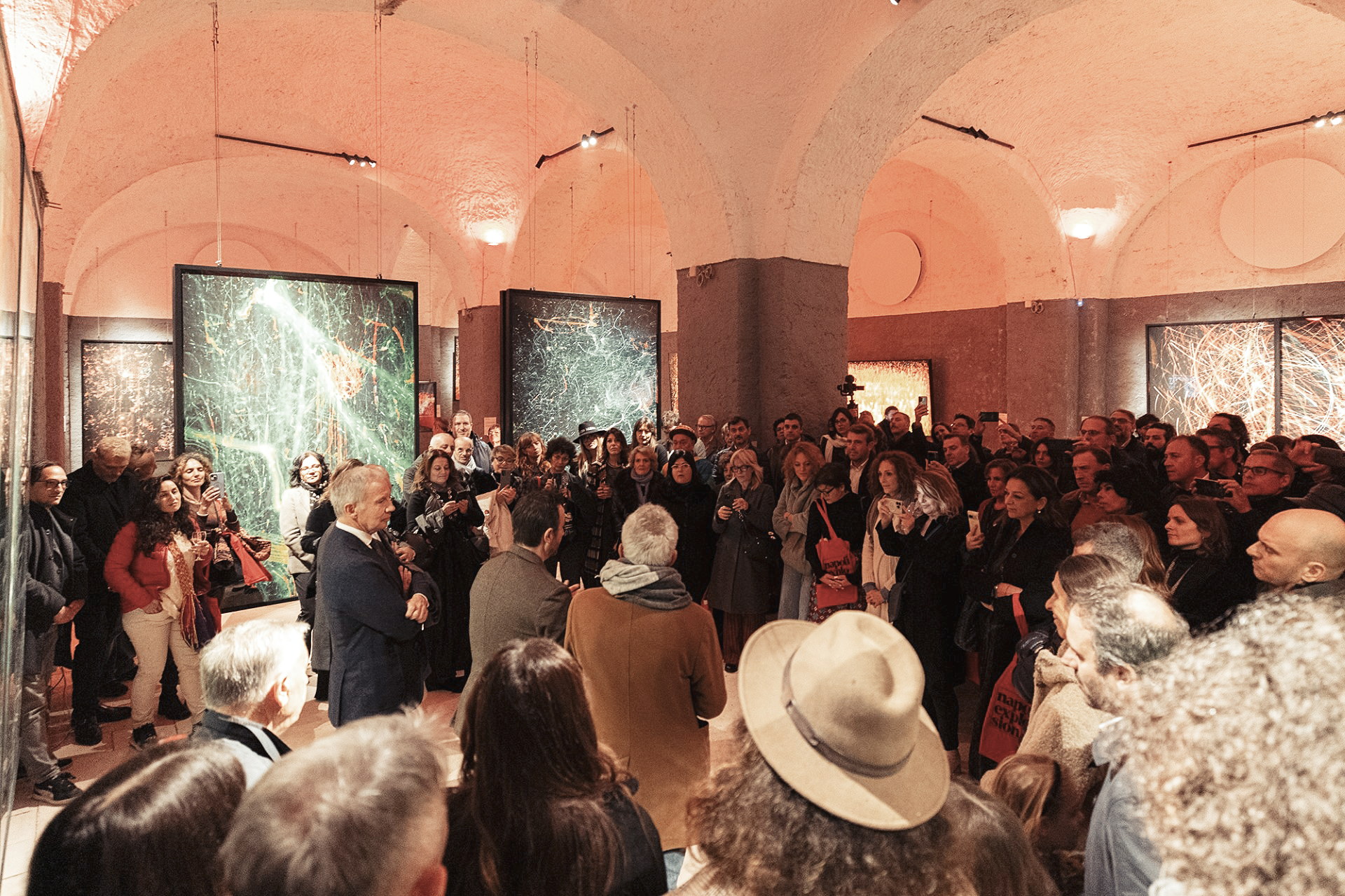
From 14 December 2023 to 1 April 2024, Napoli Explosion was presented in the Cellaio, one of the seventeen historic buildings within the Real Bosco di Capodimonte. Commissioned by Charles of Bourbon in 1738 to house the Farnese Collection, the Royal Palace preserves a heritage spanning the history of art. Its collections bring together works by Titian, Parmigianino, Caravaggio, El Greco, Artemisia Gentileschi and Warhol.
At the close of the exhibition, NAPEX 223181, entered the Museum’s permanent collection, establishing an enduring presence at Capodimonte for Napoli Explosion.

NAPEX 223181, Mario Amura, 2022. Collection of the Museo e Real Bosco di Capodimonte

The museum scale of Napoli Explosion.

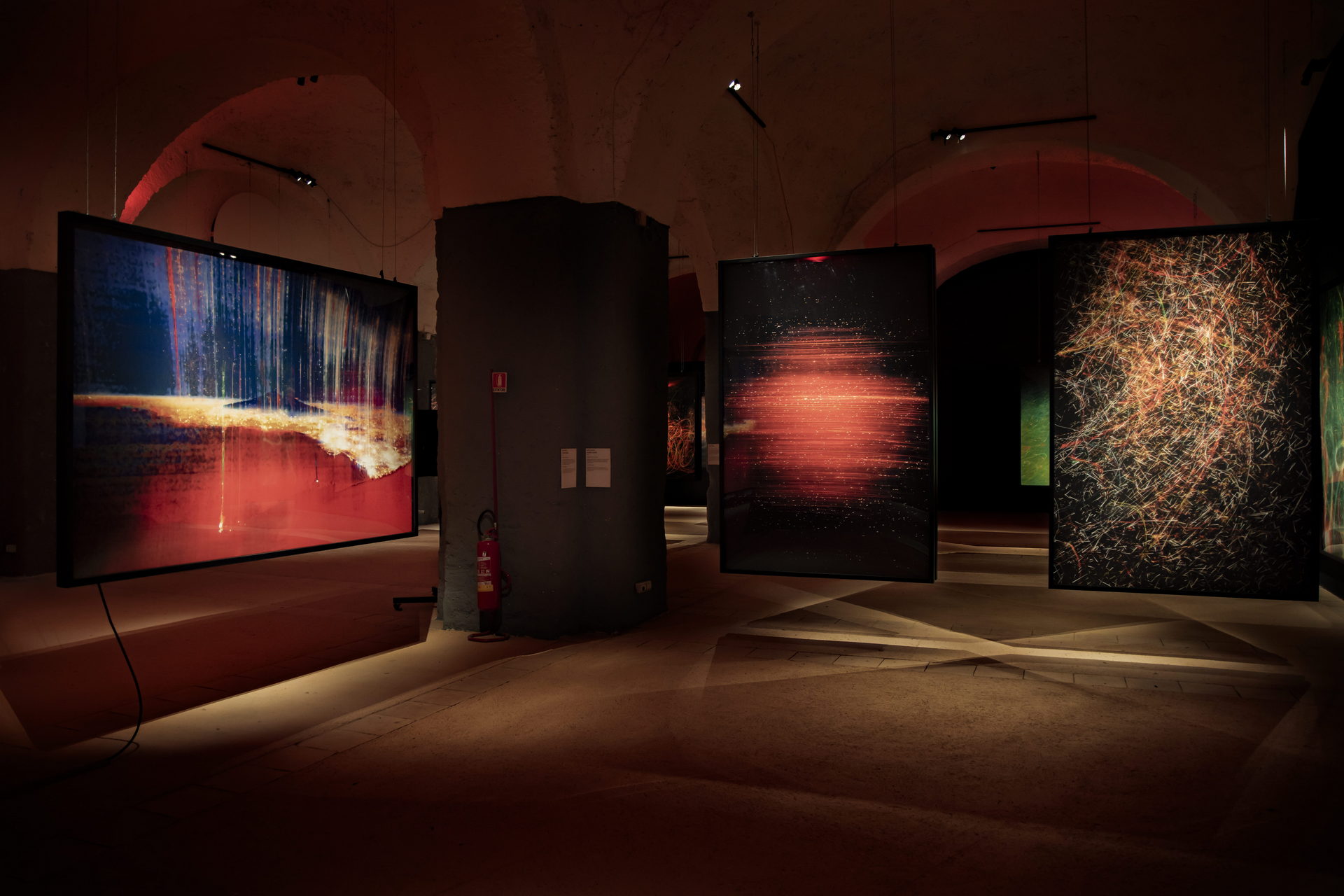
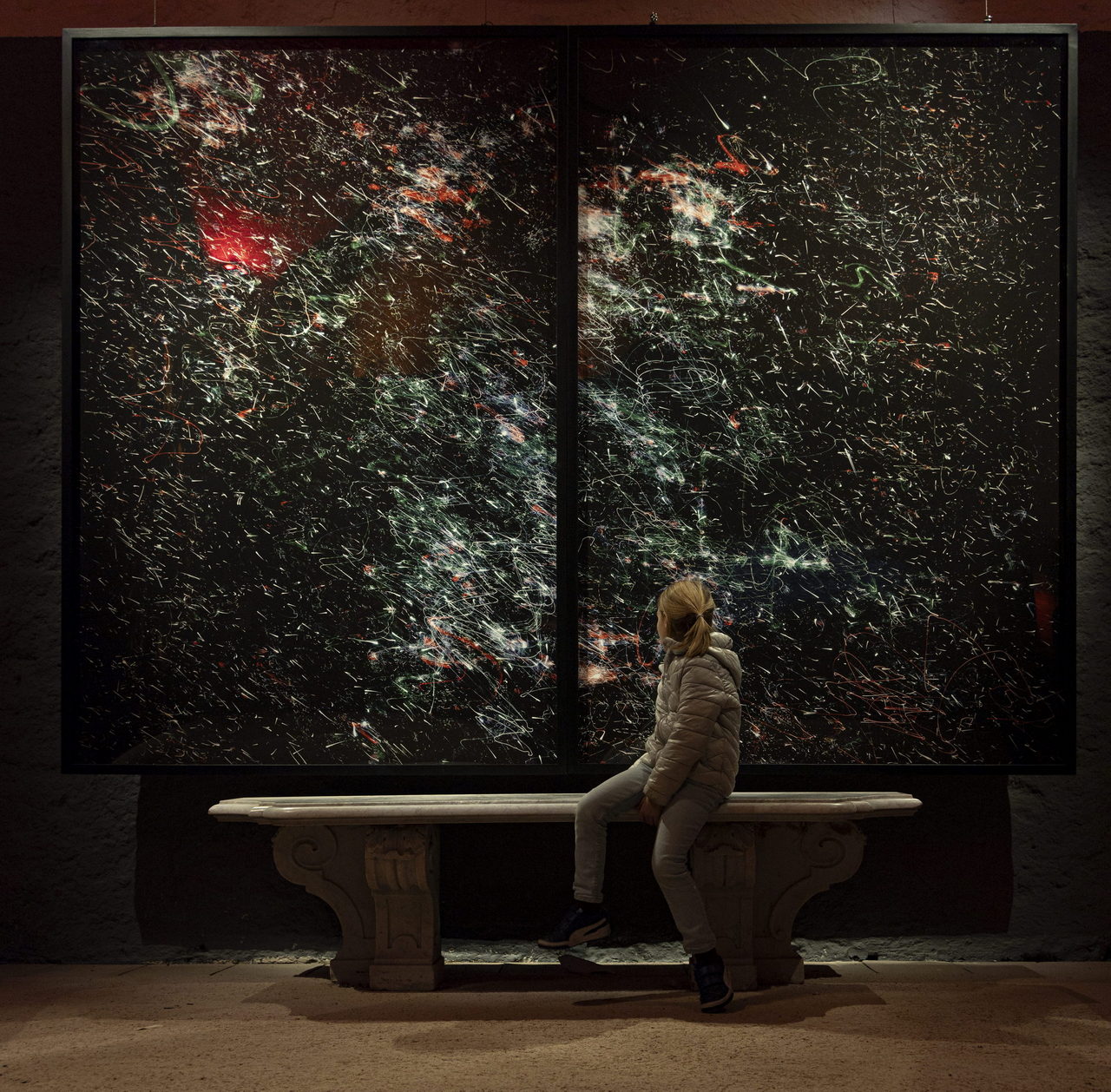
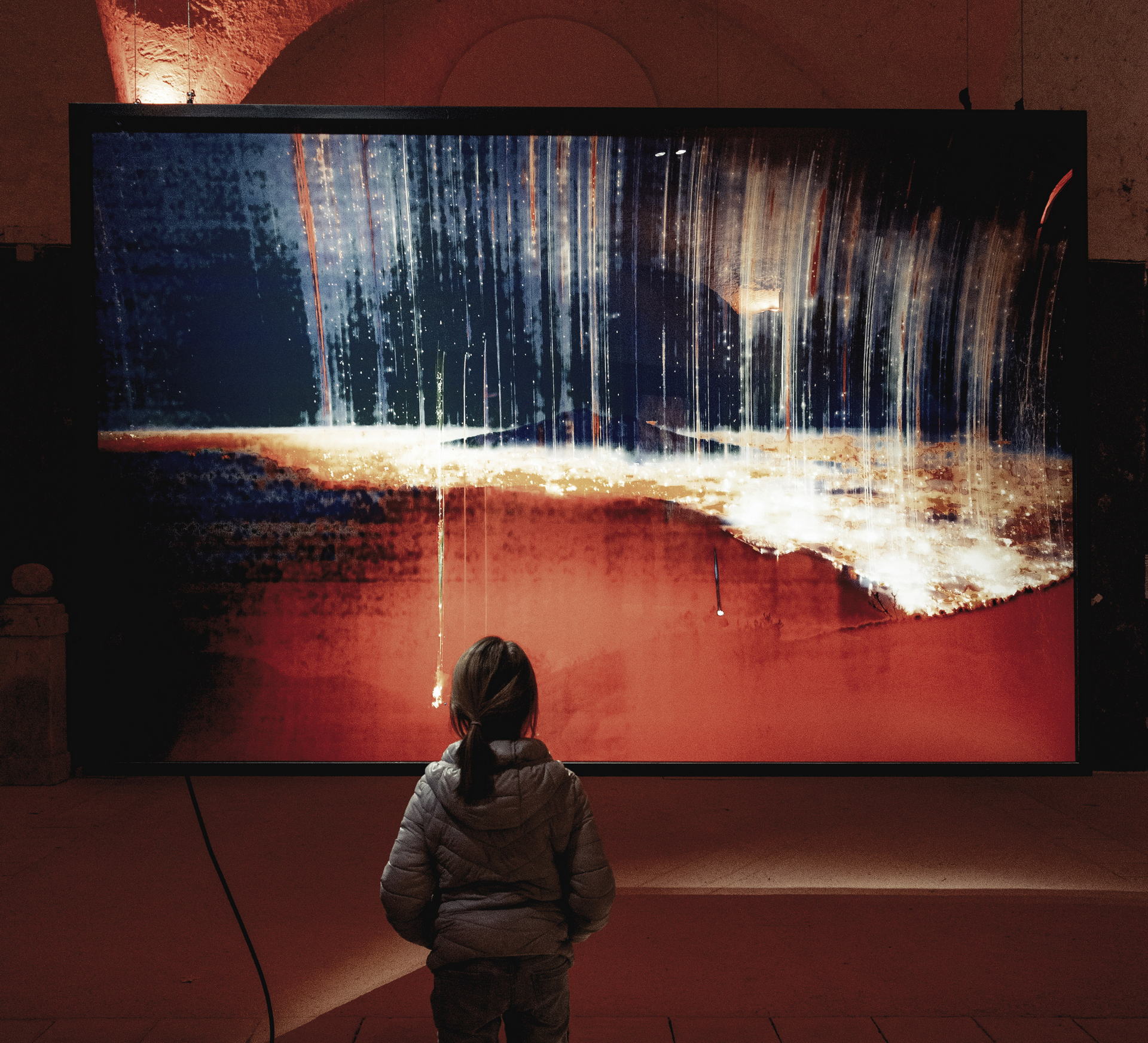
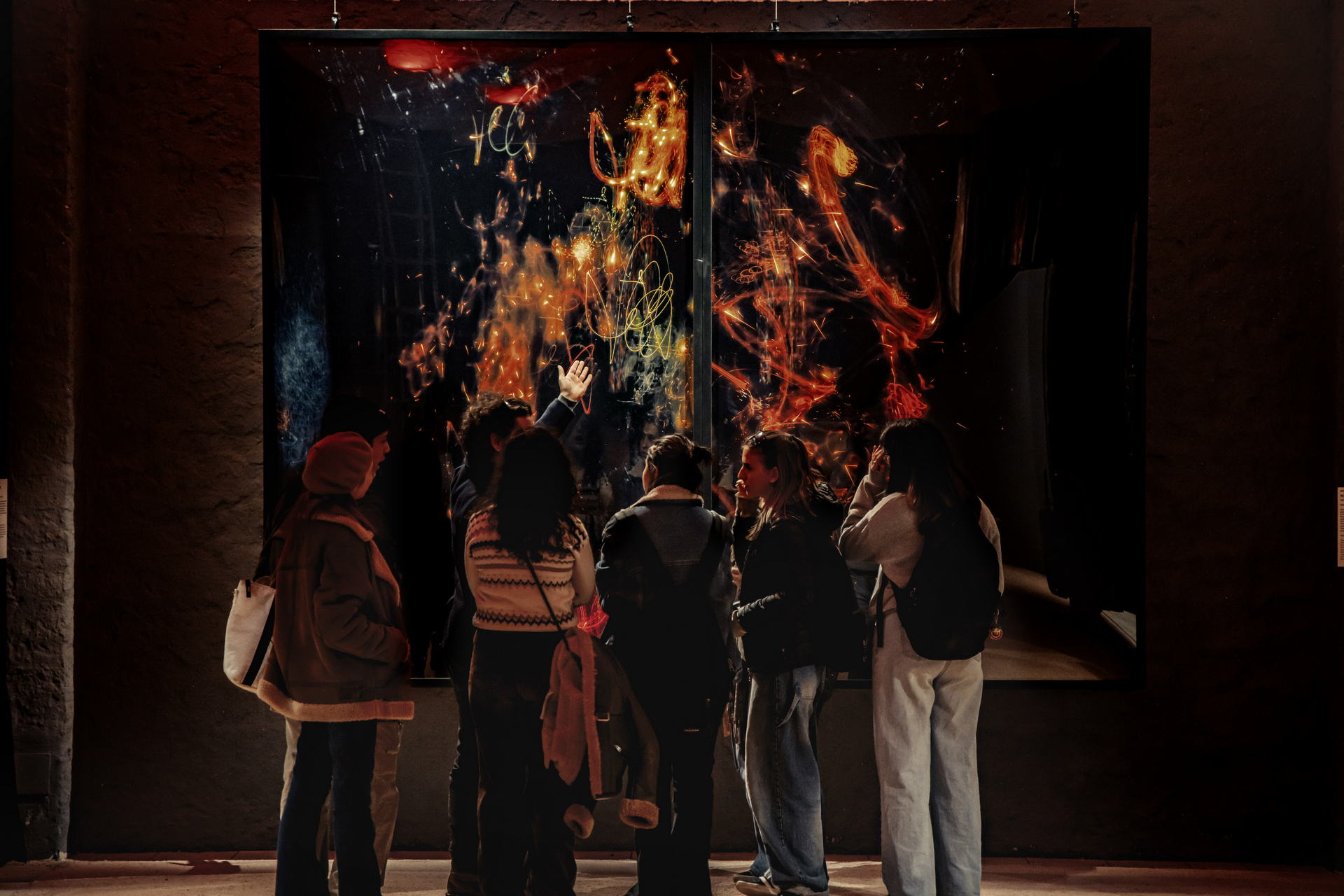
The monumental works of Napoli Explosion, some extending to as much as five metres, are produced as unique editions. Their scale responds to a precise necessity: to recreate within the exhibition space the original perception of the spectacle observed by Mario Amura from Monte Faito. From that distance, the Bay, Vesuvius and the scattered bursts of fireworks form an immense field of vision one that a smaller format inevitably reduces to an image. Museum scale, by contrast, re-establishes the relationship between body, distance and landscape: it compels viewers to step back, move closer and let their gaze travel across the multitude of marks. Each work thus occupies the wall as a singular presence, on the scale of the vision from which Napoli Explosion originated.

The Lightboxes.

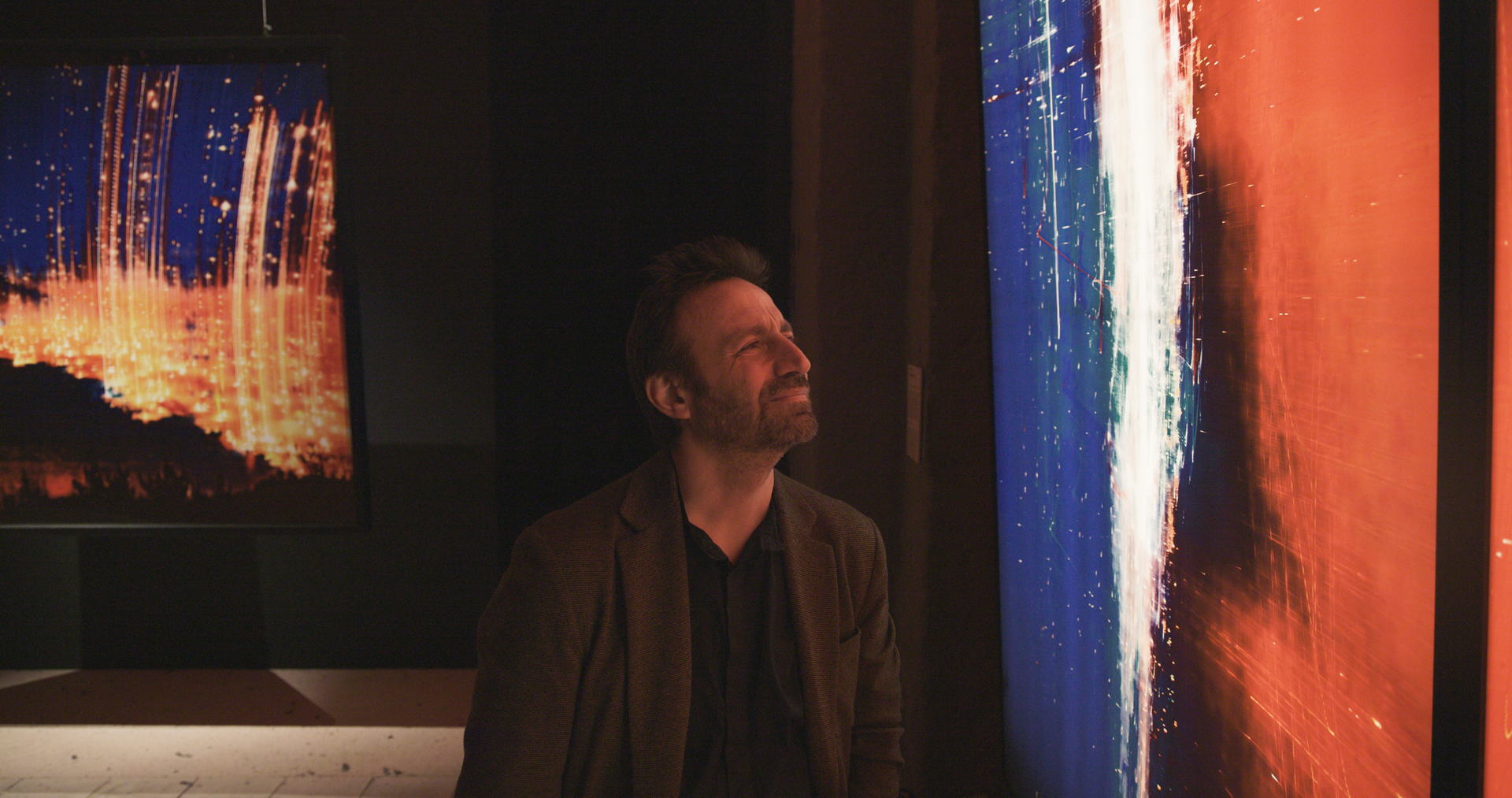
In the Napoli Explosion lightboxes, image, structure and light source form a single work. These are not photographs placed within illuminated frames: the internal light determines the depth of the blacks, the density of the colour and the physical presence of the image. In the rooms of the Cellaio, unique-edition single works and diptychs, some extending beyond three metres, acquired the autonomy of large-scale paintings and the capacity to organise the space around them. The lightbox does not add spectacle to the photograph, it defines its final form: a luminous surface that preserves the real origin of the image while asserting itself as a fully realised museum work, conceived to be installed, preserved and passed on in its original configuration.

Sylvain Bellenger – Director Emeritus, Museo e Real Bosco di Capodimonte

Sylvain Bellenger presents Napoli Explosion.

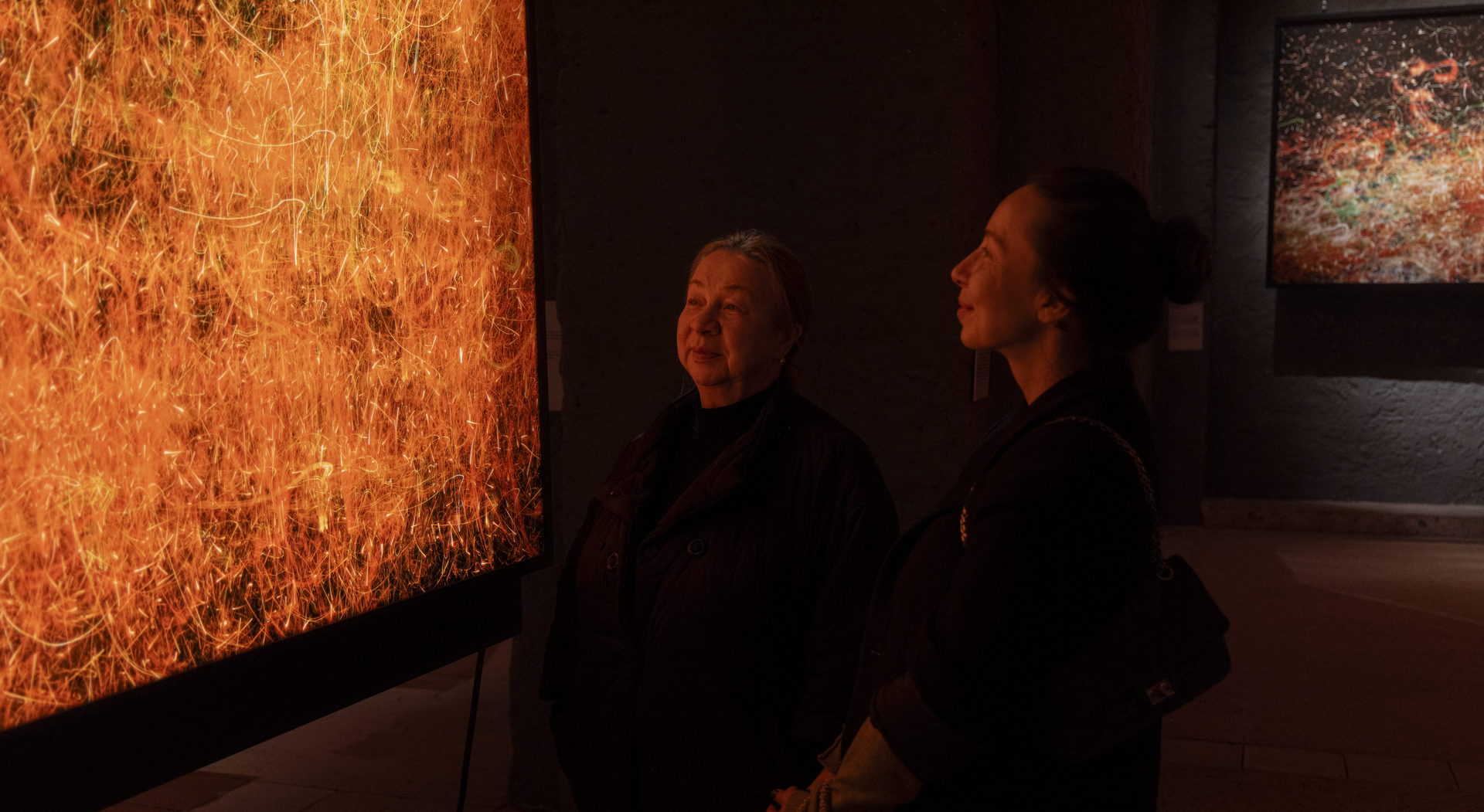
In 2023, Sylvain Bellenger, then Director of the Museo e Real Bosco di Capodimonte, recognised Napoli Explosion as a fully developed body of research and chose to present it publicly for the first time. He brought to the rooms of the Cellaio a project that Mario Amura had developed over thirteen years, away from public view, giving it a museum form for the first time. For Bellenger, these images demand time and immersion: “Gaze into these artworks for an enduring span, delve into their depths. The great danger, is that they may blind. They are so rich, so brilliant, that’s a bit like staring at the Sun with naked eyes.” In the accompanying video, the curator introduces the exhibition at the Museo di Capodimonte.

An autobiographical work.

From its first exhibition, Napoli Explosion received widespread recognition within the art world. Among its most authoritative interpretations is that of Salvatore Settis, President of the Louvre’s Scientific Committee, who identifies its collective dimension as the heart of the project:“On the night marking the passage into the new year, the city is populated by hundreds of thousands of people who set off or watch these fireworks, unaware that they are contributing to a pictorial work.” Settis also offered the definition that most radically conveys the meaning of Mario Amura’s work:
«Napoli Explosion is an autobiographical work, an hymn that Naples sings to itself».
Salvatore Settis

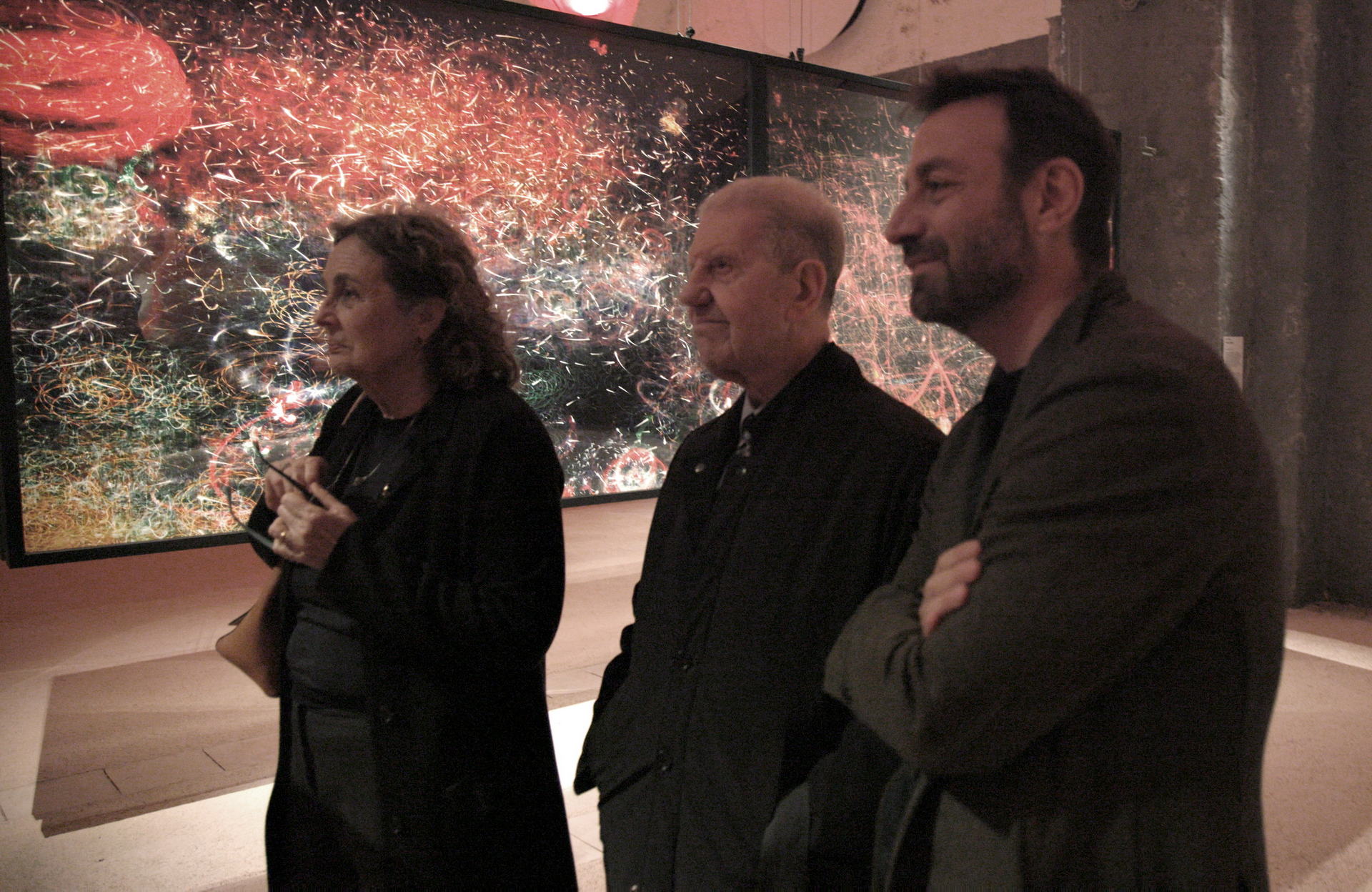
Mario Amura with art historian Salvatore Settis and professor Michela Sassi

More than 40,000 visitors.

During its five-month run, Napoli Explosion welcomed more than 40,000 visitors, a particularly significant figure when compared with the approximately 250,000 annual admissions recorded by the Museo e Real Bosco di Capodimonte. Public interest quickly extended beyond the rooms of the Cellaio: images and videos from the exhibition circulated widely across social media and were featured by major news outlets. On 2 January 2024, only a few days after the opening, TG1 devoted a report to the project in its late-night news edition, documenting its rapidly growing online reach and bringing Napoli Explosion to the attention of a national audience. In the accompanying video, the report captures the moment when the project’s first exhibition became a shared cultural phenomenon.

Mario Amura traces the origins of Napoli Explosion.

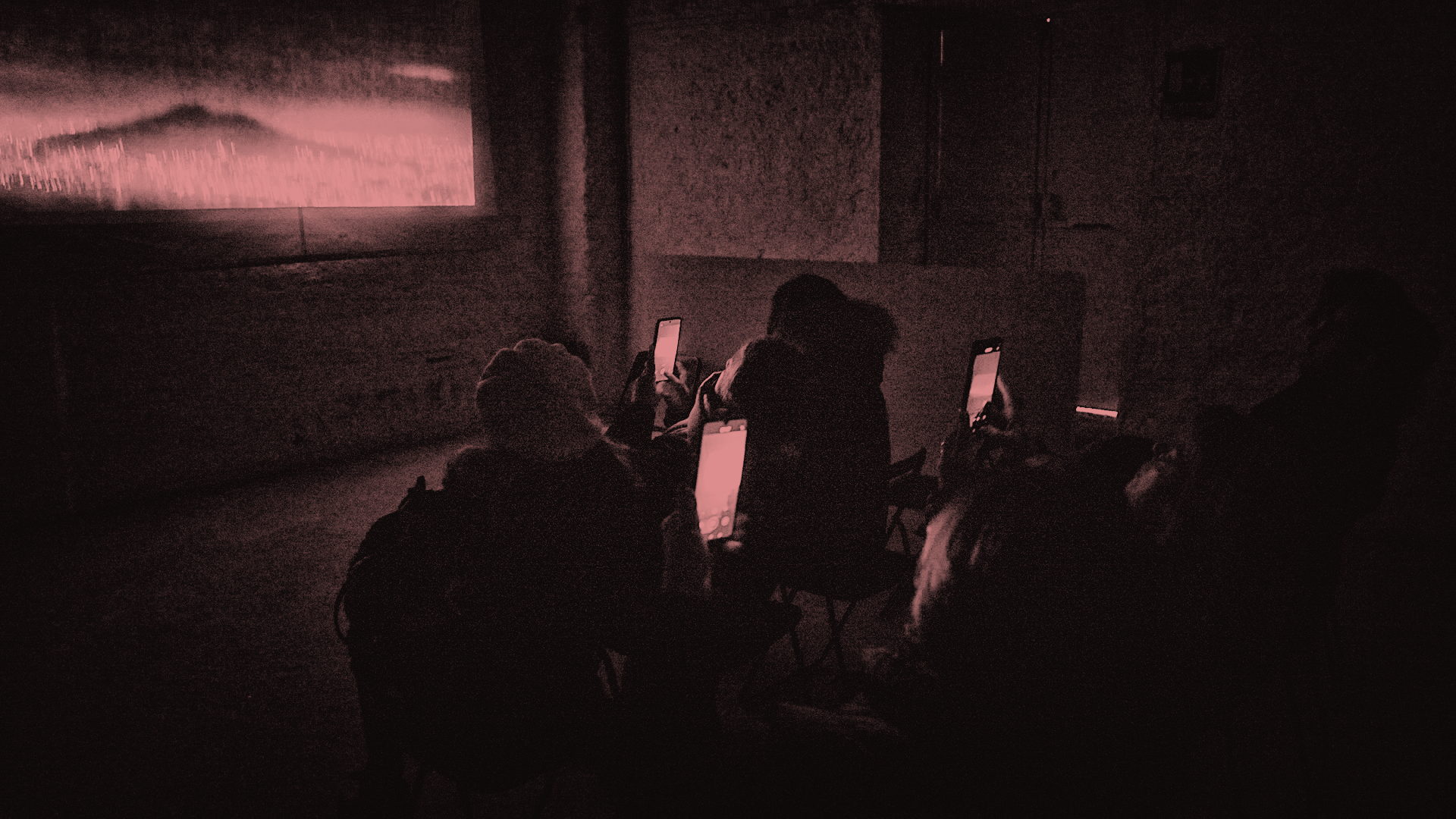
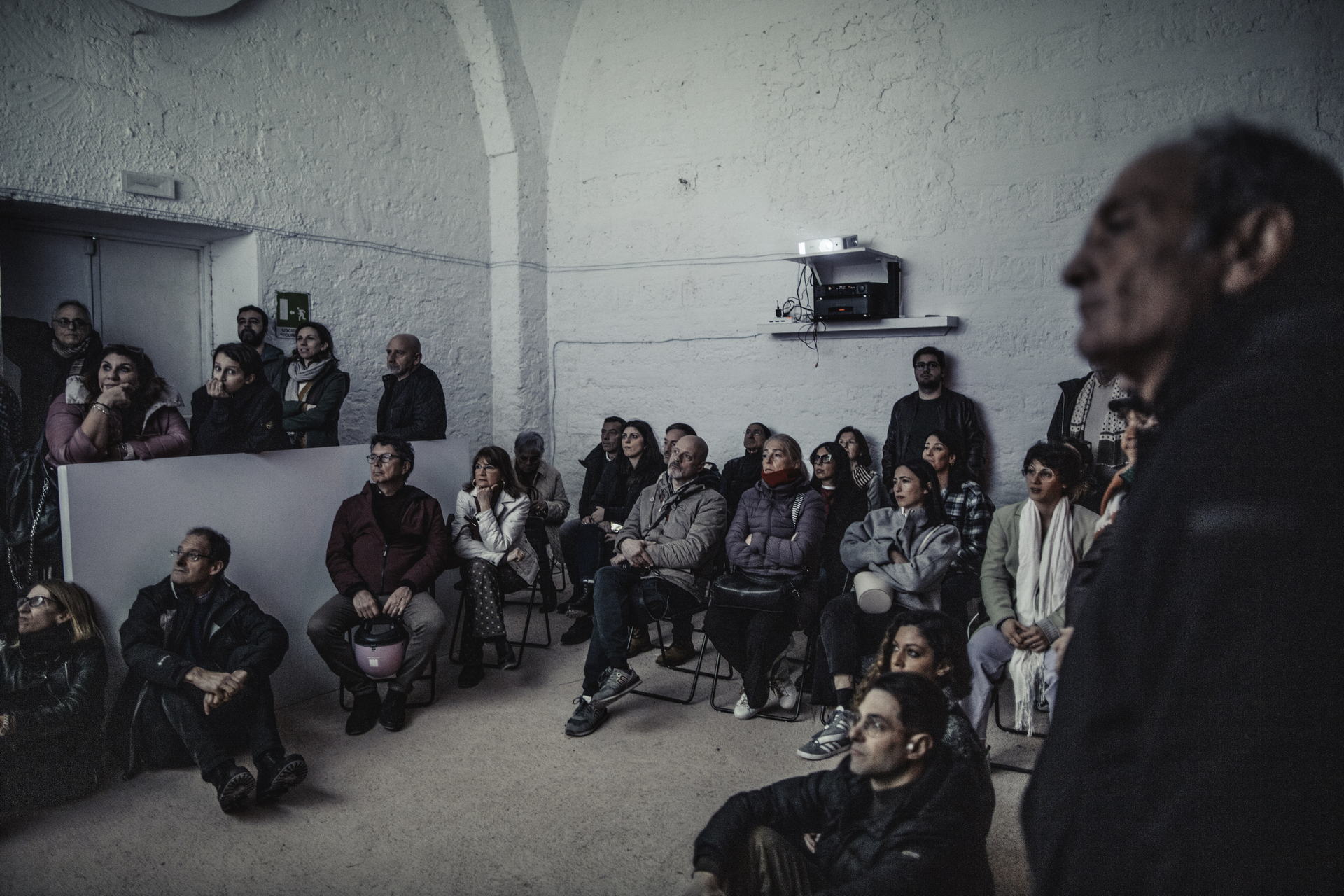
In the cinema room, Mario Amura recounts the birth of Napoli Explosion: its earliest intuitions, the expeditions to Monte Faito, the work of the crew, and the transformation of a collective ritual into an investigation of light, time and the image. The documentary interweaves the artist’s voice with those of the Napoli Explosion team, Serenella Iovino, Serafino Murri, moving-image historian Bruno Di Marino, Salvatore Settis and Sylvain Bellenger. From the project’s beginnings to its future prospects, the film tells the story of a research process that is still ongoing.

Napoli Explosion Vol. 1:
the first chapter of a three-volume work.

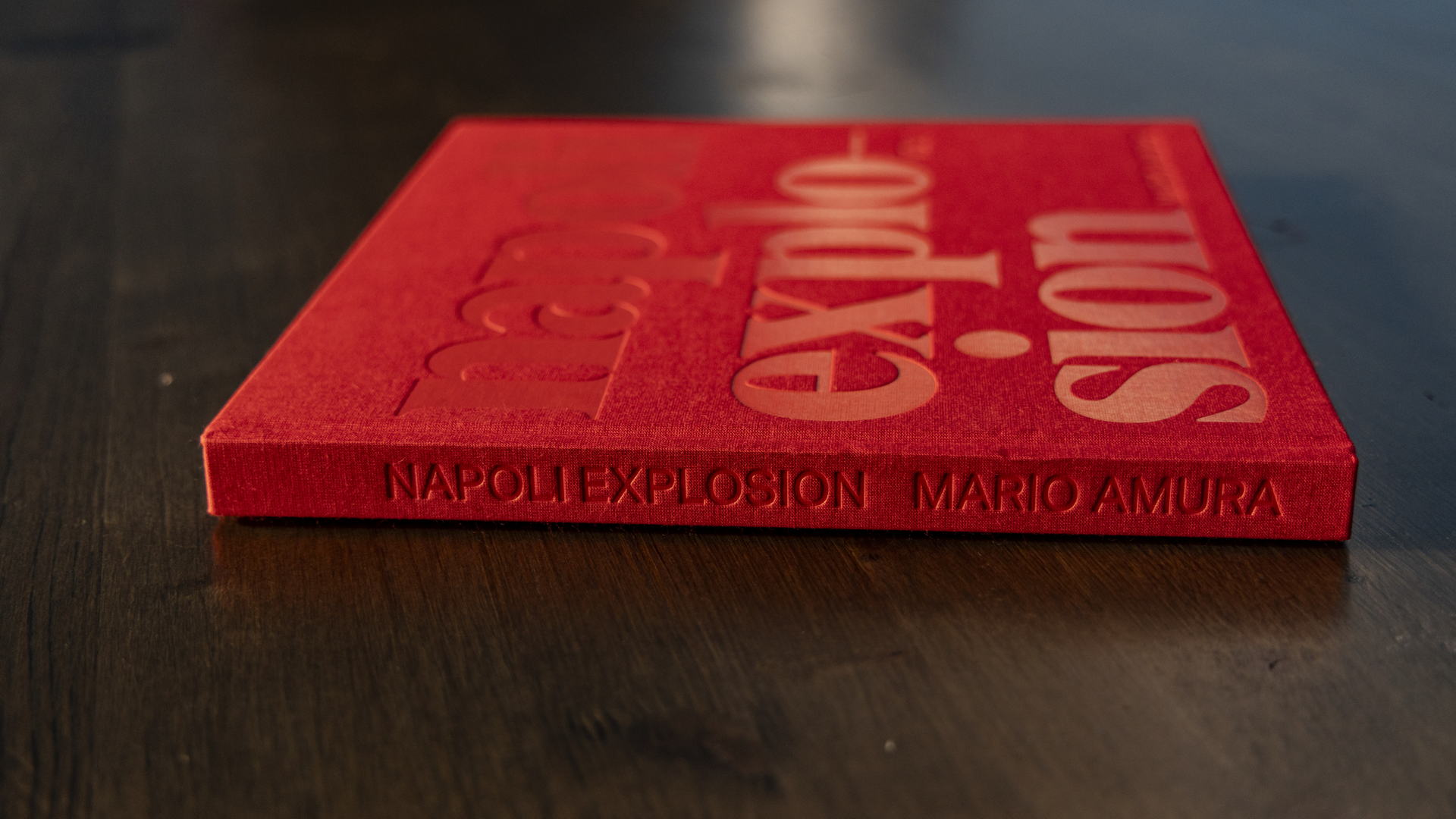
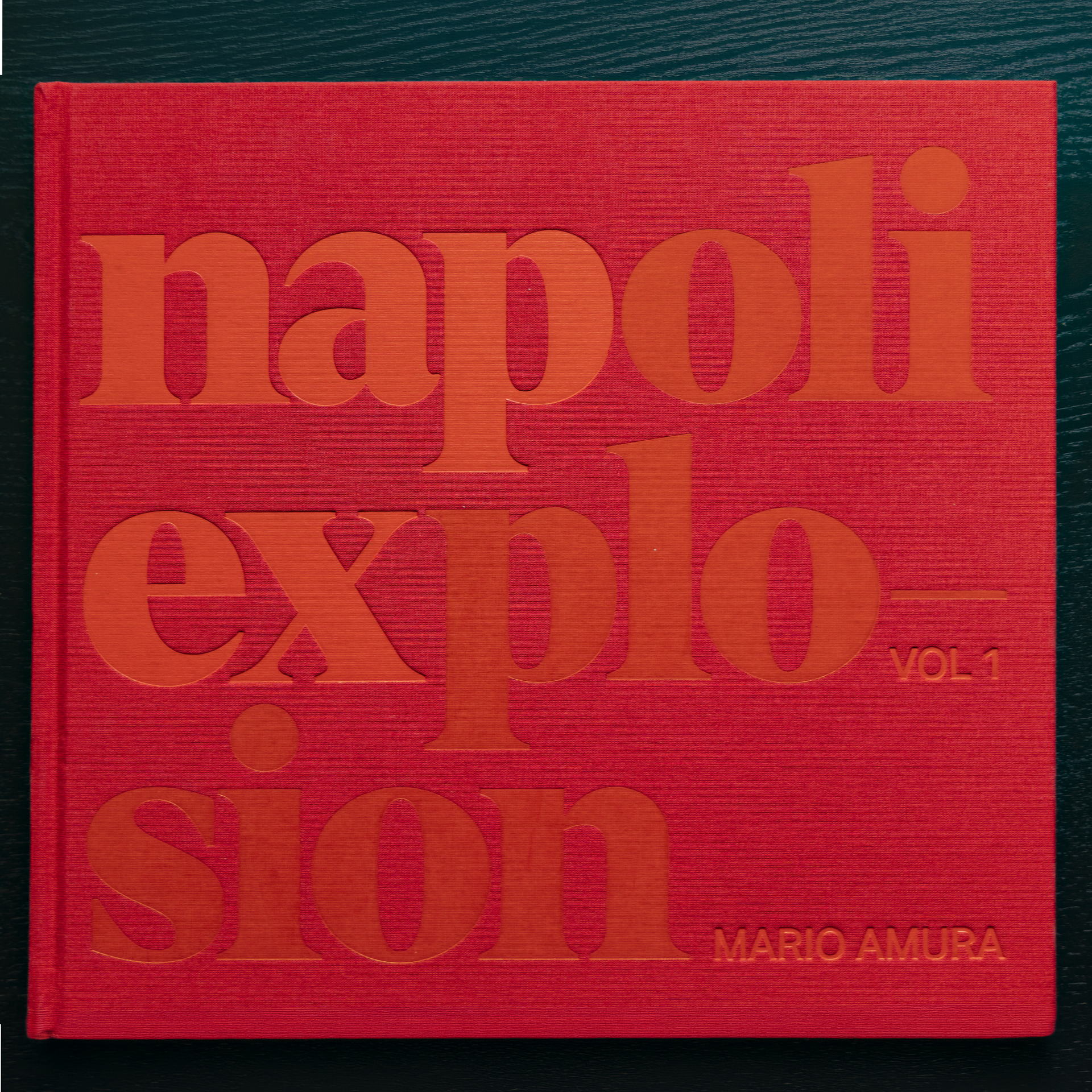
Published in 2023 to coincide with the first Napoli Explosion exhibition at the Museo e Real Bosco di Capodimonte, the volume inaugurates an editorial project conceived to bring together the entire body of work in three parts. Across its 192 pages, the artbook presents 116 photographic paintings created by Mario Amura over more than thirteen years of research, accompanied by texts by Salvatore Settis, Serenella Iovino, Serafino Murri and Bruno Di Marino, as well as an extended interview with the artist. Published in a bilingual Italian-English edition, signed and limited to 400 copies, Napoli Explosion Vol. 1 gives coherent editorial form, for the first time, to an archive that continues to evolve, and opens the broader narrative of the artistic project.
Cart0